Creating a garden photograph at Winterbourne
Read how I created this early morning image on the Garden Media Guild visit to Winterbourne House and Garden in Birmingham.
GMG and PGPA Visit to Birmingham, part 1
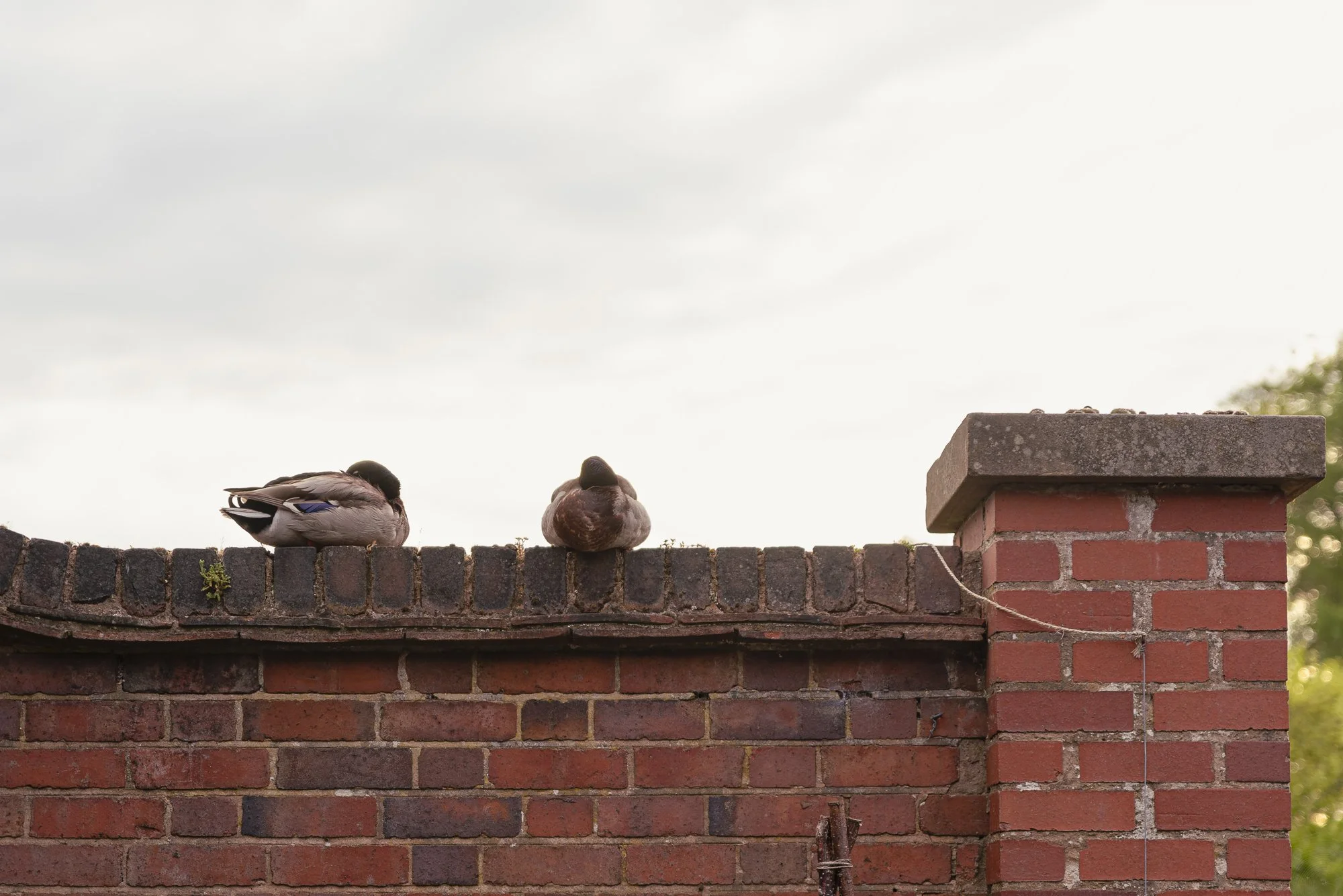
They were just asleep right there, precariously balanced atop the crinkle crinkle wall of the kitchen garden. This pair of ducks will be familiar for regular visitors to Winterbourne House and Garden at the University of Birmingham. Most often spotted in the dipping pool in the centre of the walled garden, they frequently make their way up to the main terrace outside the cafe to harvest any fallen cake crumbs. When I mentioned them to Jenny, the events coordinator, she informed me they don’t have names, but have been known to sneak past the staff on reception into the main part of the house.
‘What were you doing at Winterbourne whilst the ducks were asleep?’ you may well ask. Well I’d signed up to a visit to both Winterbourne and the Birmingham Botanic Gardens, organised by members of the Garden Media Guild. This is the professional body I have joined whose aims are to raise the quality of garden writing, photography, broadcasting and other methods of communication. As part of this, visits to gardens of interest are an important networking opportunity for members of the garden media. The other opportunity these events frequently offer is early access to the gardens for photographers to get images during early morning light (and before lots of visitors arrive)
On this occasion I was met early by Indy Rana who runs tendershoots.co.uk together with Jenny Lily a fellow Birmingham photographer. It being this start of May, the sun was already up by the time we entered the garden at 7am but the sun wasn’t so high that it created unpleasant contrast.
I know Winterbourne garden well because I regularly volunteer there in the Letterpress museum, but there’s always something new growing, especially at this time of year. We’ve had an unusually warm and dry spring (sadly, this will become more common with climate change), so much of the planting is a few weeks ahead of where it would usually be.
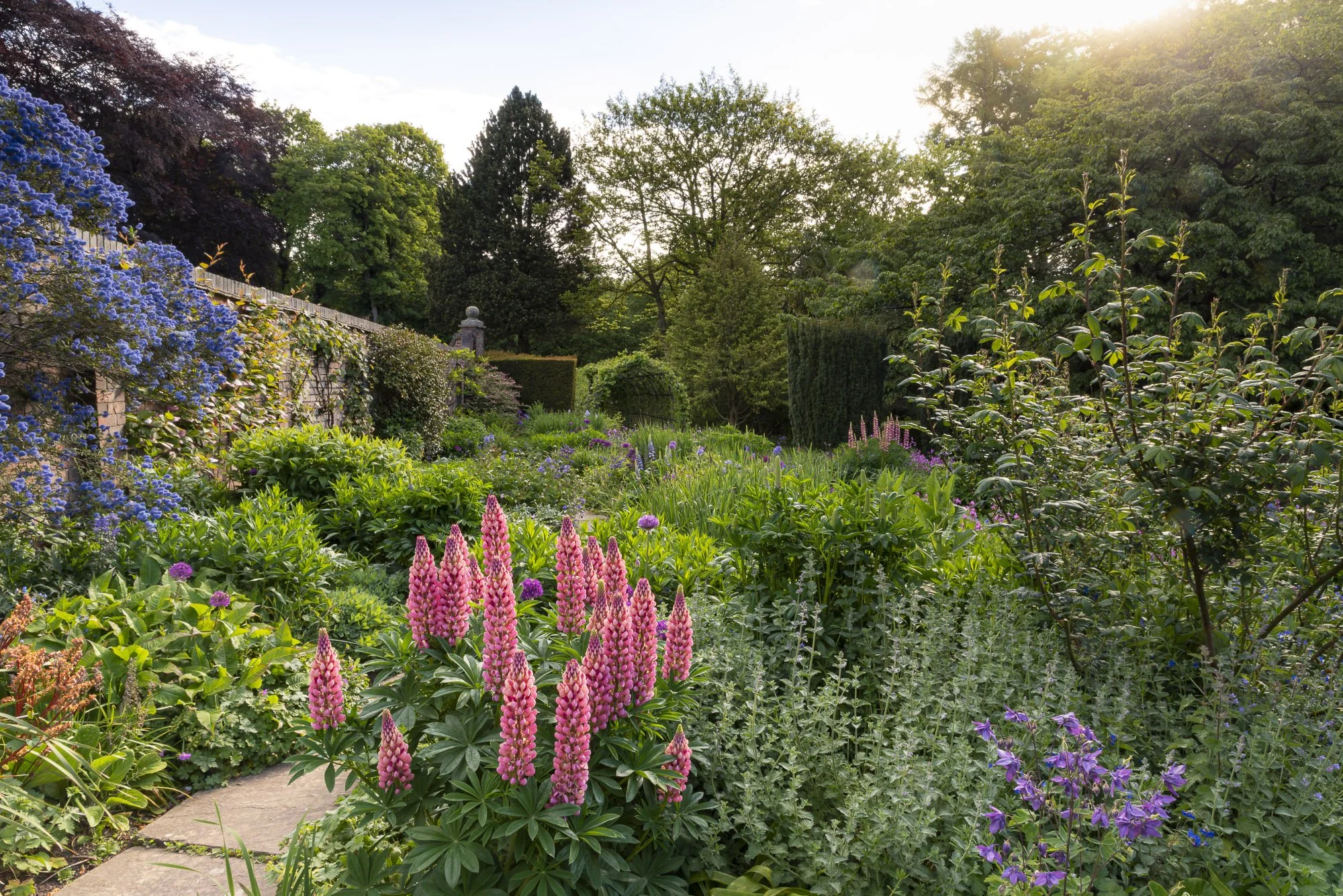
I knew I should head through the walled garden towards the pink and blue borders because the mature trees on the east side of the garden would filter the sun nicely whilst still providing warm side light to capture the saturated colours of the spring flowers. Let me walk you through how I made the following image.
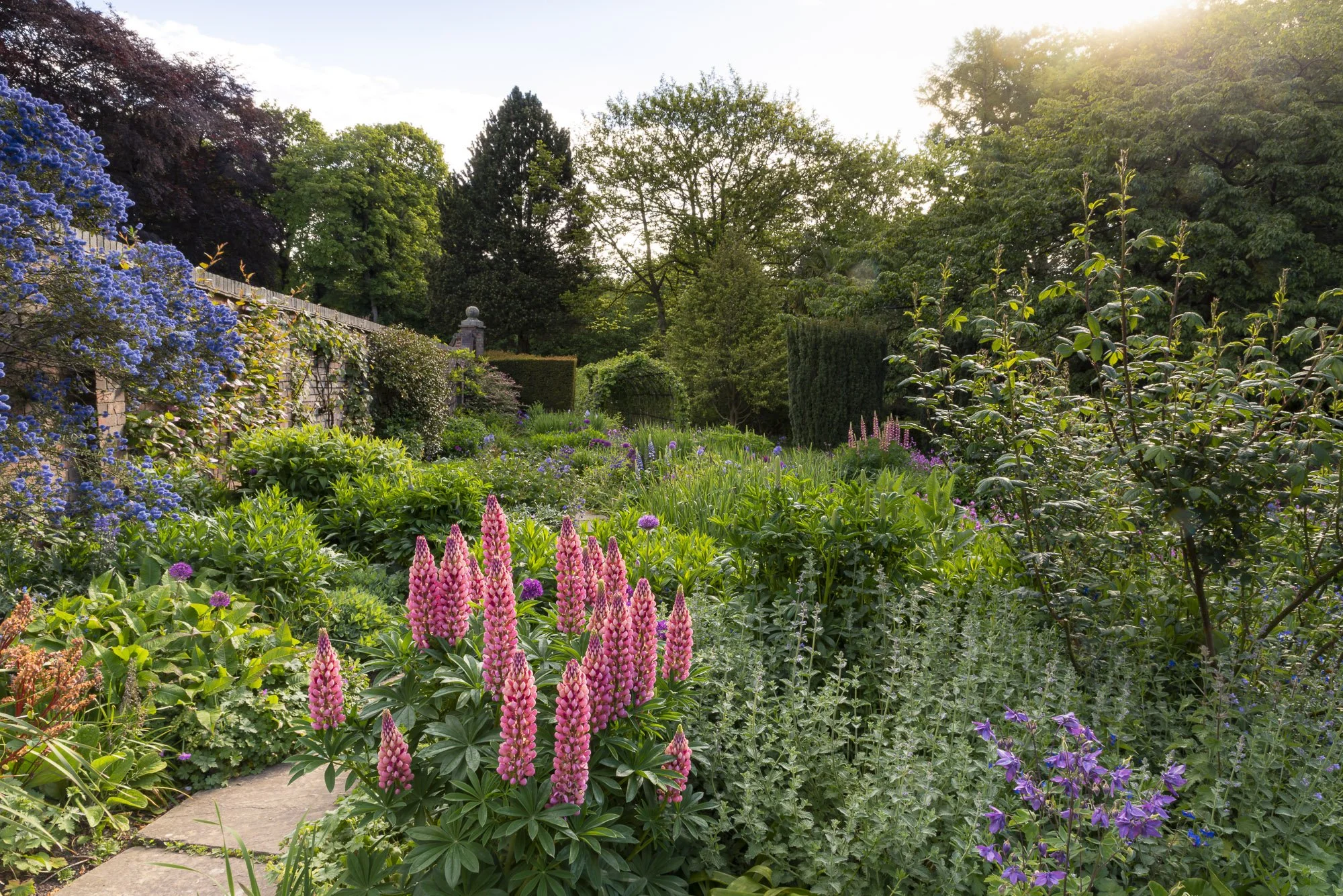
After quickly visualising the composition I wanted to create - the path leading through the border towards the Nut Walk, lupins in foreground and repeated in the background - I channeled my inner Jason Ingram and quickly set up my tripod, to which I attached my Nikon D750 DSLR. I chose my trusty 24-70mm f2.8 lens and twisted on my filter holder. I knew I wanted the image to be sharply in focus from foreground to background, to get the pink lupins and Nut Walk arch clear, so I chose a narrow aperture (high f-stop number). However, a quick check of the resulting exposure histogram revealed that if I exposed correctly for the foliage and flowers in the foreground, the sky would be completely blown out/over-exposed. So Into the holder went my trusty 0.6 Graduated neutral density (ND Grad) filter. I slid the filter down from the top right of frame to bottom left so that the brightness of the sun peaking into frame would be reduced by 2 stops of light, thus balancing the overall exposure. In hindsight, I could’ve used the 0.9 ND Grad to retain even more information in the clouds, but they aren’t the subject of the photo so I’m not overly concerned by them being almost pure white.
When I got home and started post processing this image in Adobe Lightroom I’ve dropped the highlights and raised the shadows to recover some detail in those areas and enhance the foliage. I’ve reintroduce contrast with a very shallow S-shape in the Tone curve. I warmed up the white balance to reflect how I viewed the scene on the day (my camera’s auto white balance made the scene look rather cold).
In terms of colour, I’ve increased the Vibrance slightly however the white balance adjustment mentioned above did a lot of the heavy lifting in terms of making the flowers seem more saturated. Additional contrast was added in the foliage by dropping the luminance in the Colour Mixer panel
Lastly, I added a radial mask over the sun in the top right of the image, dropping clarity, dehaze and the blacks to reduce contrast in this area. I also added some warmth with the white balance. Overall I think these adjustments accentuate the early morning vibe of this scene. I particularly like the warmth of the yellow-ish areas of light hitting the foliage in the middle of the scene. Yellow being on the opposite side of the side of the colour provides a nice contrast to the blues and purples of the Lilac tree, alliums and aquilegia. Let me know what you think by getting in touch.
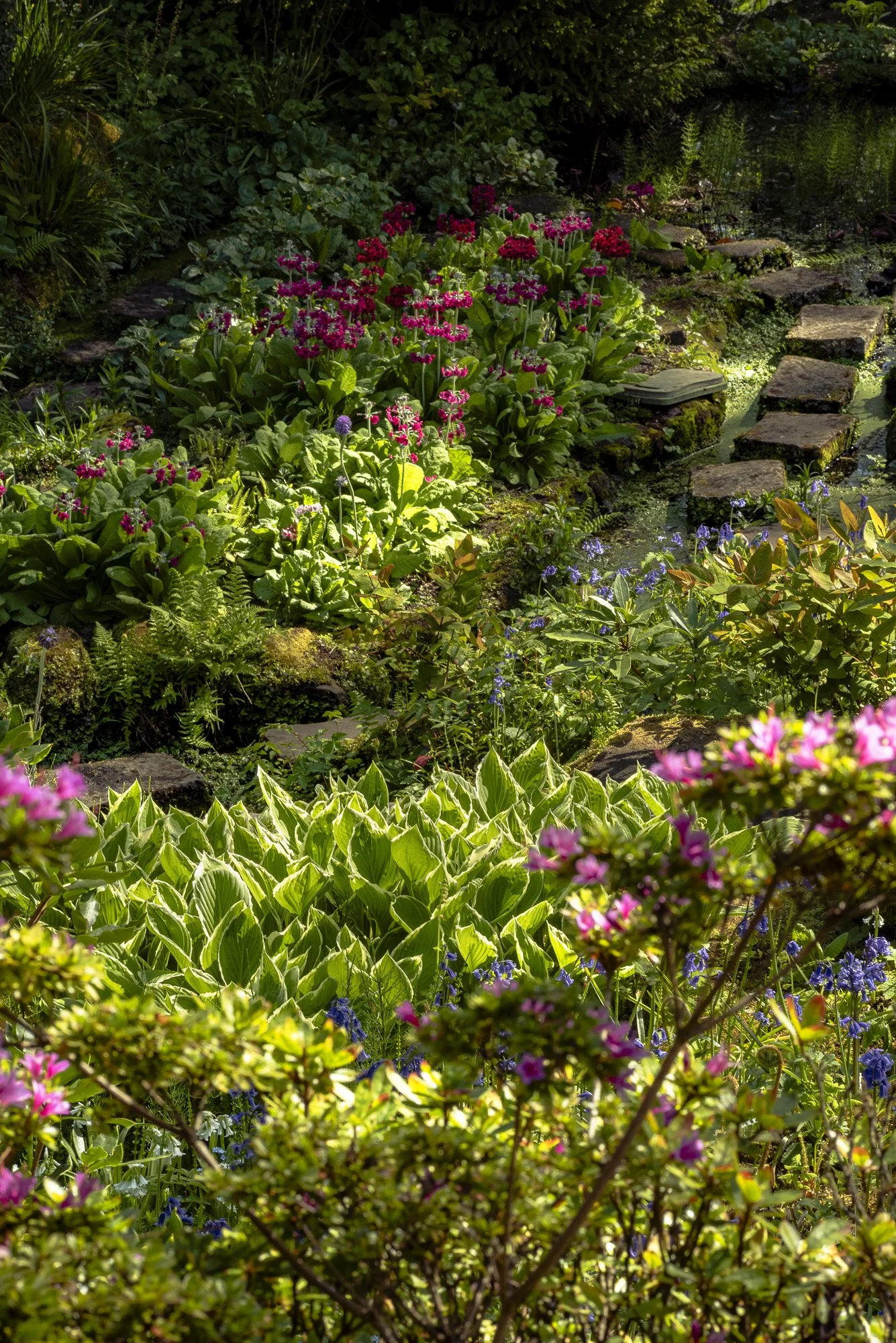
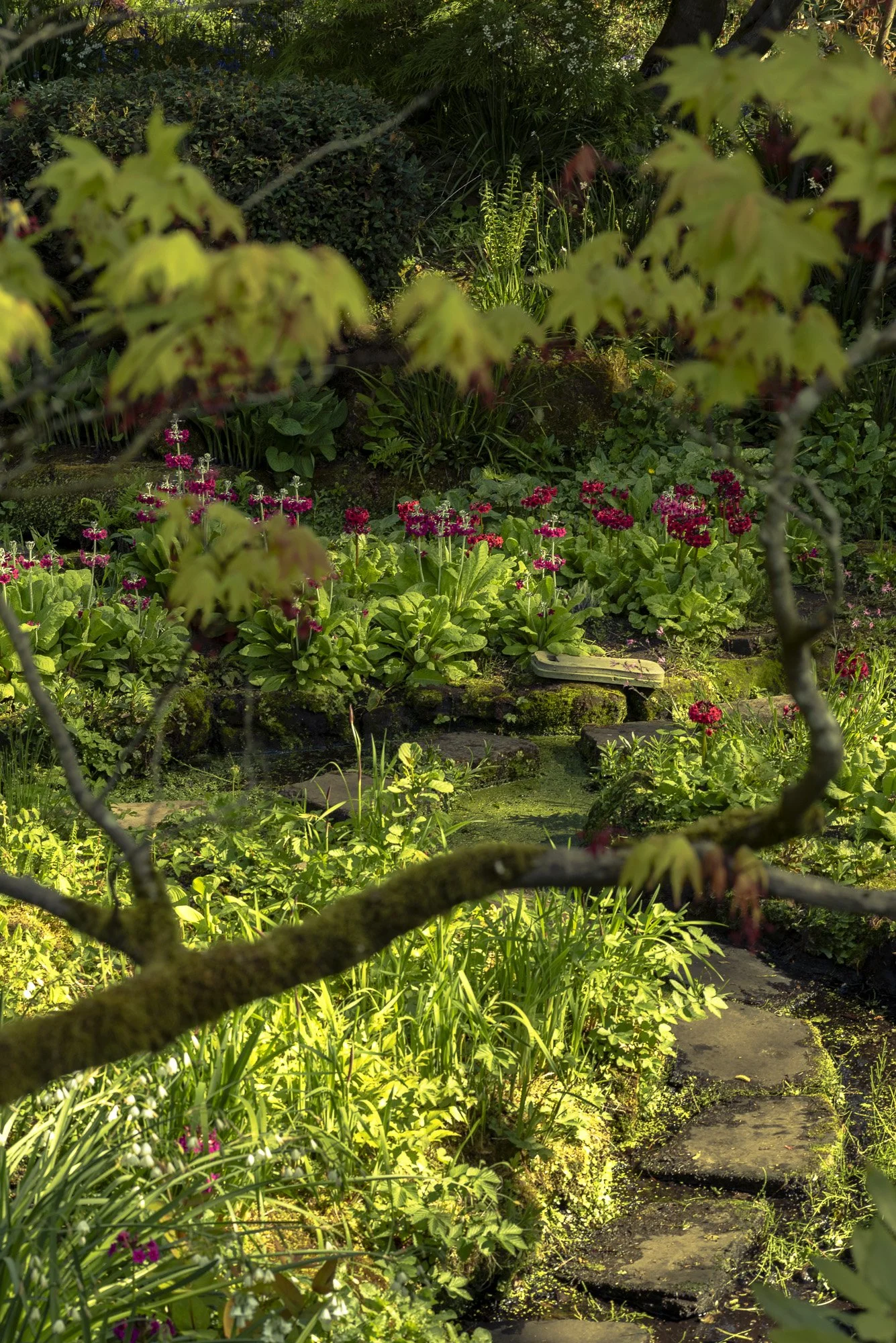
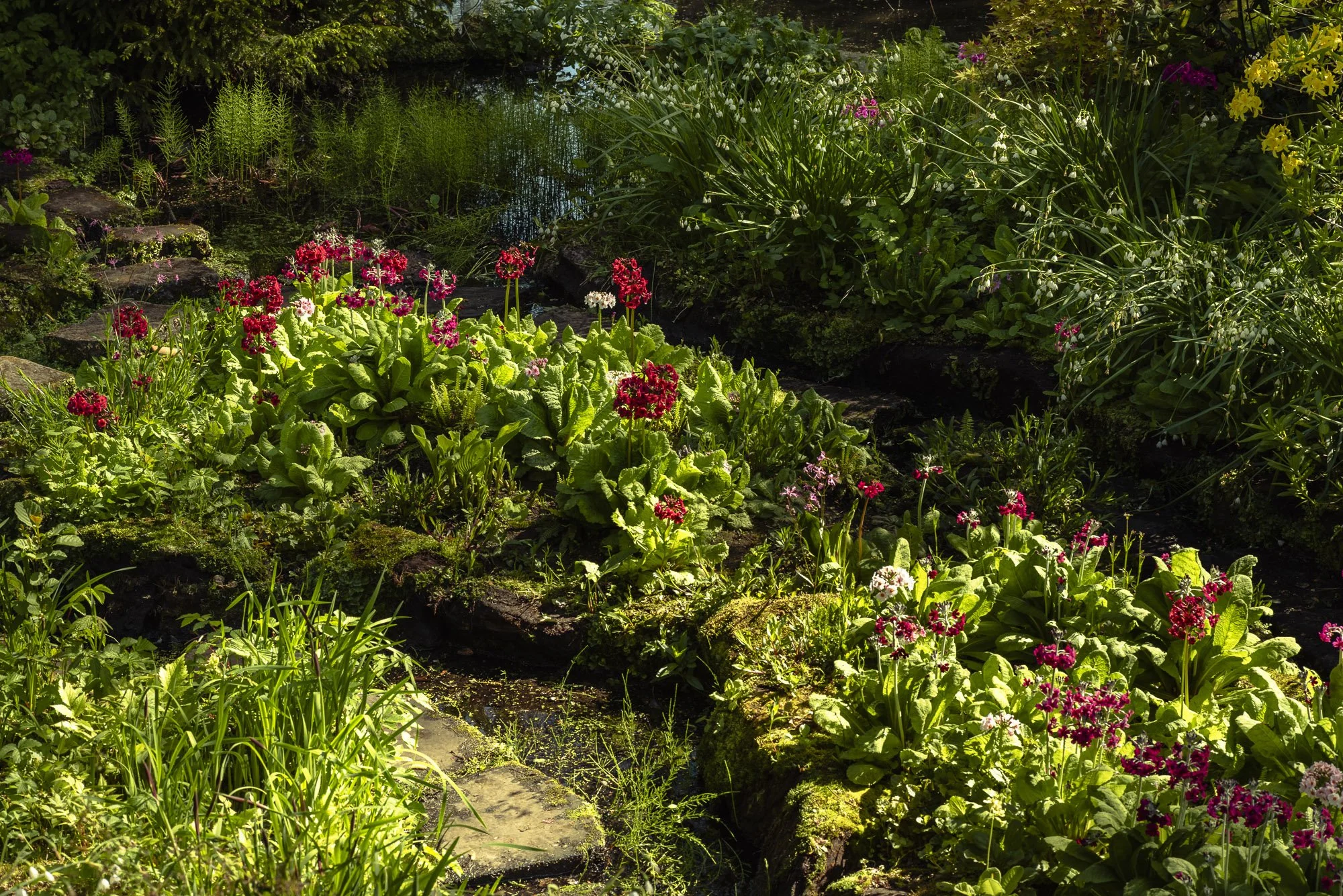
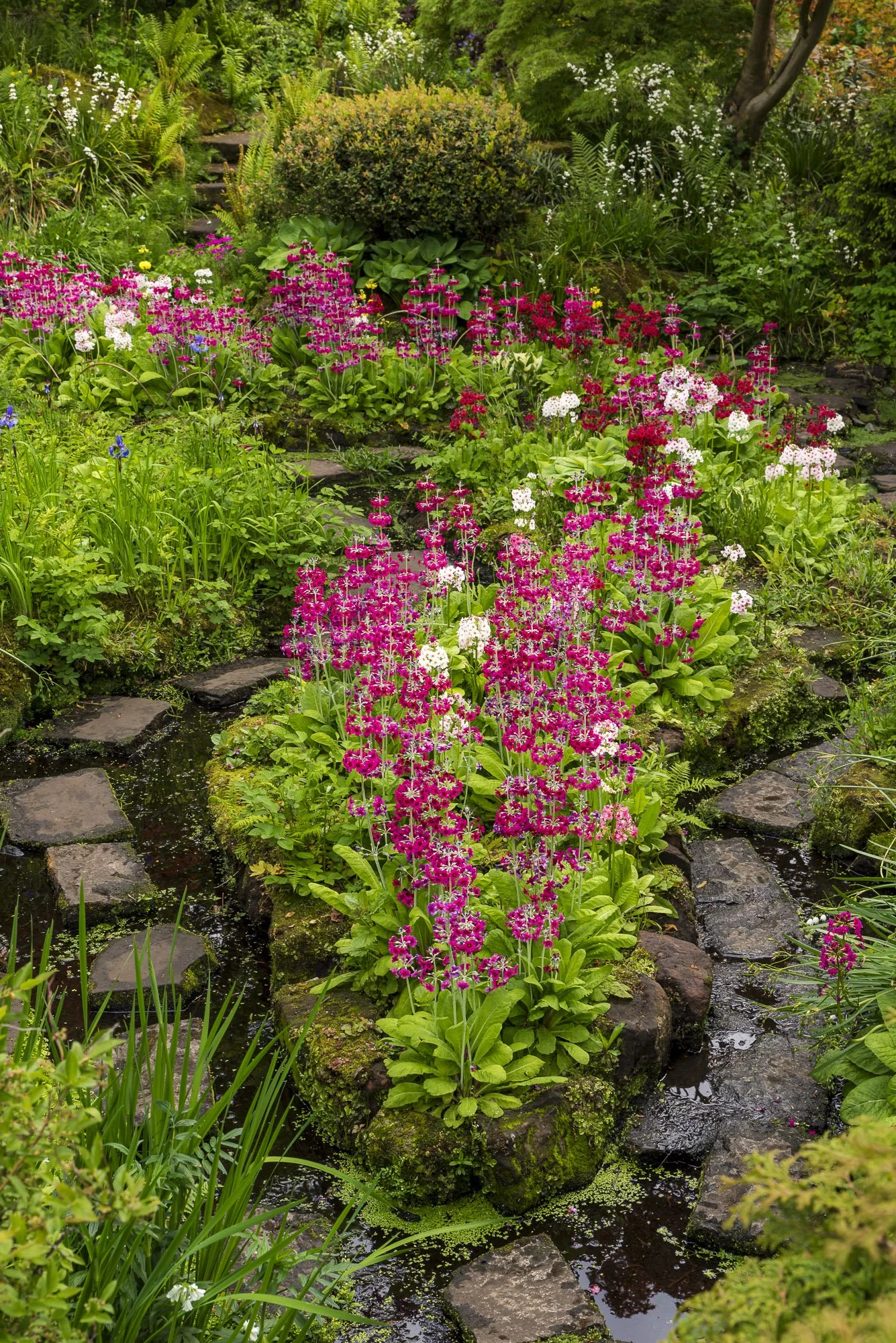
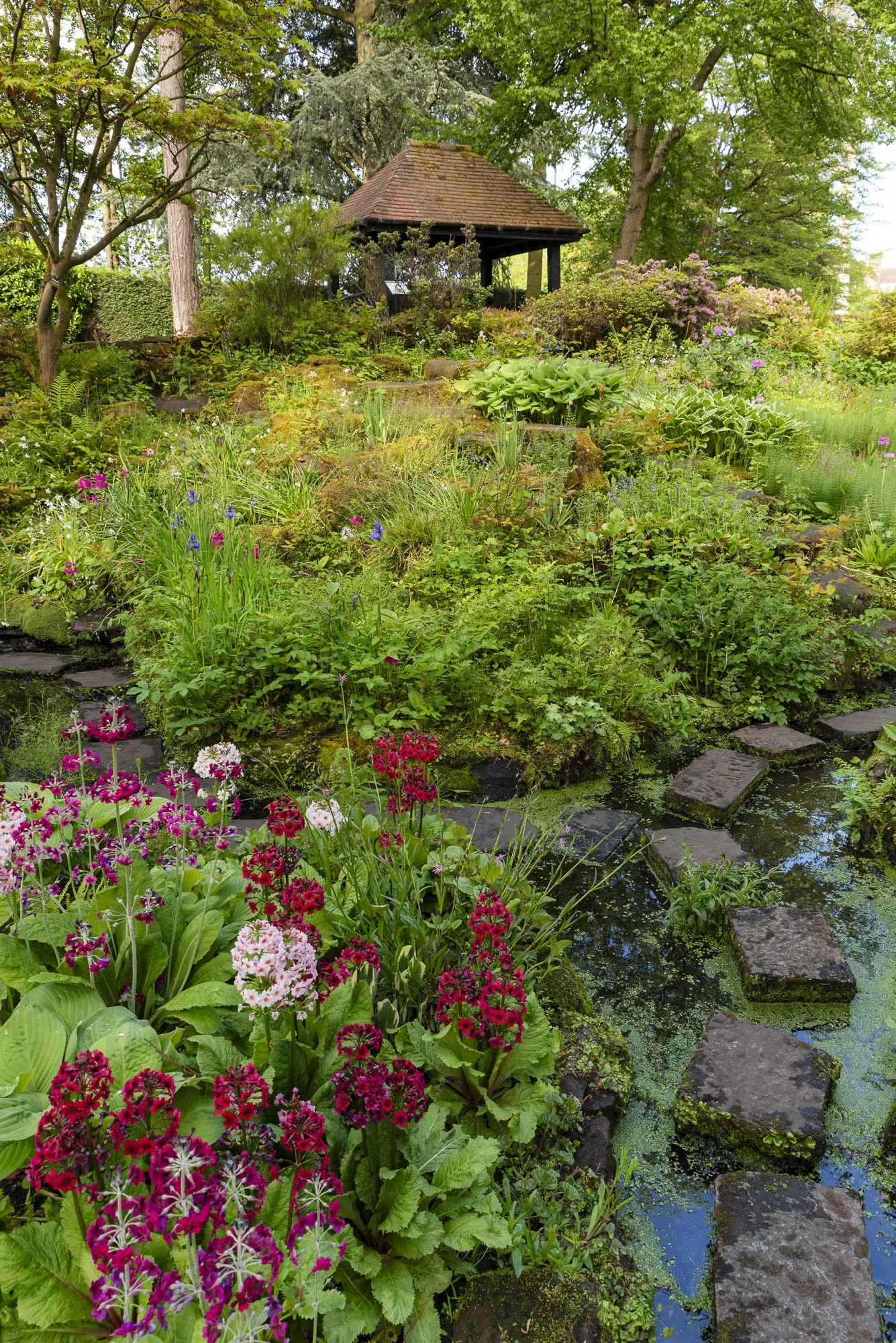
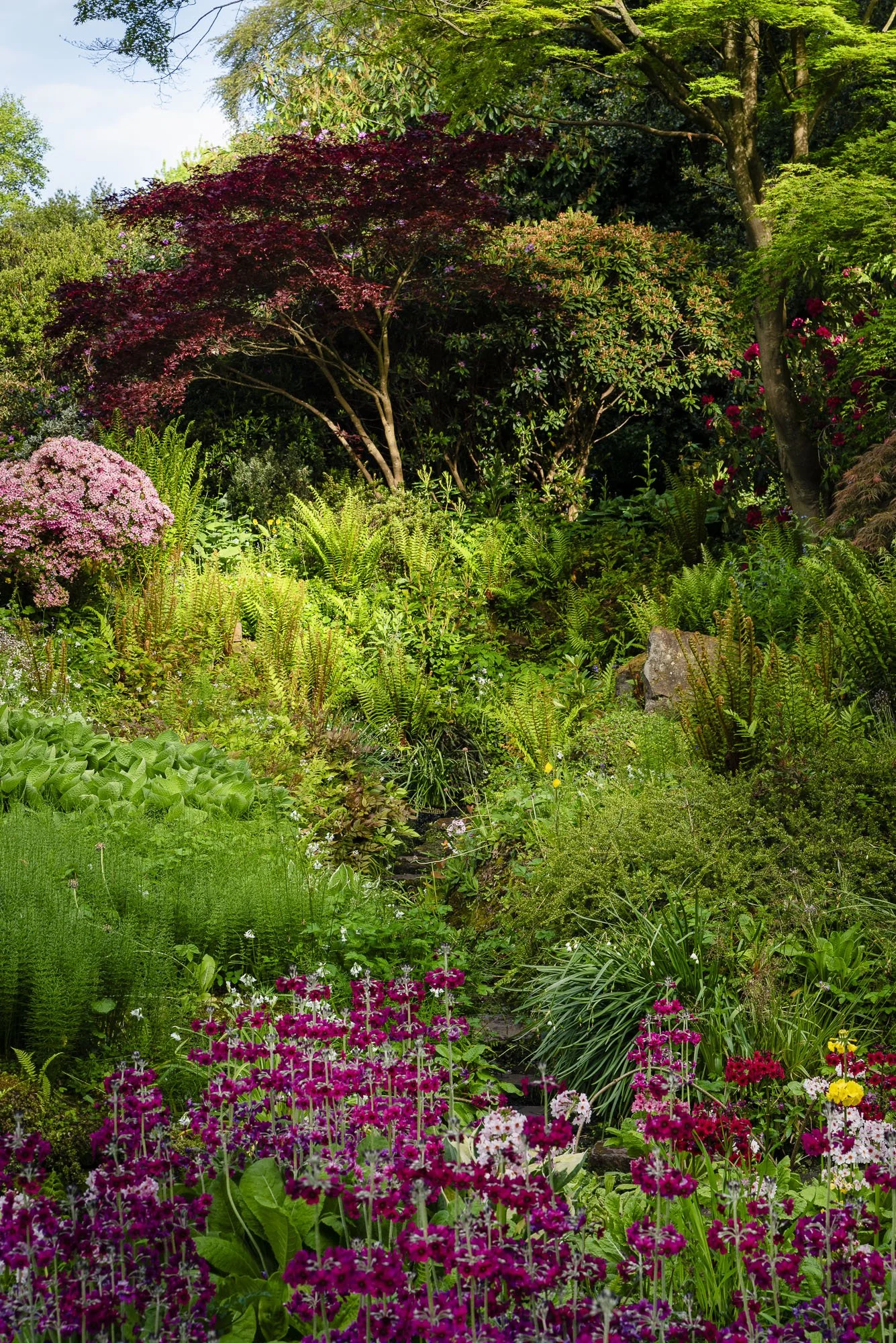
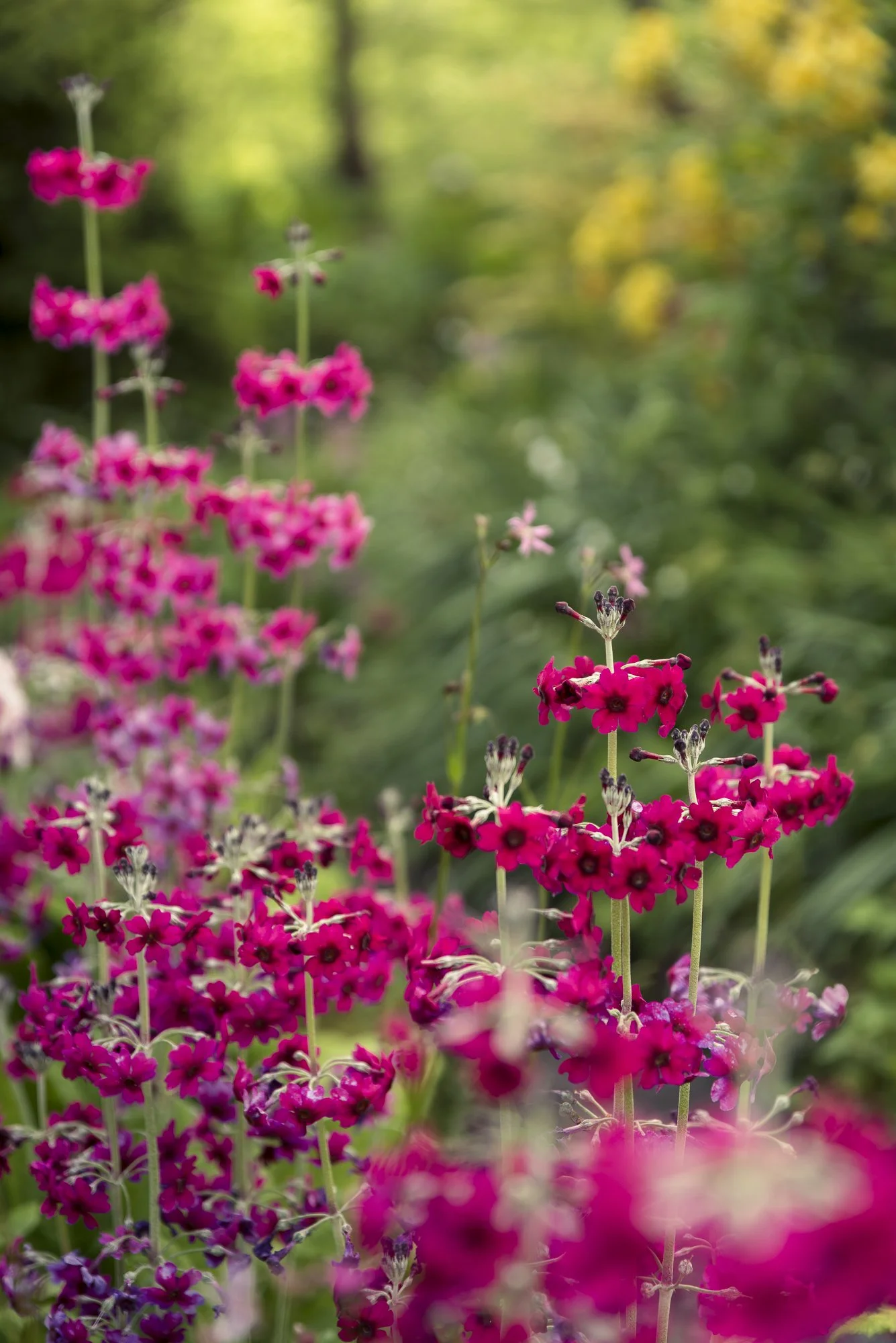
My next venture was over to the sunken rock garden. My favourite thing about this area of the is the contrast of light and shade. Despite harping on about perfect morning light, I’m a dark and moody photographer deep down. The way the light was filtering through the redwood trees this morning creating my ideal mood to capture. As can be seen in these shots, there were some lovely pockets of light hitting the hostas and primulas. Later in the morning, on our tour of the gardens led by horticultural supervisor Fumiko Miyachi, I discovered that this area of the garden is fed by natural springs (and rainwater run-off from the adjacent astro-turf sports pitches). It’s this abundance of water that makes the conditions ideal for the primulas.
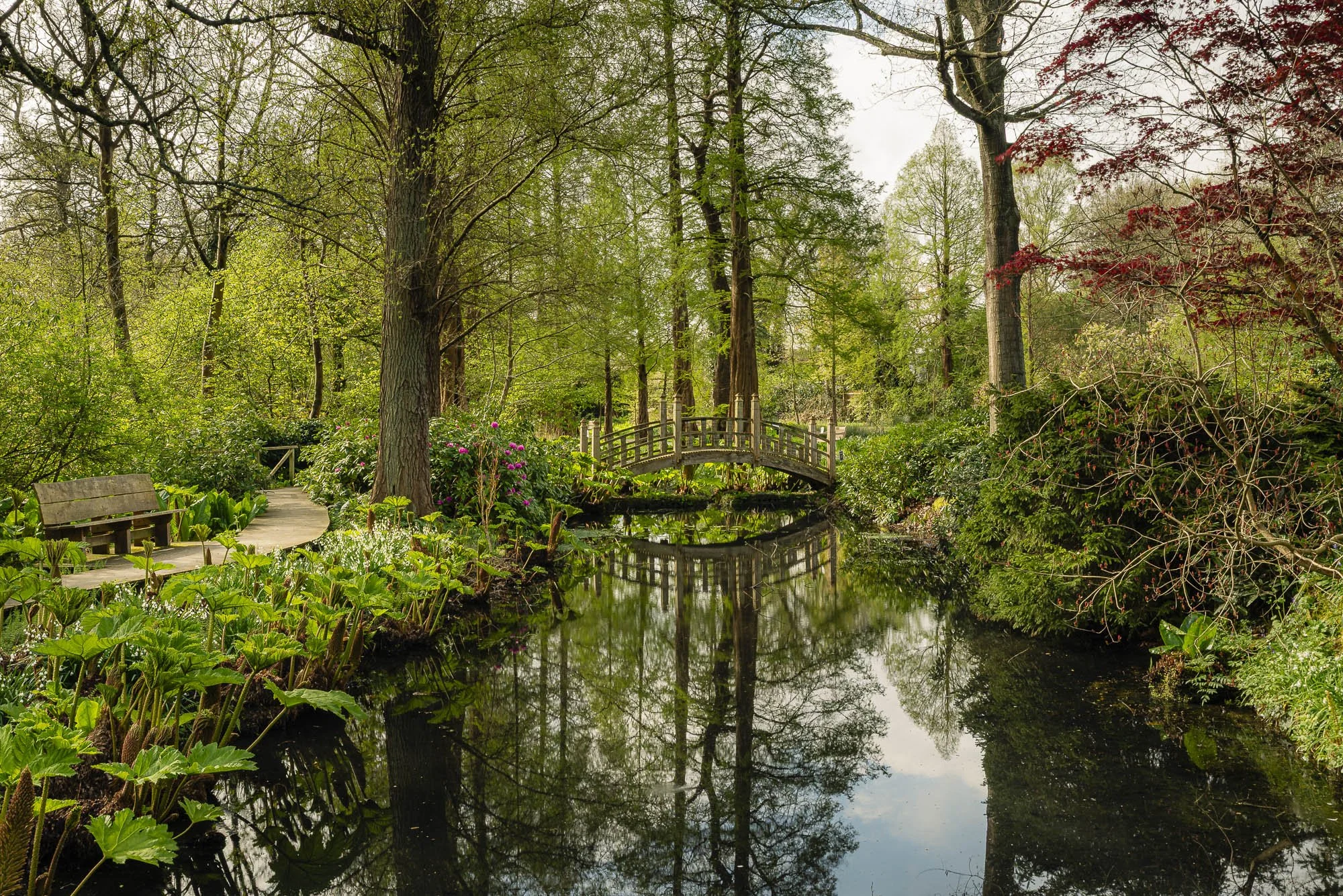
I should also mention that this area of the garden holds a special place in my heart as I would sit on the bench overlooking the Japanese bridge and just breath during my recovery from Burnout in 2024. It really is a very calming place to be and it’s hard to believe you’re only 2 miles from the city centre. It was this experience that inspired me to shoot the following image which coincidentally gained me the April 2026 Image of the Month from the Professional Garden Photographers Association. I was really proud of this, as whilst it’s not a competition, it is recognition from peers in the industry. Or as international award winning Claudia Gaupp whose work I so much admire put it “… an inspiring monthly catch up about what others were recently shooting”.
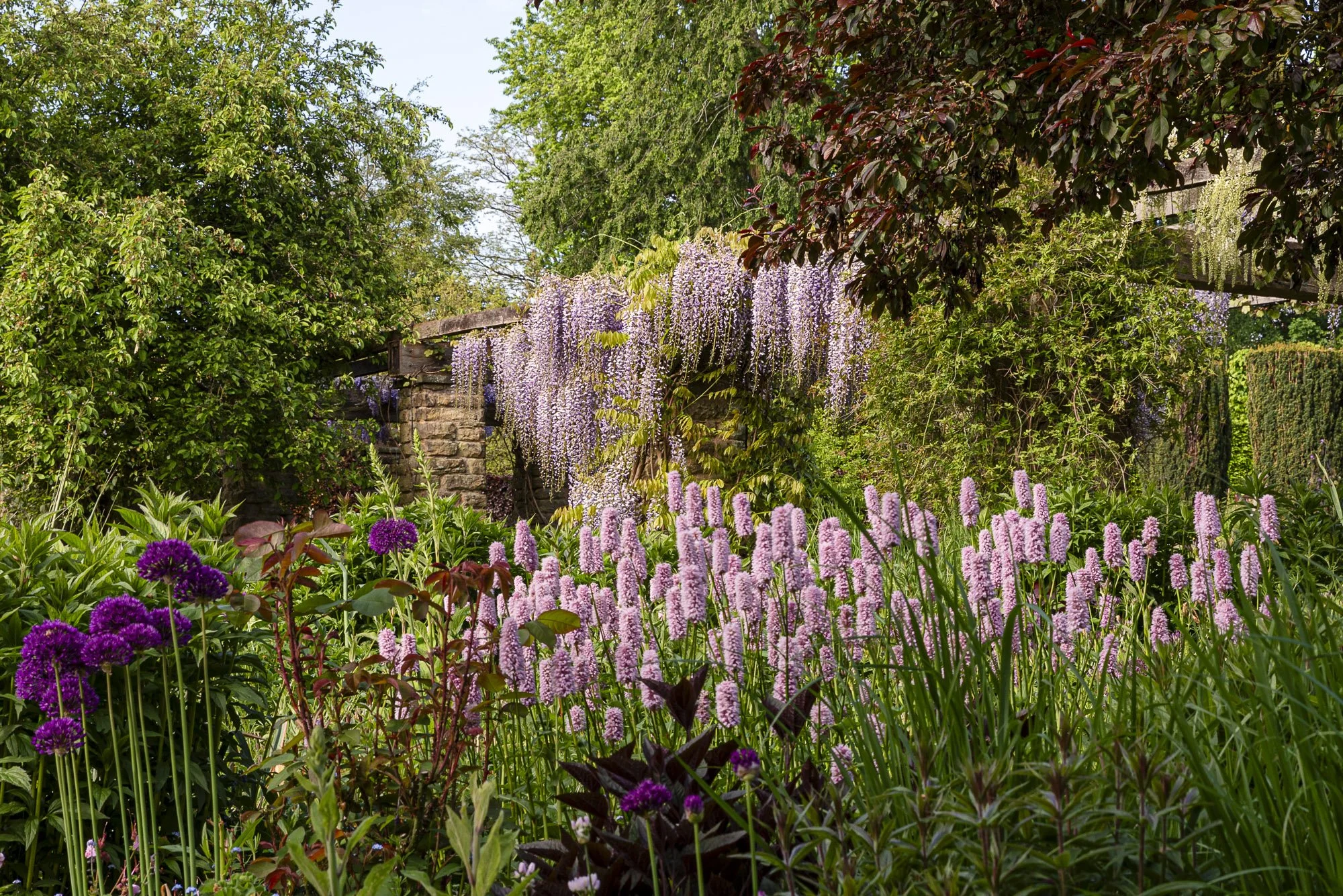
A further shout out has to go to Fumiko whose enthusiasm and knowledge about Winterbourne really shined through during the tour she gave us. We learned the way to tell the difference between Japanese and Chinese Wisteria is the direction the twines curl when viewed from above: Japanese twines clockwise, Chinese curls anticlockwise. The other way is that the Japanese racemes (flower clusters) are considerably longer.
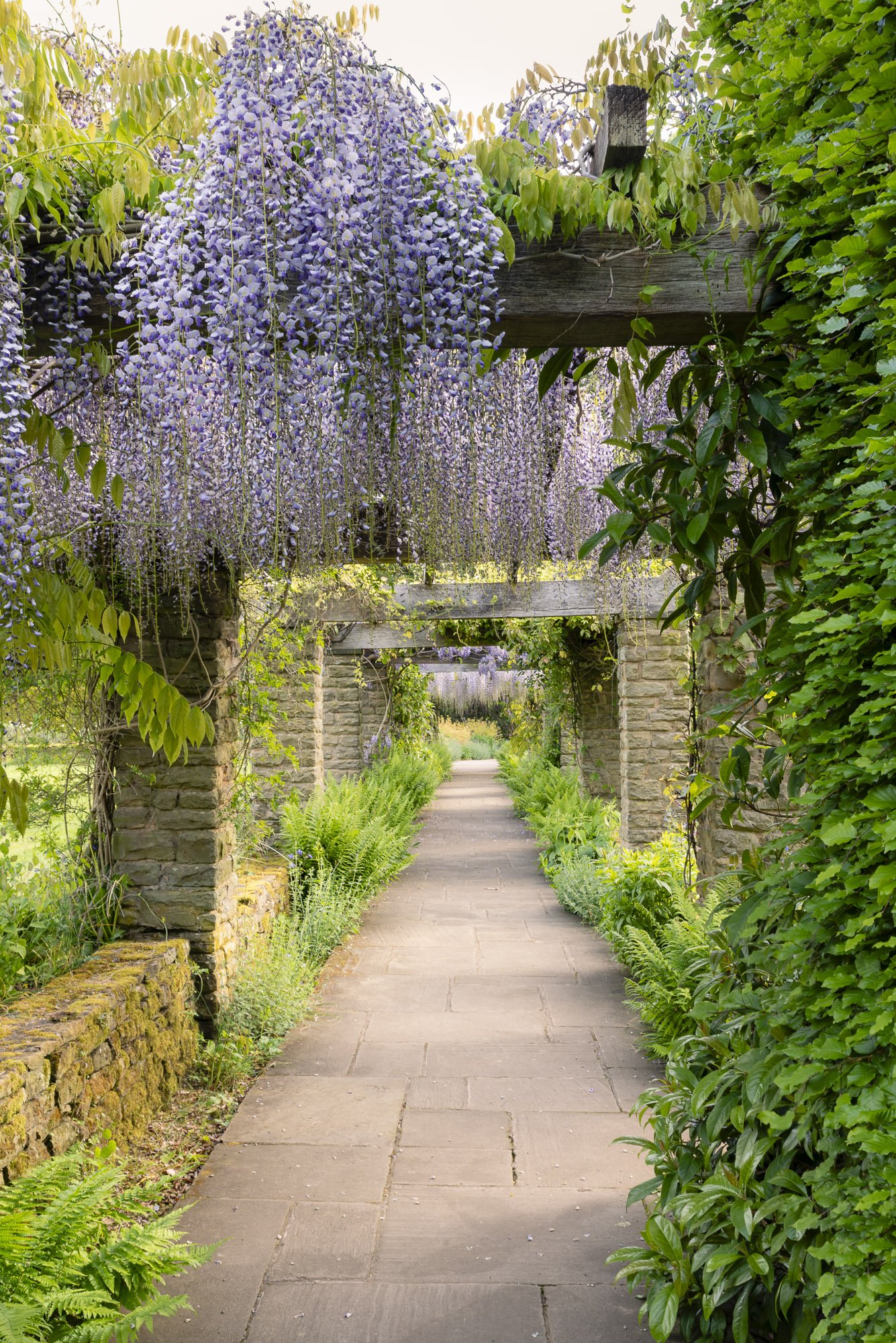
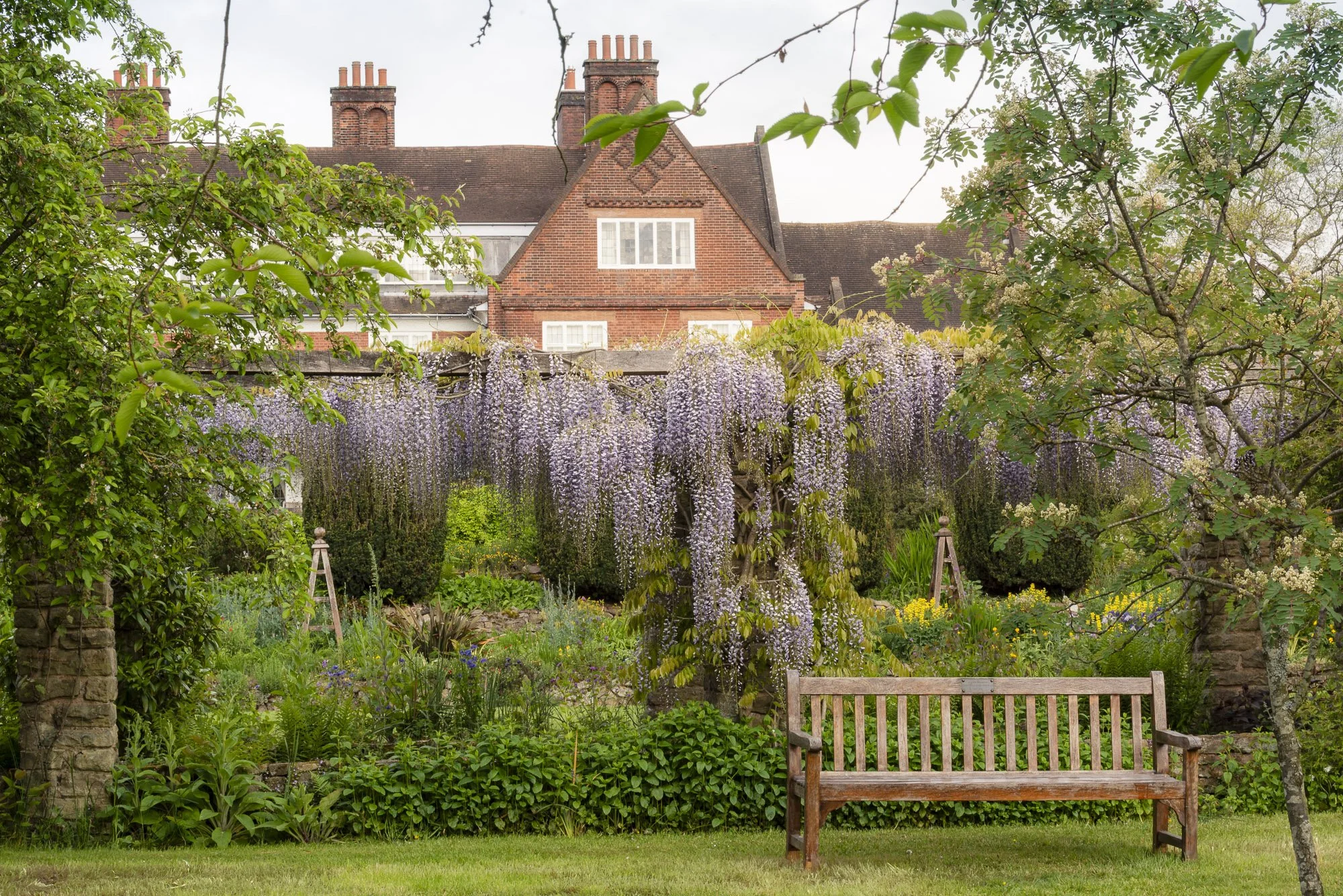
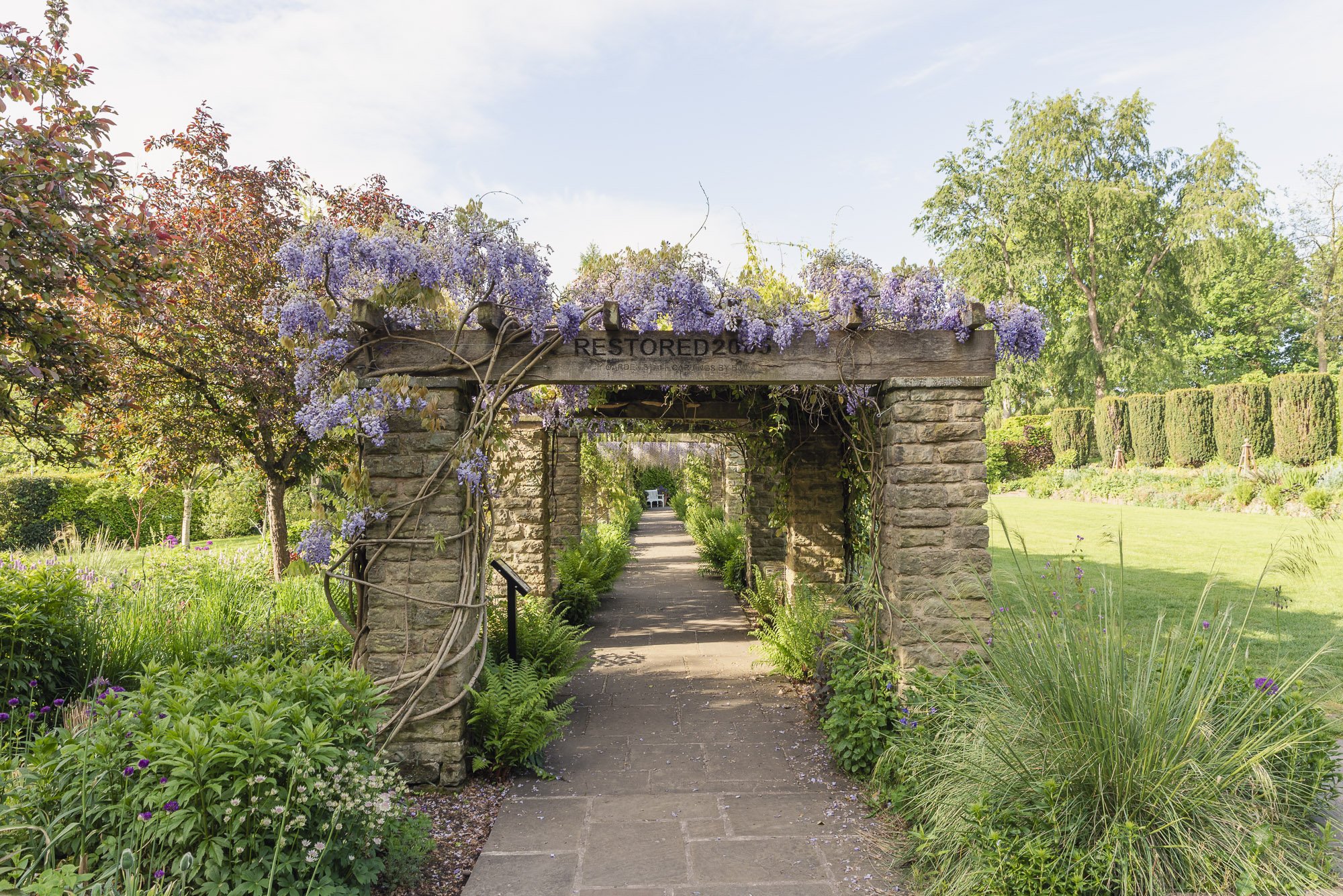
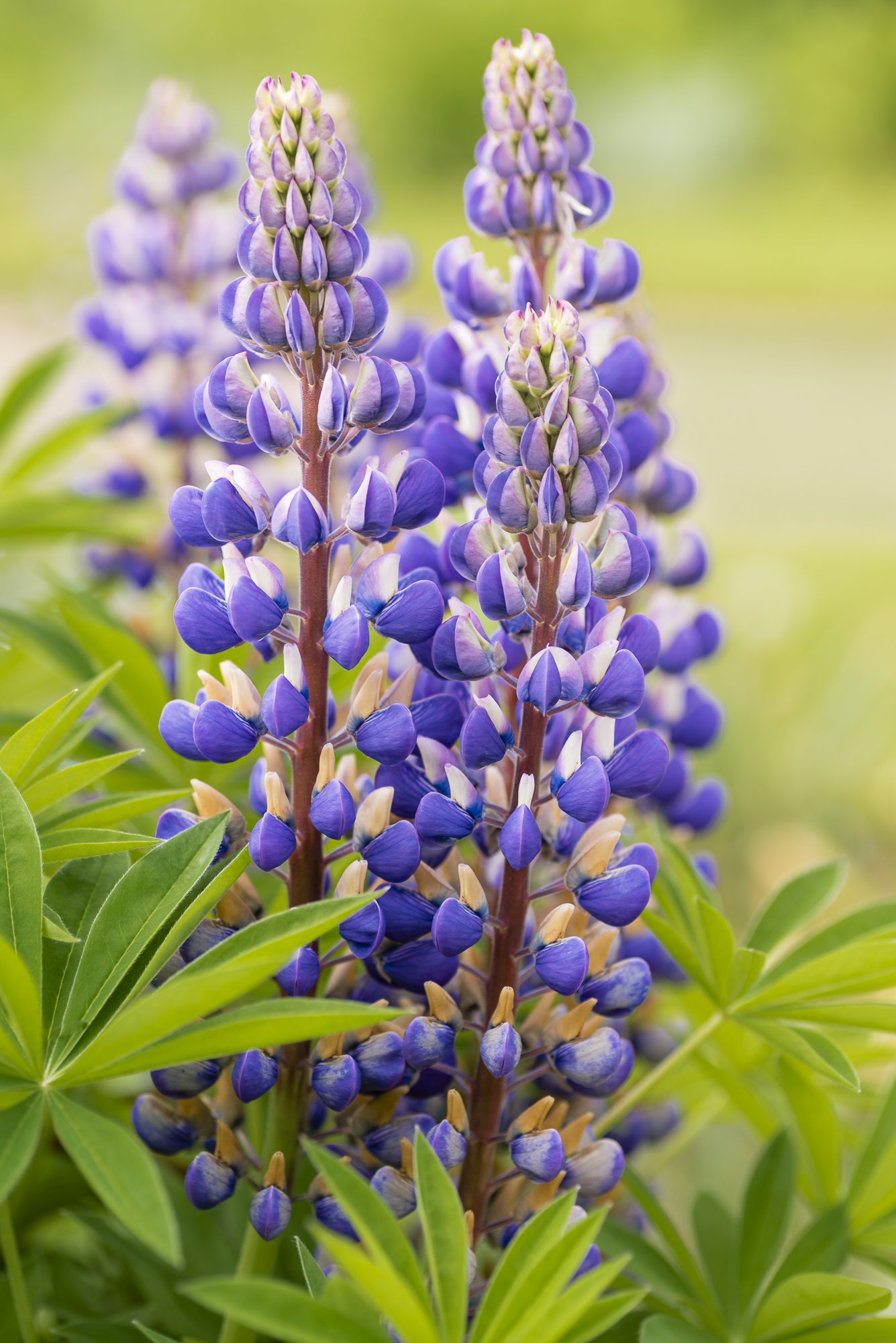
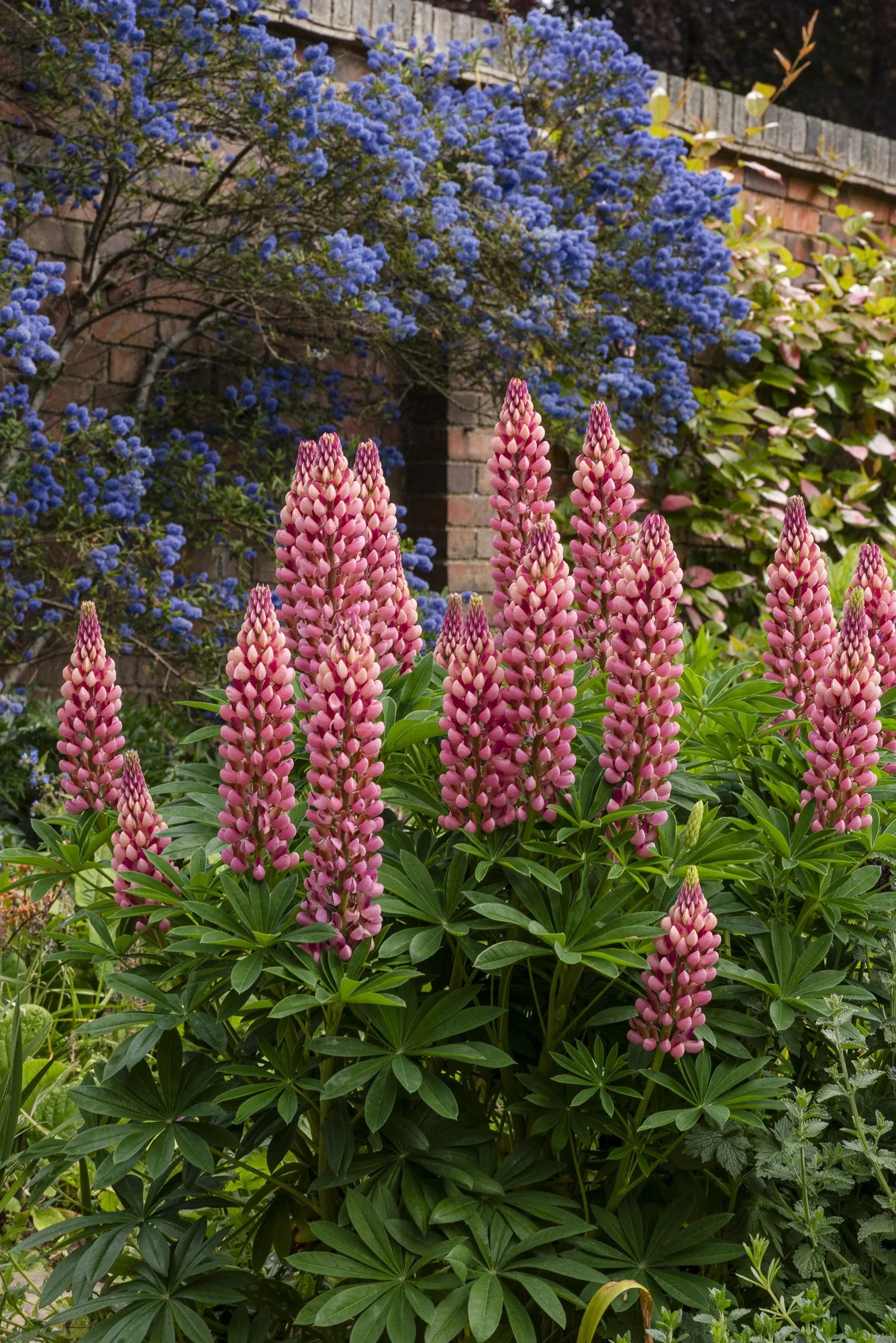
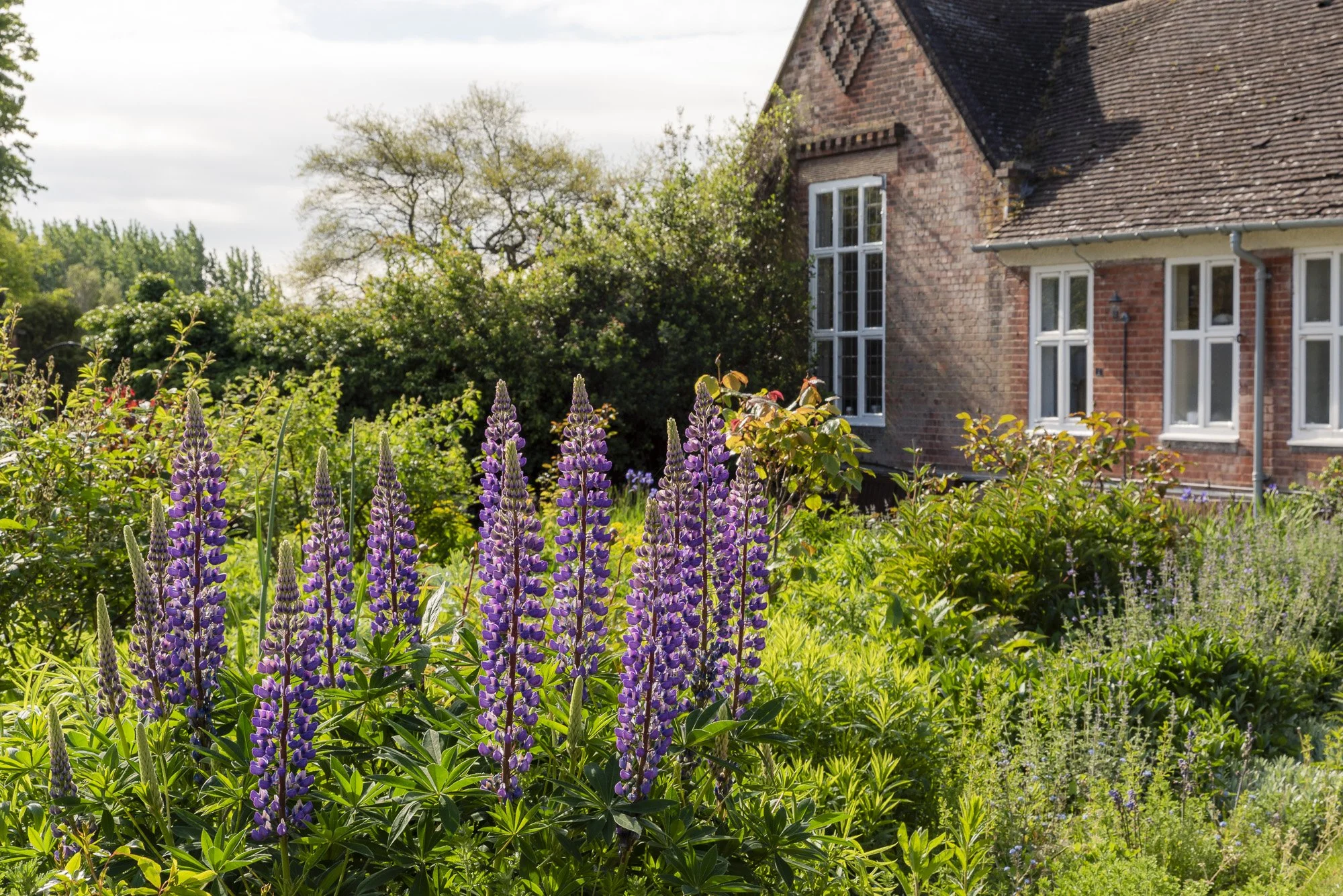
Fumiko was also very good at herding a bunch of us around the gardens, keeping us on time. Fumiko is worth a follow on social media, because her flower arrangements are fantastic. She does a lot of the floral art around the house and her seasonal wreaths on the door opposite the glass houses, together with the snowdrop Kokedamas are a sight to behold. I also really enjoyed hearing that the walled garden, which Fumiko is primarily responsible for, follows no-dig principles as well as being planted to produce food for wildlife, not humans. The following images of the walled garden illustrate some of the benefits of this. I created these images much later in the morning than the shot I directed above, however the repetition of the Lupins was intentional, so as to be able to create a cohesive set of photographs. This is important for offering clients a range of choices of composition for diverse uses, be that editorial or commercial.
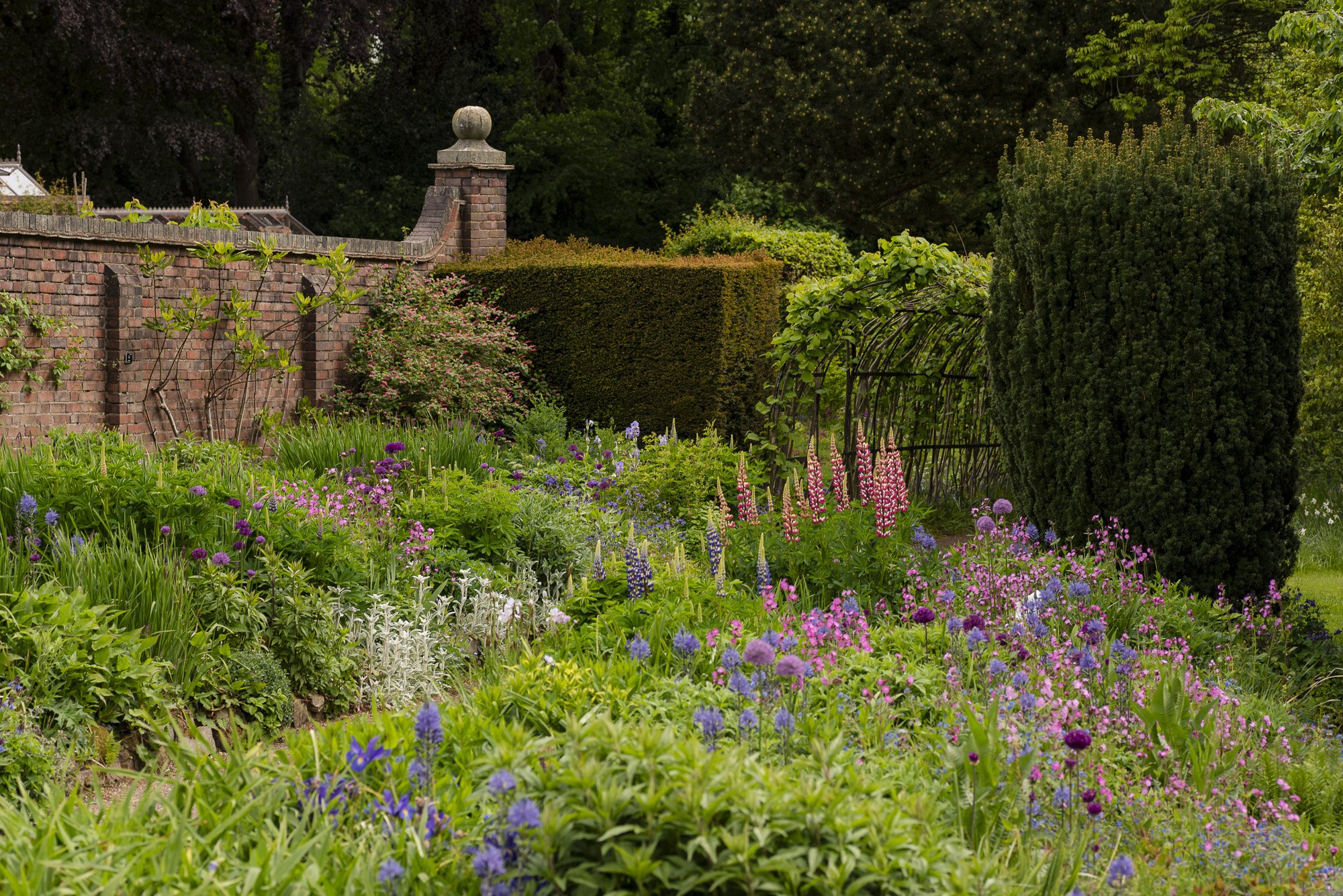
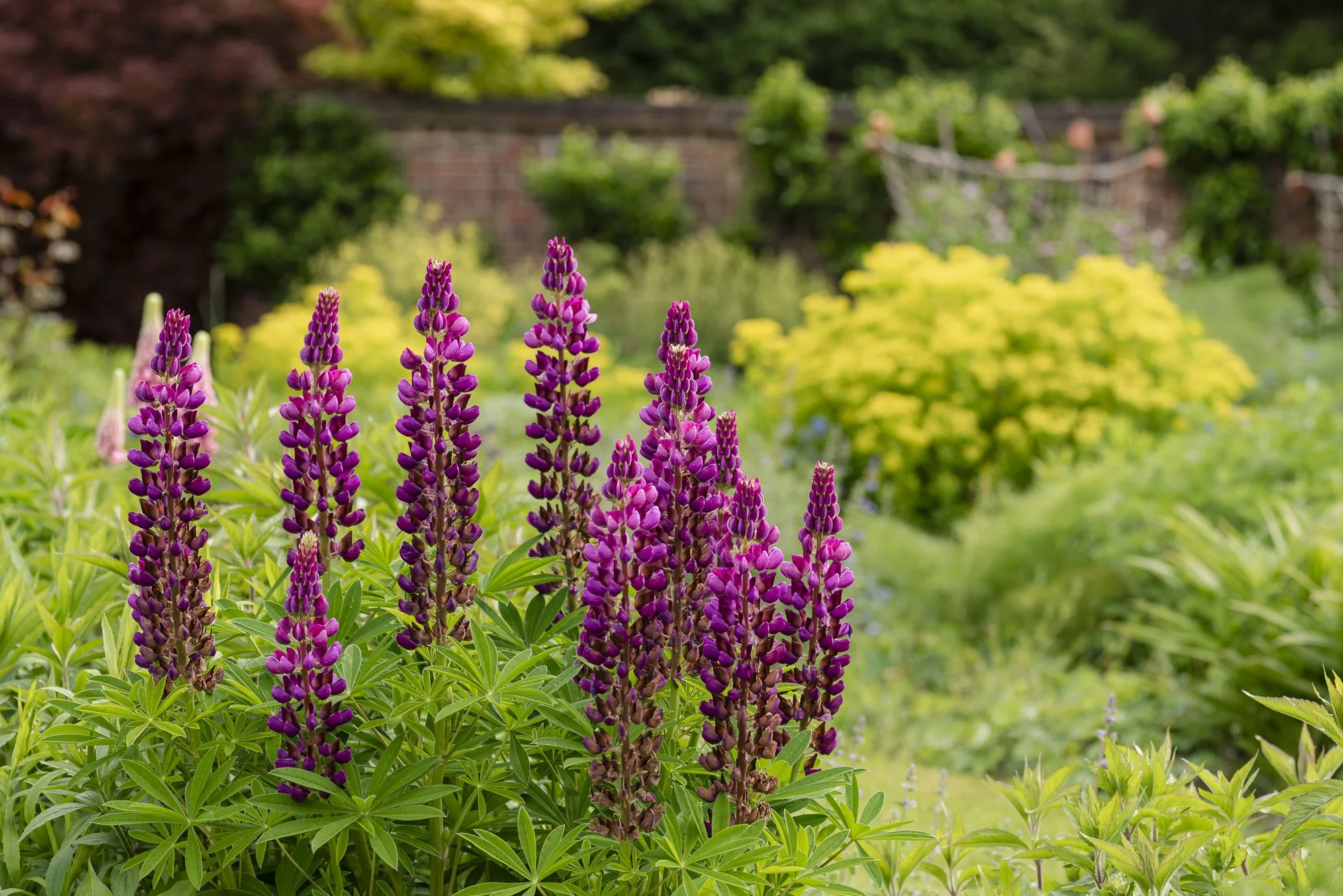
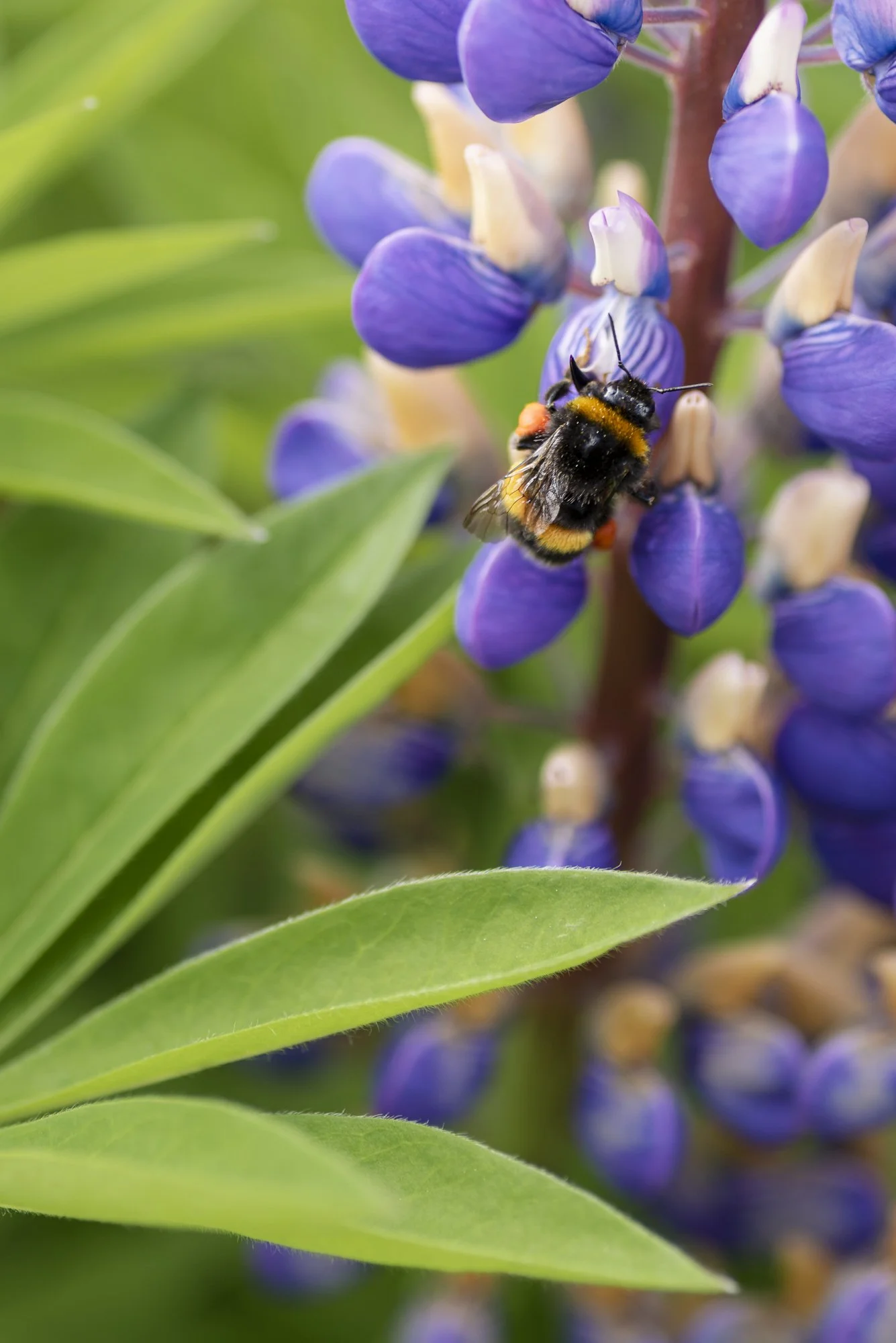
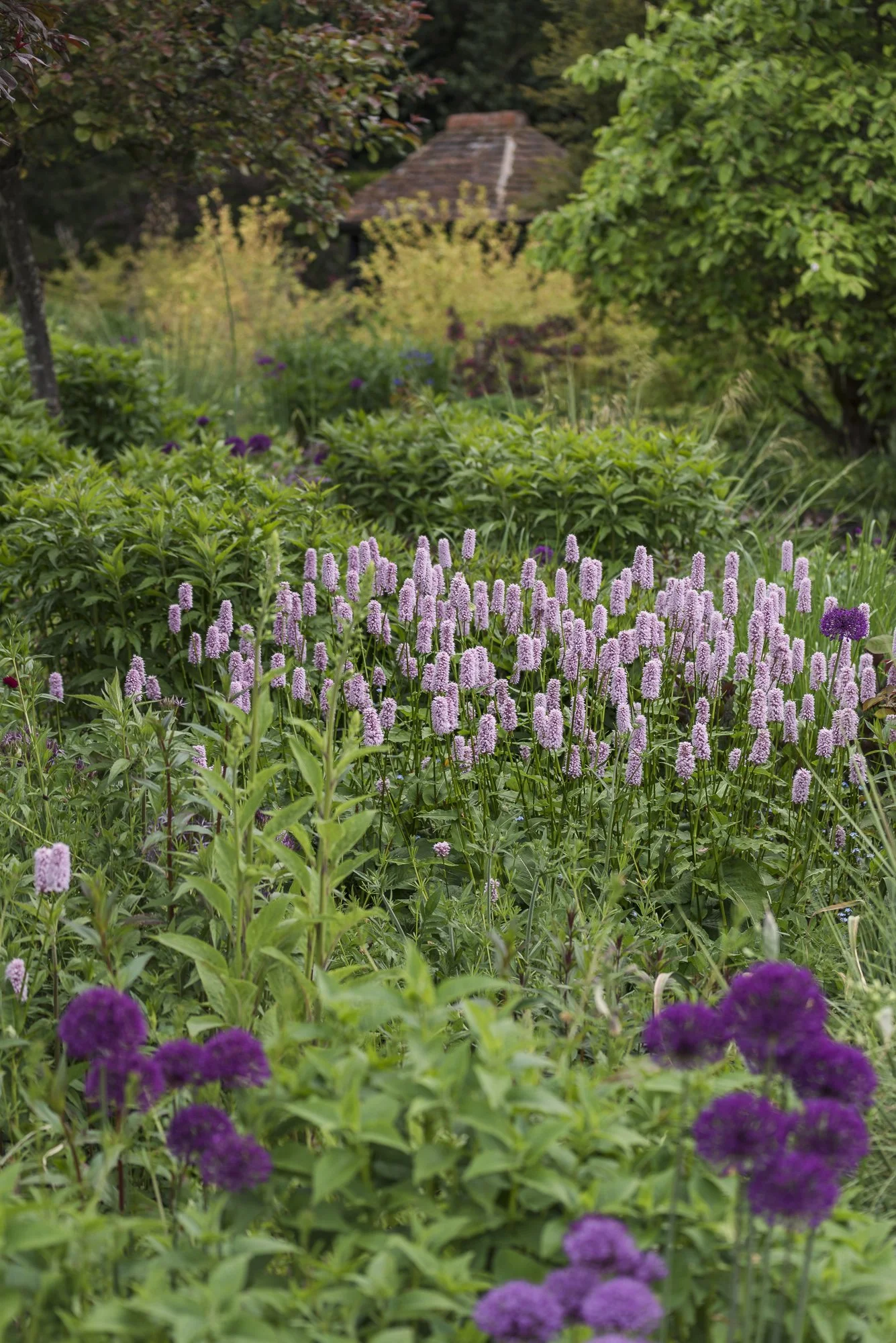
Lastly, it would be remiss of me not to mention the wonderful opportunity to meet like minded creatives on this visit. It was particularly nice to meet Alex Valk, trained horticulturalist, writer, award winning garden designer, garden consultant and all round good egg. We discovered a mutual enjoyment of the Birmingham food scene and pride at being adopted Brummies, we were very keen to share our love of Winterbourne with the collected group of GMG members. It was also a joy to meet Fiona Walsh, an amazing photographer from the south west. We geeked out about camera gear and she was very kind to share with me some of her experiences of the industry. It was interesting the array of career changers amongst us and Alex, Fiona and I shared our respective stories of what prompted our changes. I’m so grateful I joined the GMG/PGPA for just these types of experiences where you get to meet other people in the industry, as well as get a behind the scenes look at some incredible gardens.
Keep an eye out for my next blog, where I’ll write more about our visit to the Birmingham Botanic Gardens, including the major capital project they are fundraising for in order to renovate the historical glass houses and create a truly amazing visitor experience in the heart of the City.
Pop your details below and I can notify you when future blog posts go live.
My first garden show as a professional garden photographer - RHS Malvern Spring Show 2026
Check out my personal highlights from the 2026 RHS Malvern Spring show.
“Press overflow parking is through the gate and into the field behind you”, said the friendly steward that directed me in other the RHS Malvern spring 2026 show . I’d arrived a little later than intended (though still before 8am) due to the rush hour traffic around Malvern. But luckily the journey from Birmingham hadn’t been too bad. Whilst we were a little beyond sunrise, the weather was a little overcast so the light was beautiful and soft, making great conditions for capturing natural colours and details in the planting.
I had a couple of goals for the day, it being my first time attending with a press access: one was to meet some of the designers of the Blooming Borders category, showcasing up and coming designers; the second was to capture the Floral Tablescaping exhibit of Ashley Edwards. Ashley runs Ashtree Floral Designs in Balsall Heath, Birmingham and we’d worked together in December 2025 at one of her wreath making workshops.
Shortly after arriving, having hastily remembered to return to my car to put on my boots, I made my way on site to scope out the show gardens.
It’s a privilege to be on the show grounds before the public, there’s a sense of peace and calm around the exhibits, albeit there are staff and exhibitors scurrying around making last minute adjustments and generally zhuzh-ing things up ahead of opening time.
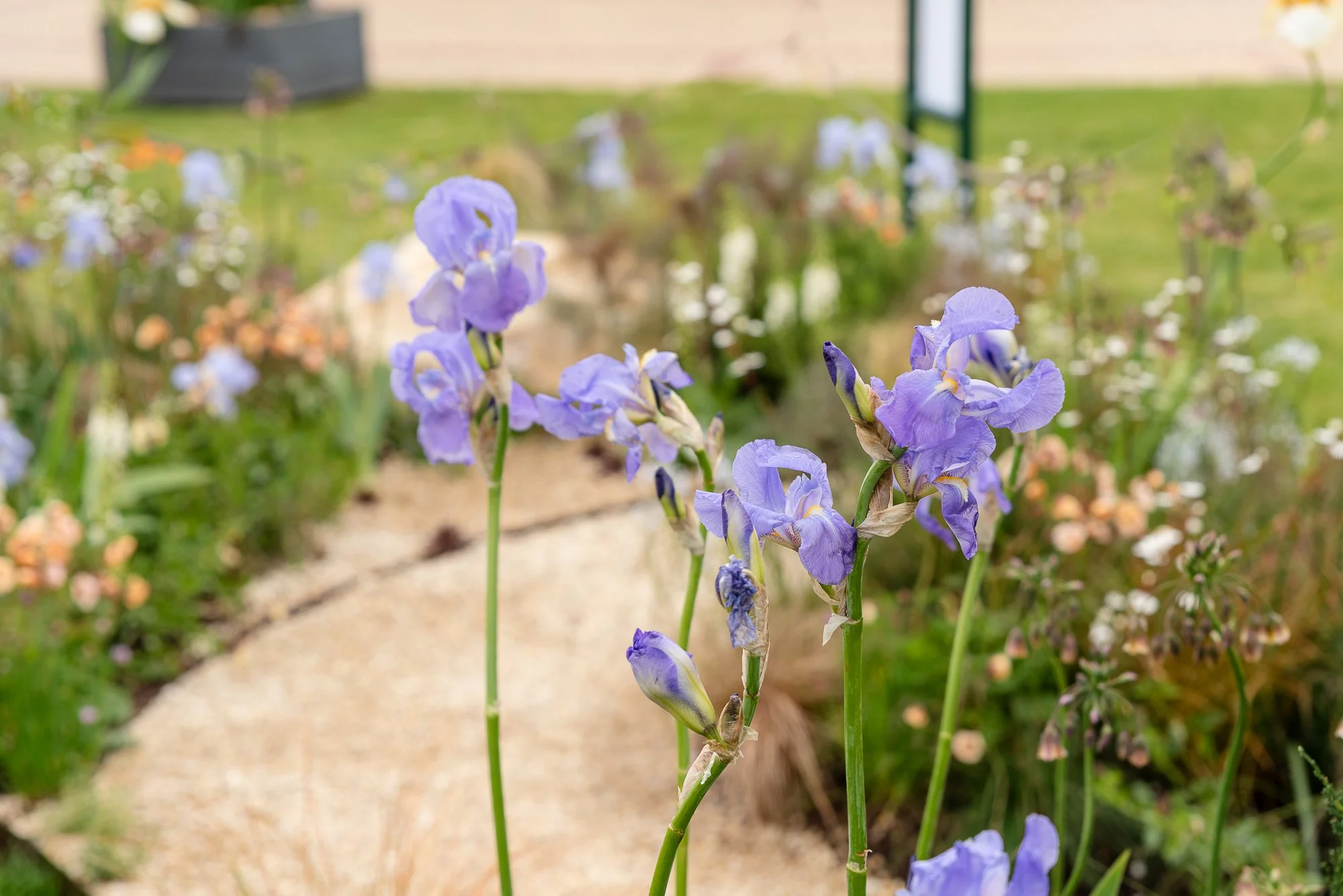
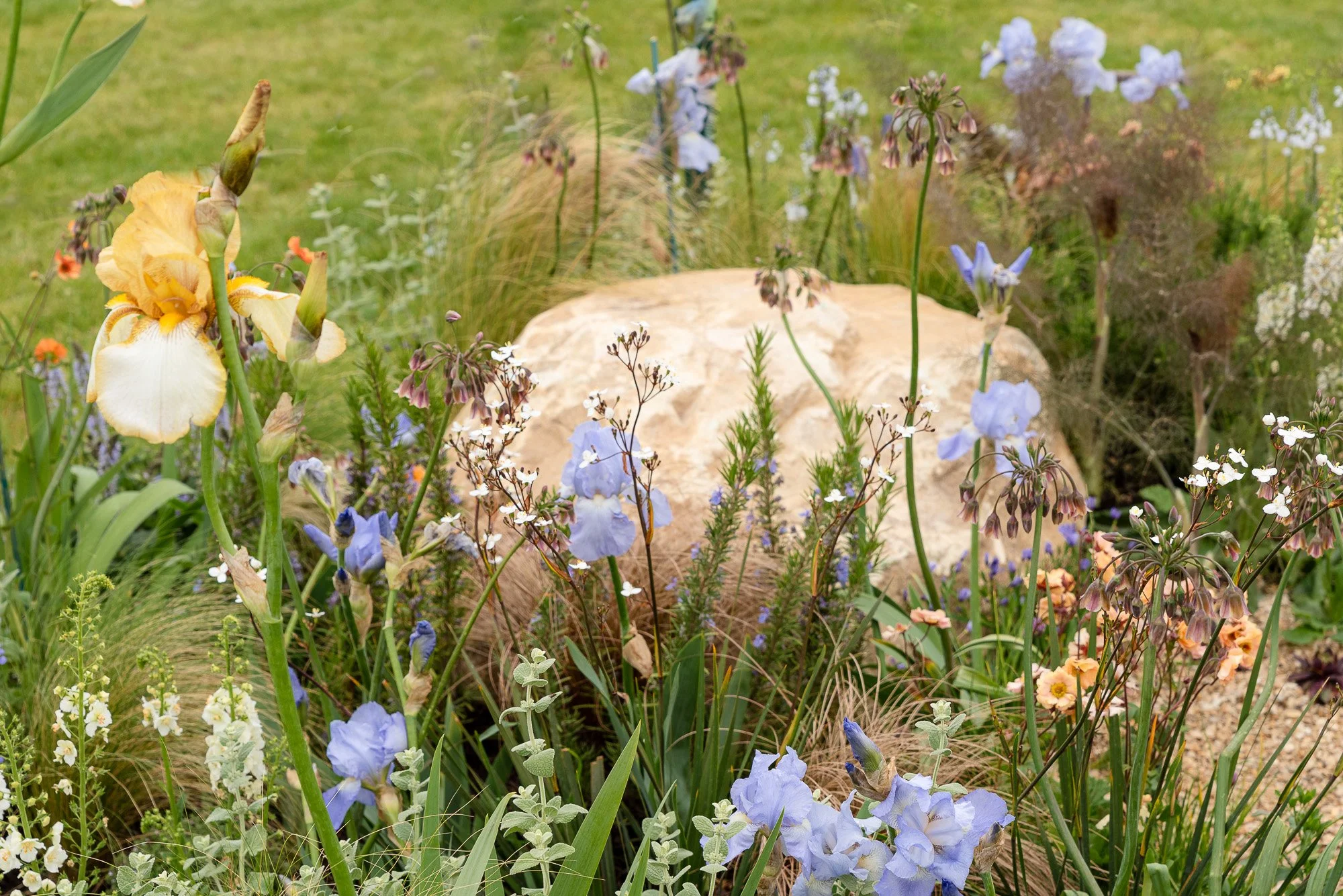
I was firstly taken by Megann Dodd’s poignant border ‘Finding Balance’. As a garden photographer, colour contrast usually captures my attention, so I particularly liked the contrasting blue’s and soft orange-peachy tones in the planting which, represented the disorientation and loss of balance caused by Acoustic Neuroma (a condition Megann’s mum suffered). The structure created by the Juniper mixed well with the softer, yet resilient planting of Iris and geums.
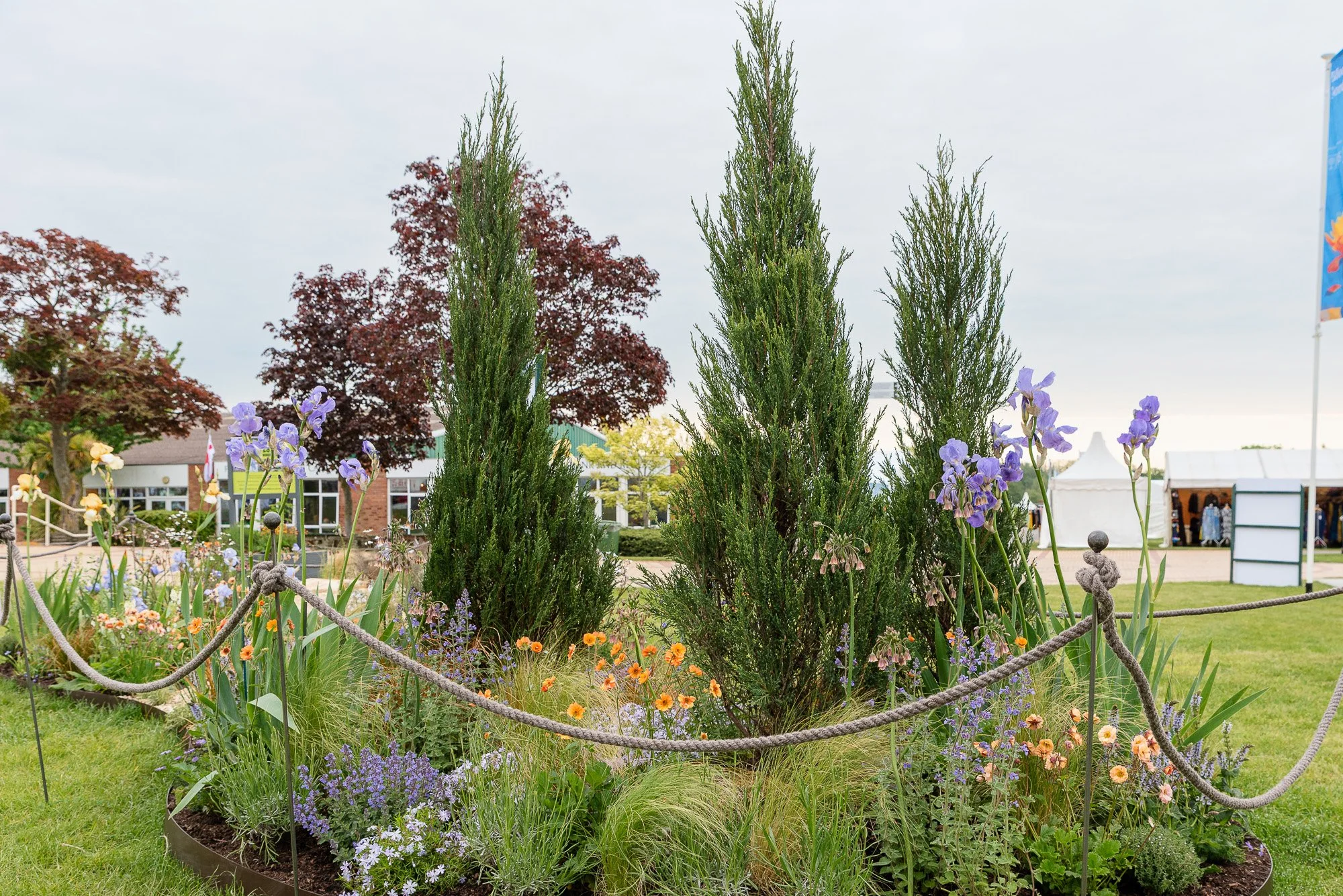
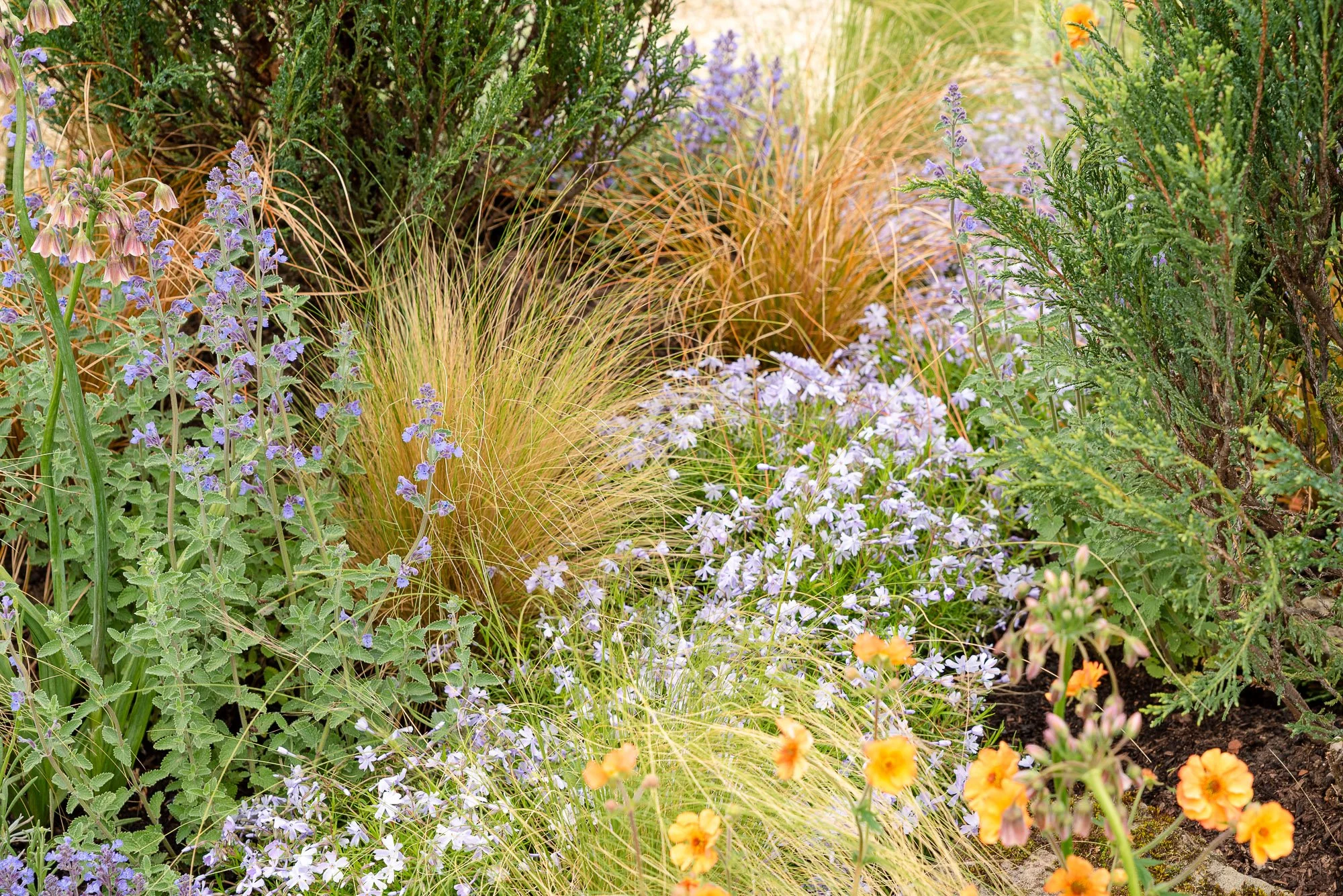
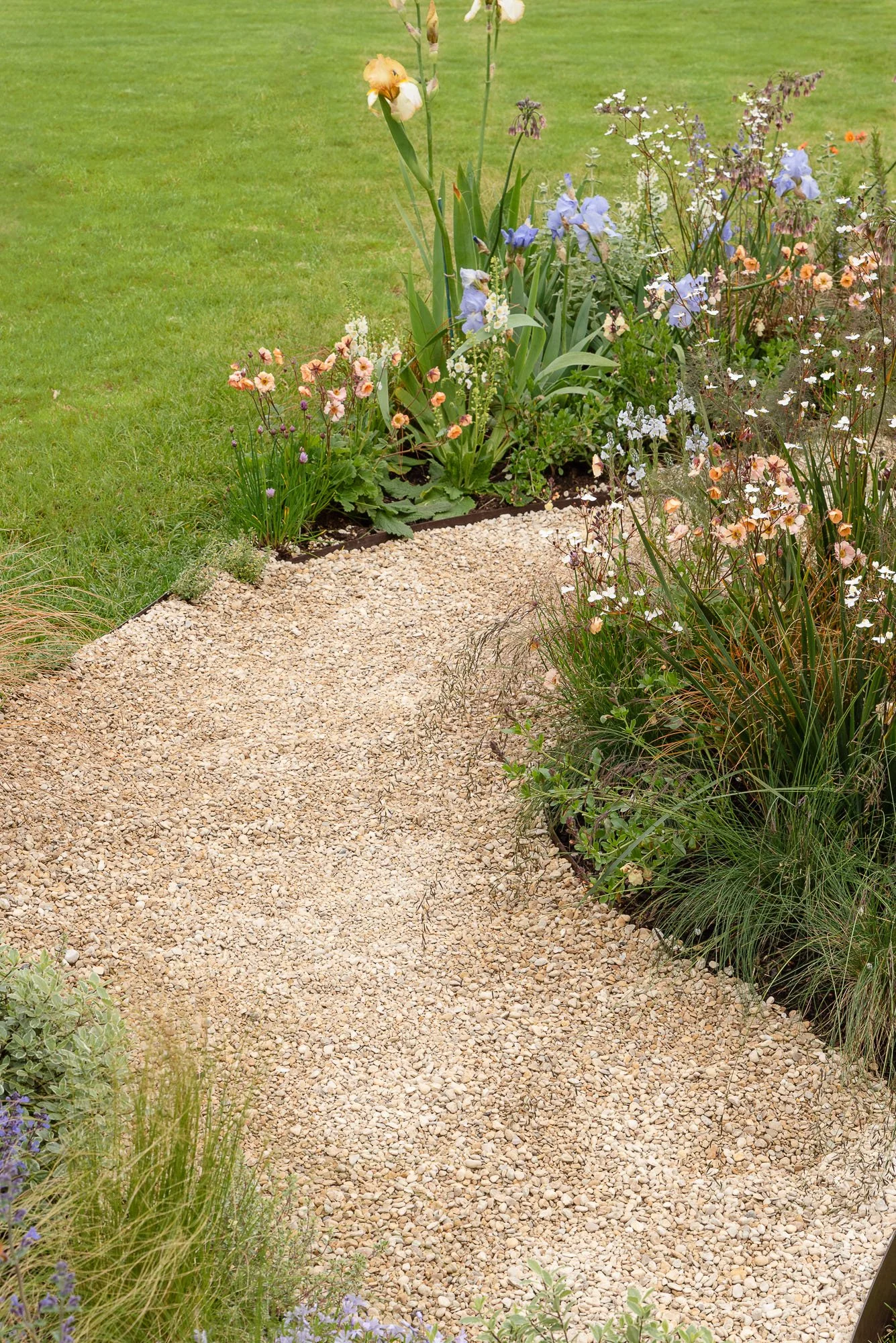
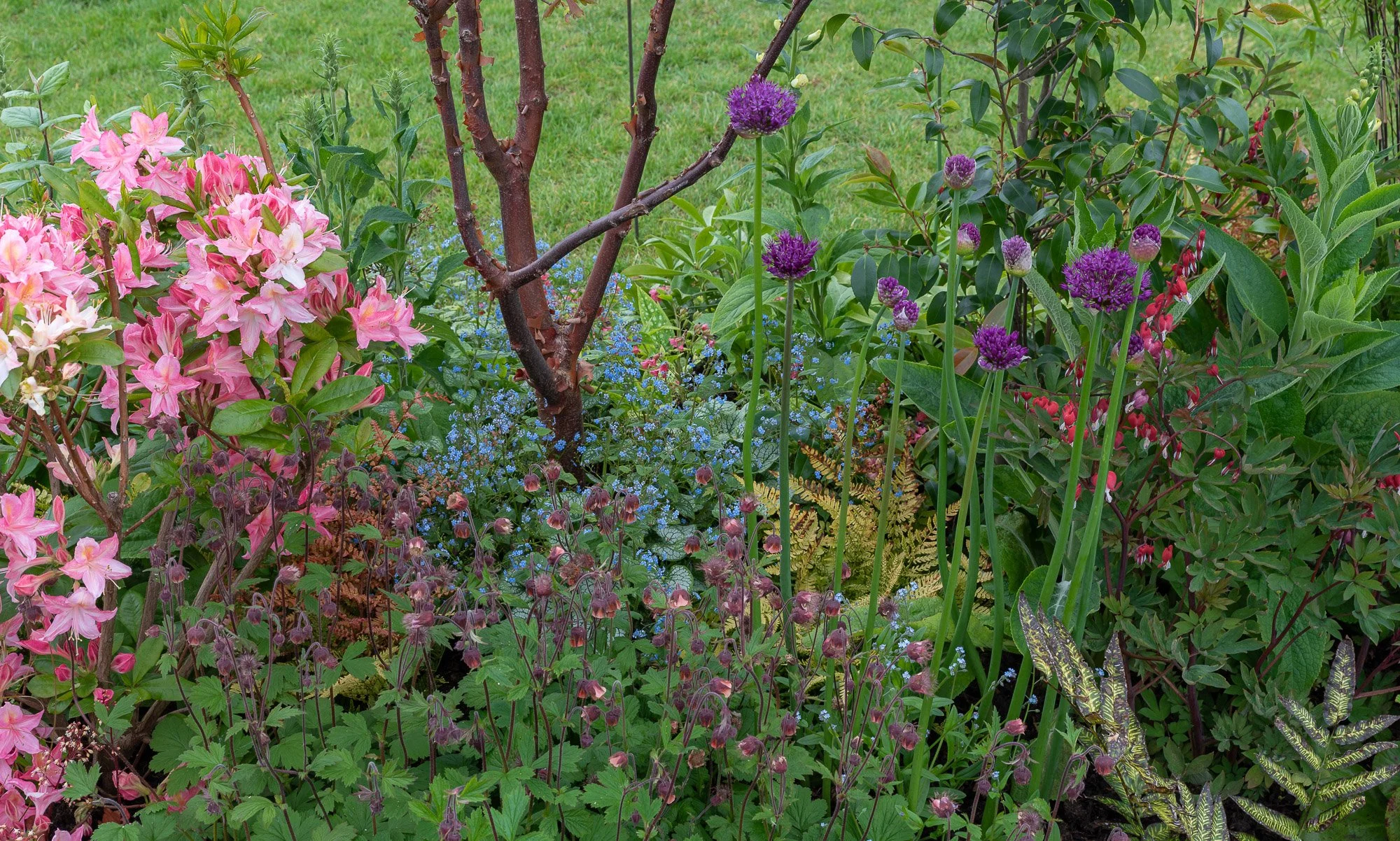
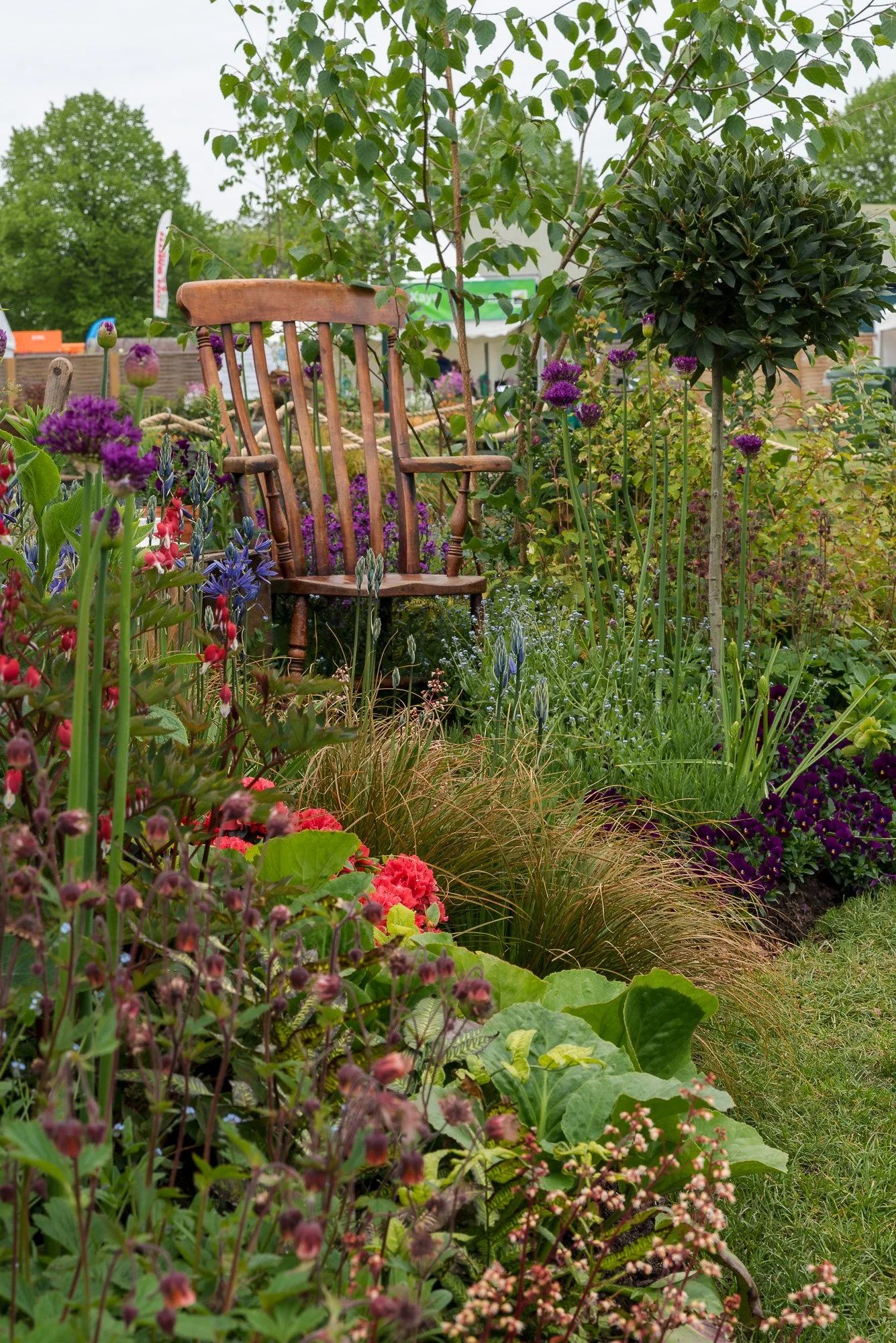
Next up I enjoyed Paul Nicholson’s Reflective Memories border. I’m definitely one for sitting and enjoying a brew which Paul’s border positively encourages. In a small border, every plant has to earn it’s place and Acer griseum has all bases covered. The leaf shape reminded me more of an oak than a usual palmate acer and the peeling bark adds year round colour and interest. It was also commented upon how well the forget-me-nots were weaved daintily amongst the rest of the planting, as well as tying in nicely with the theme of remembrance.
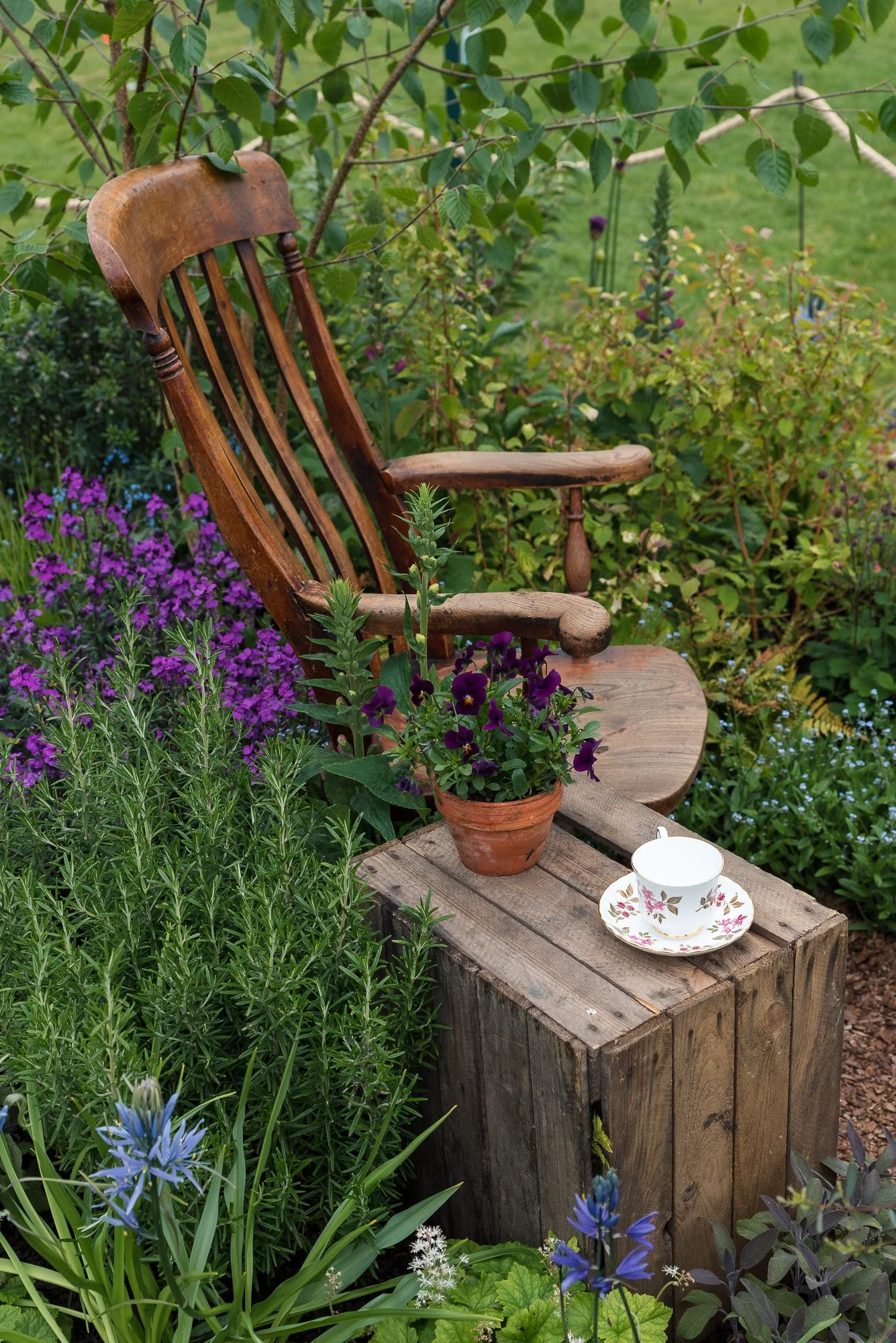
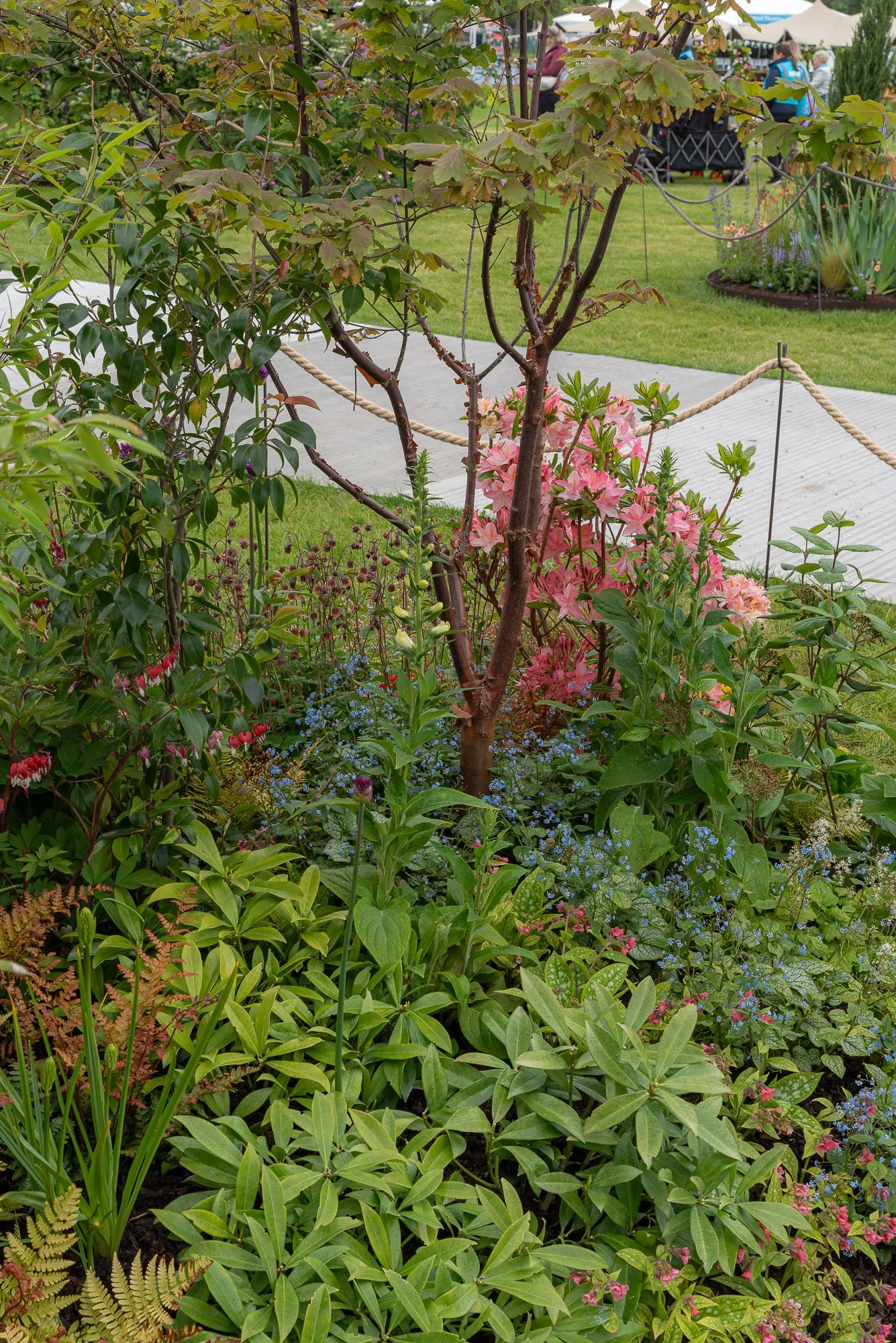
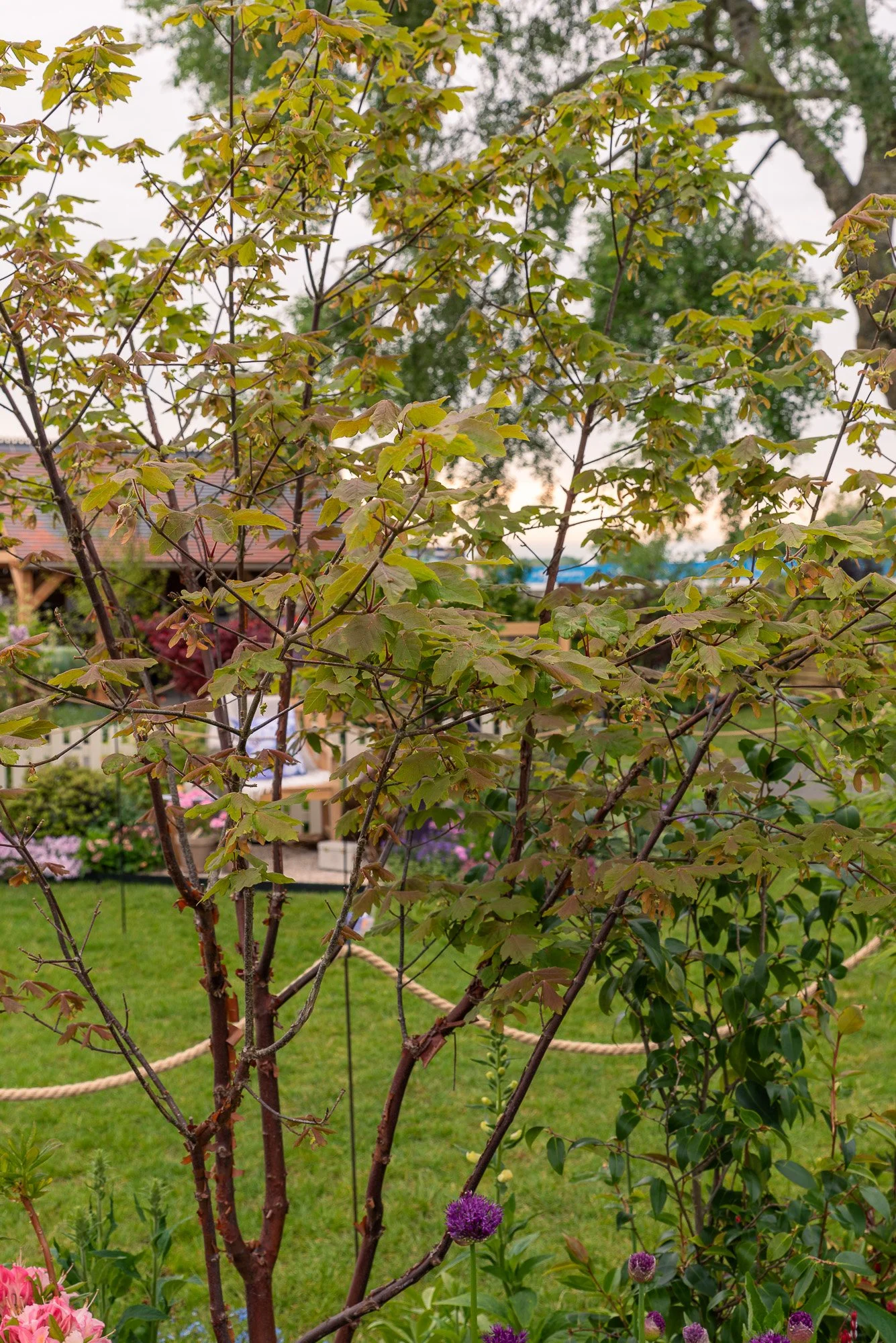
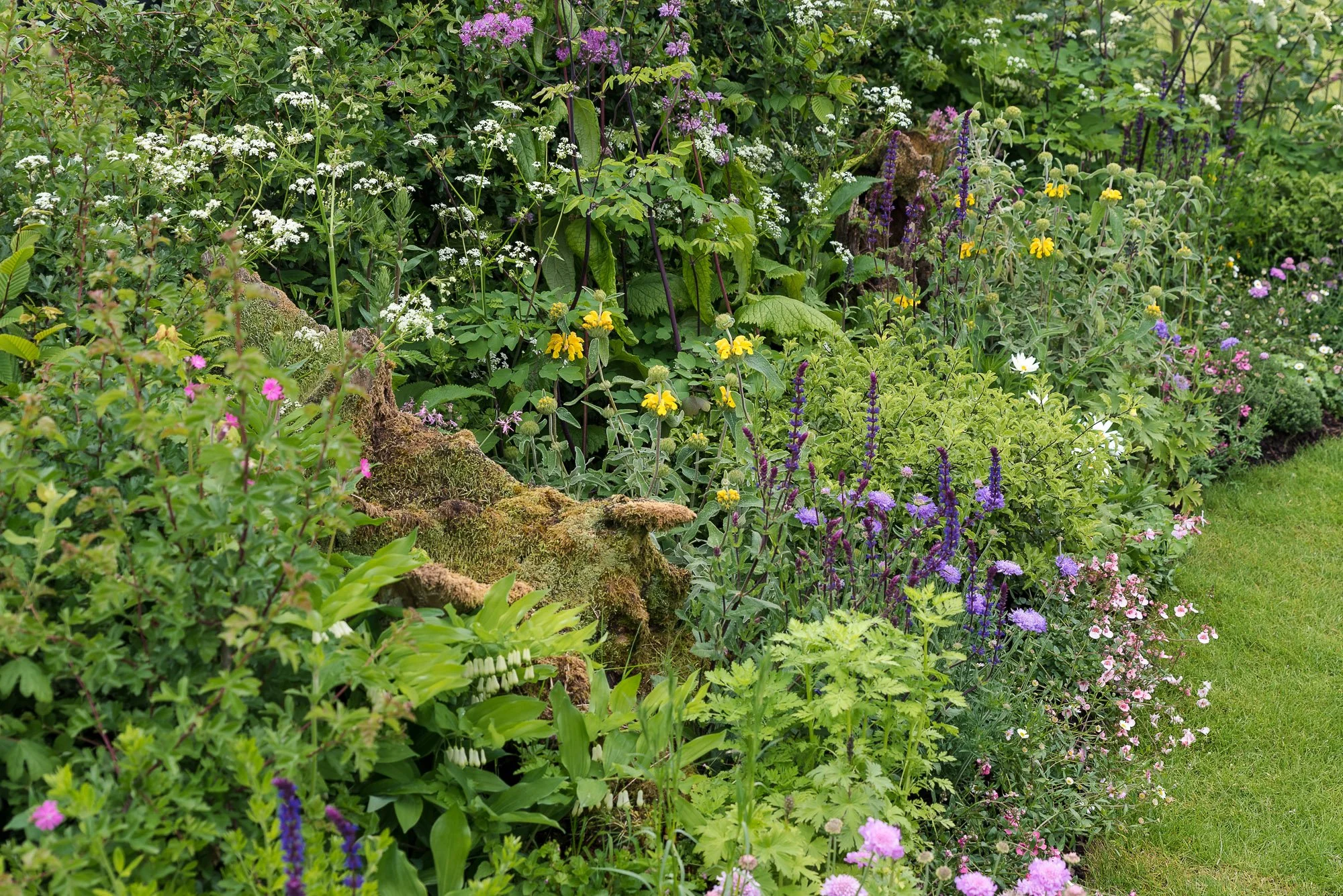
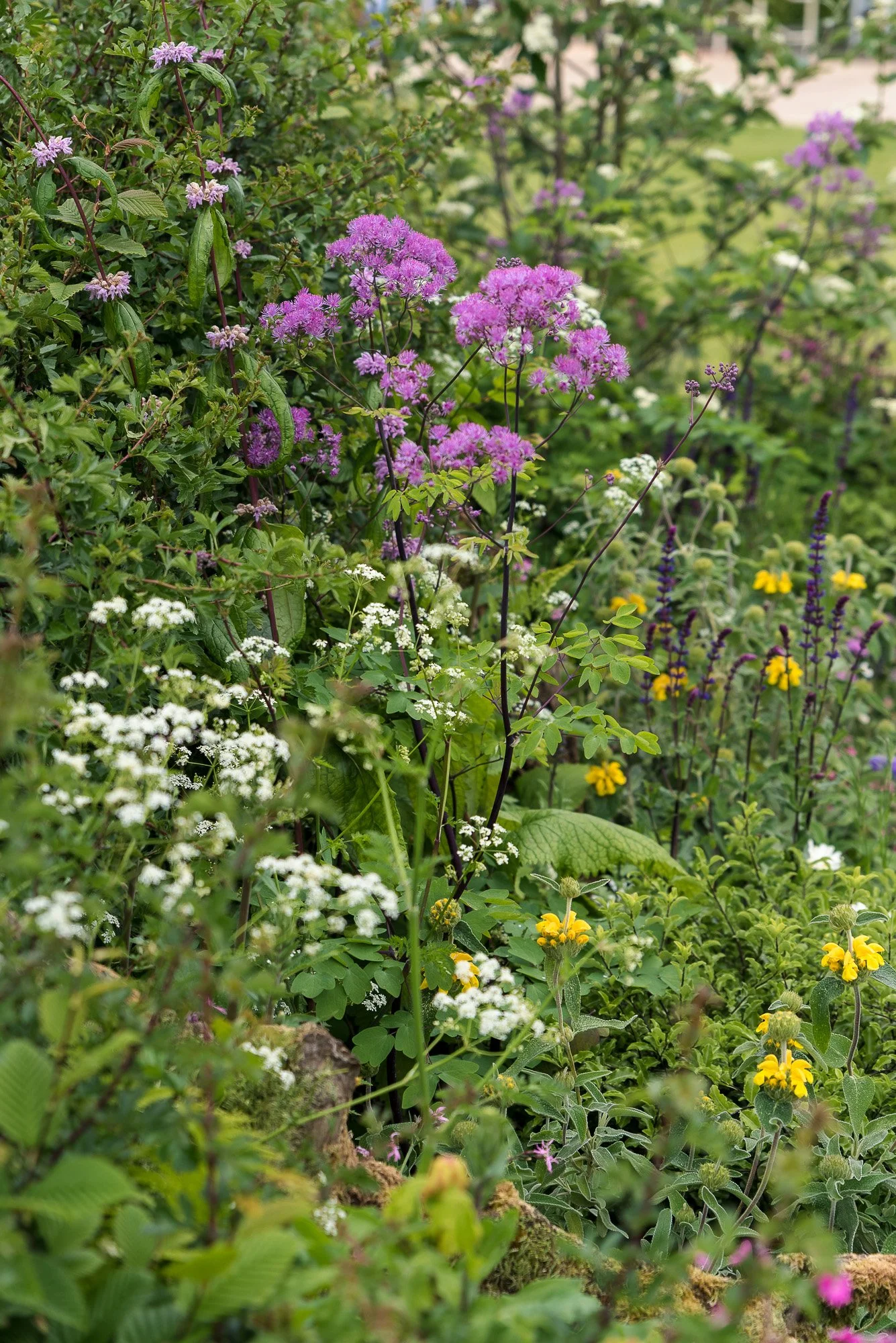
The third border that really caught my attention was Laura Ashton-Philips’ - Stumped. I was astounded by the realism of the traditional hedgerow and how it blended seamlessly into the wildlife friendly, forest edge style planting. The mossy tree stumps, taken from Laura’s own garden. Naturally weathered and moss covered, these blended in seamlessly with the native planting and made the border feel very well established in the environment.
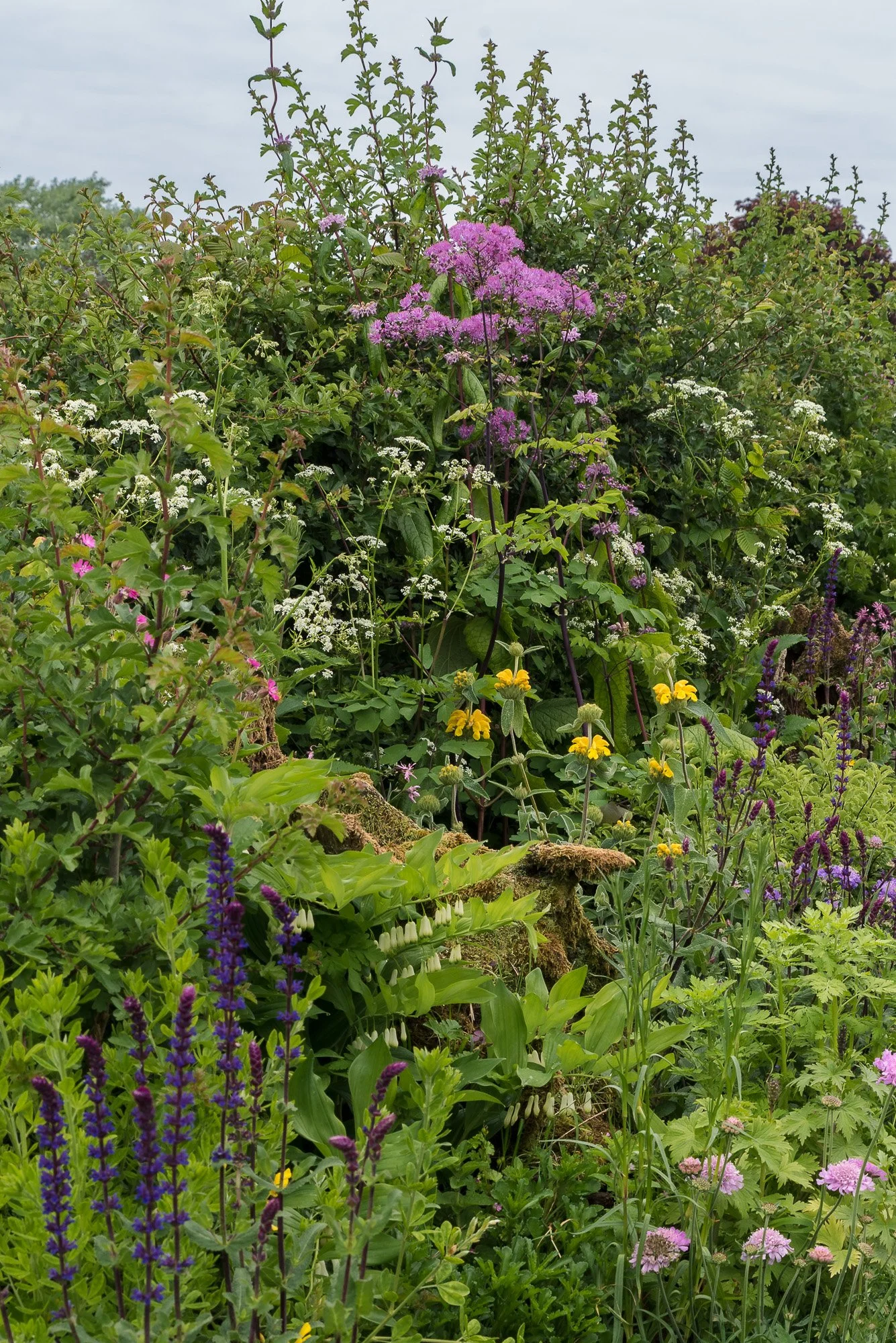
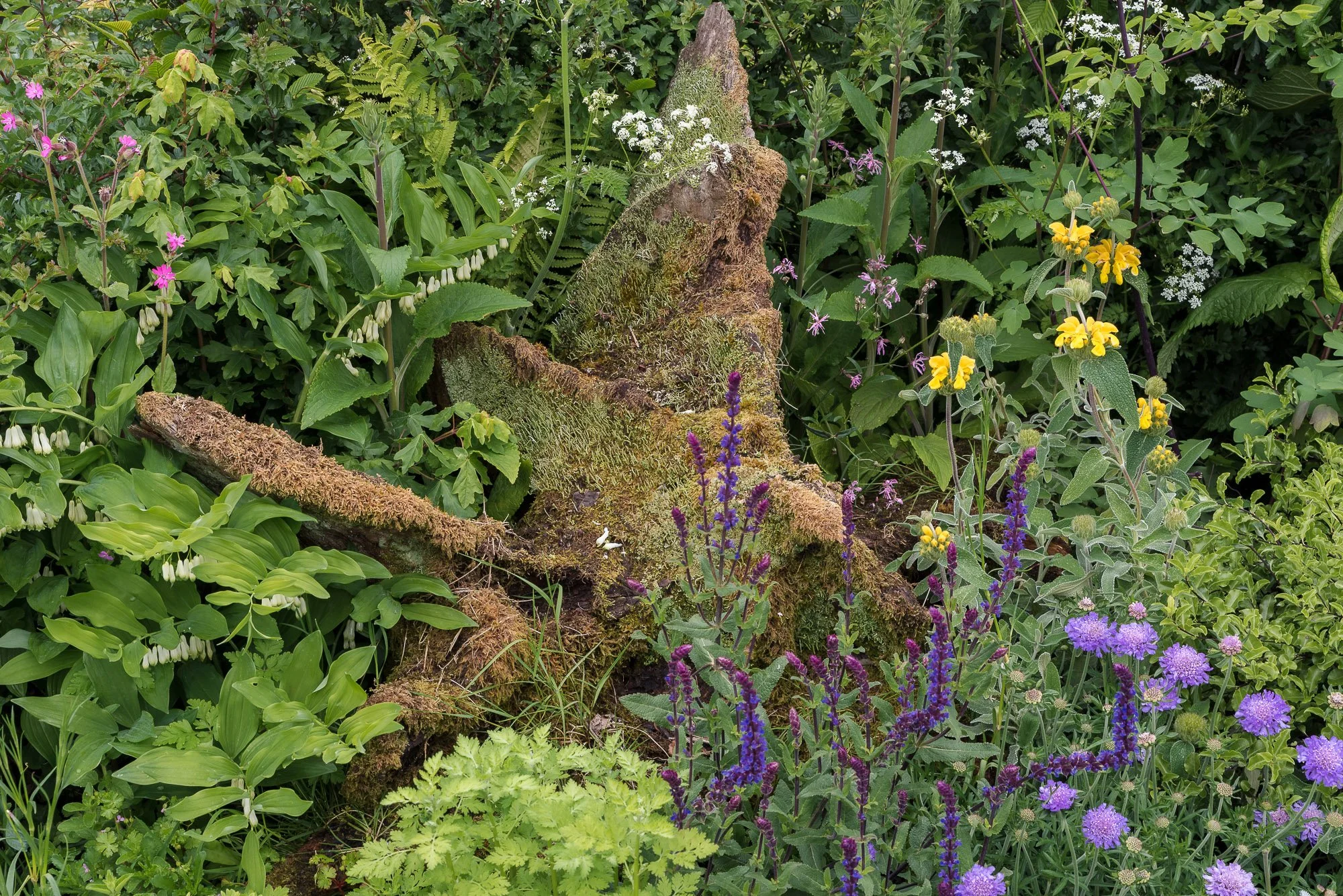
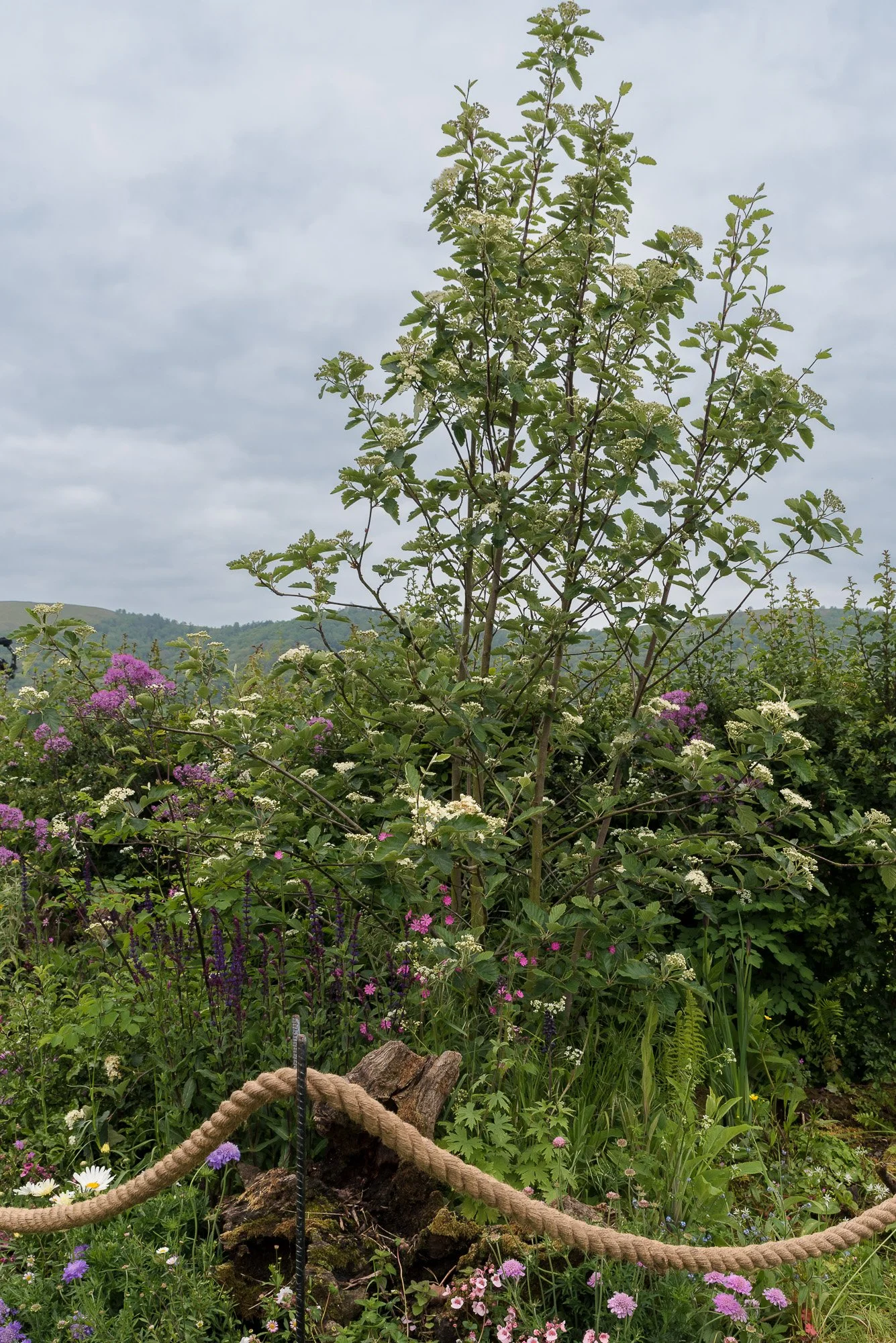
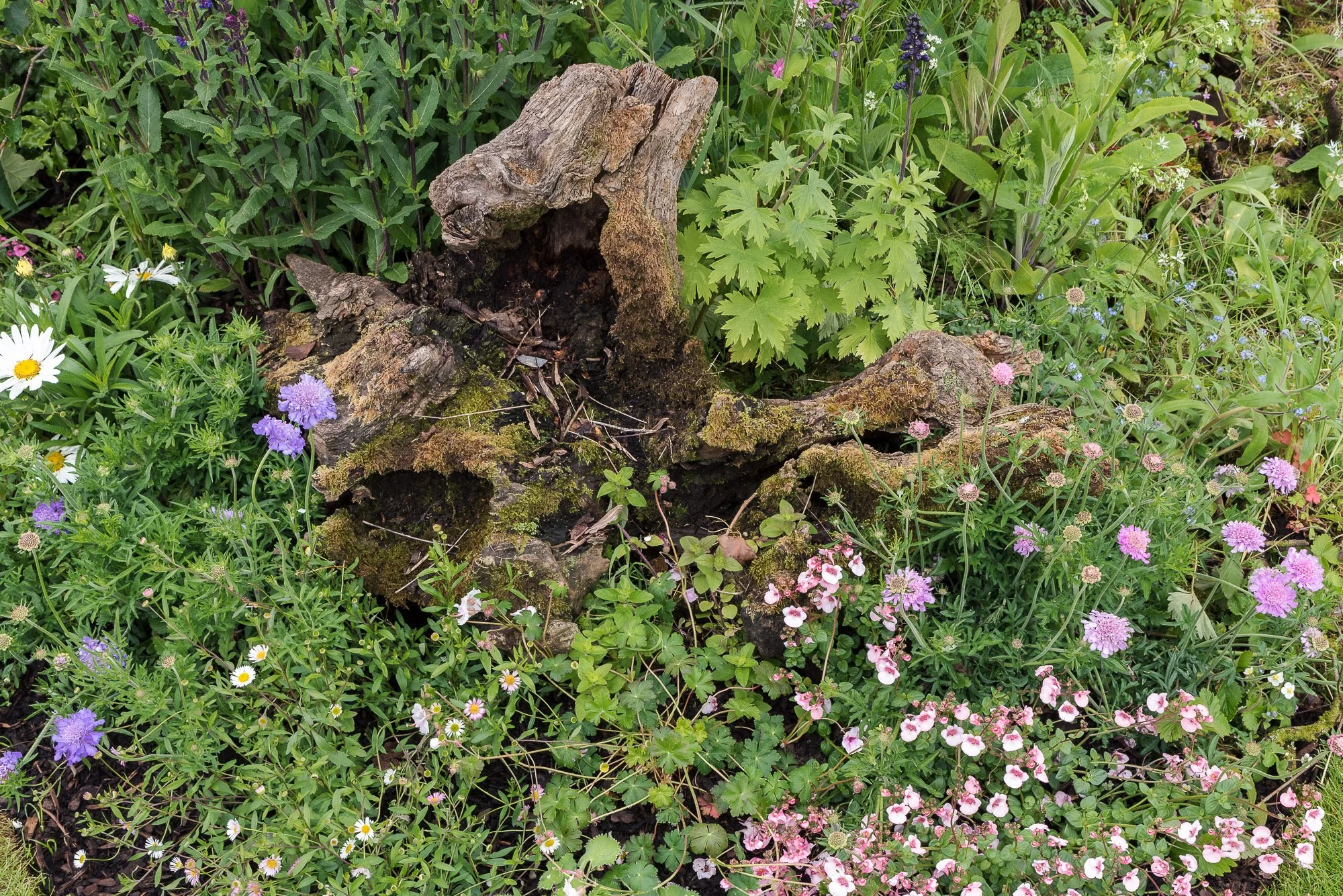
After checking out the remaining borders (and grabbing a quick coffee to power me through the rest of the day) I headed over to the floral tablescaping area. This is a new category for RHS Malvern in 2026 and I was pleased to know Ashley who was participating. Ashley is already an award winning wedding floral artist but this was her first RHS show entry.
Floral tablescaping uses floral art to elevate the dining experience, using creative combinations of flowers and foliage to tell a story or evoke a mood.
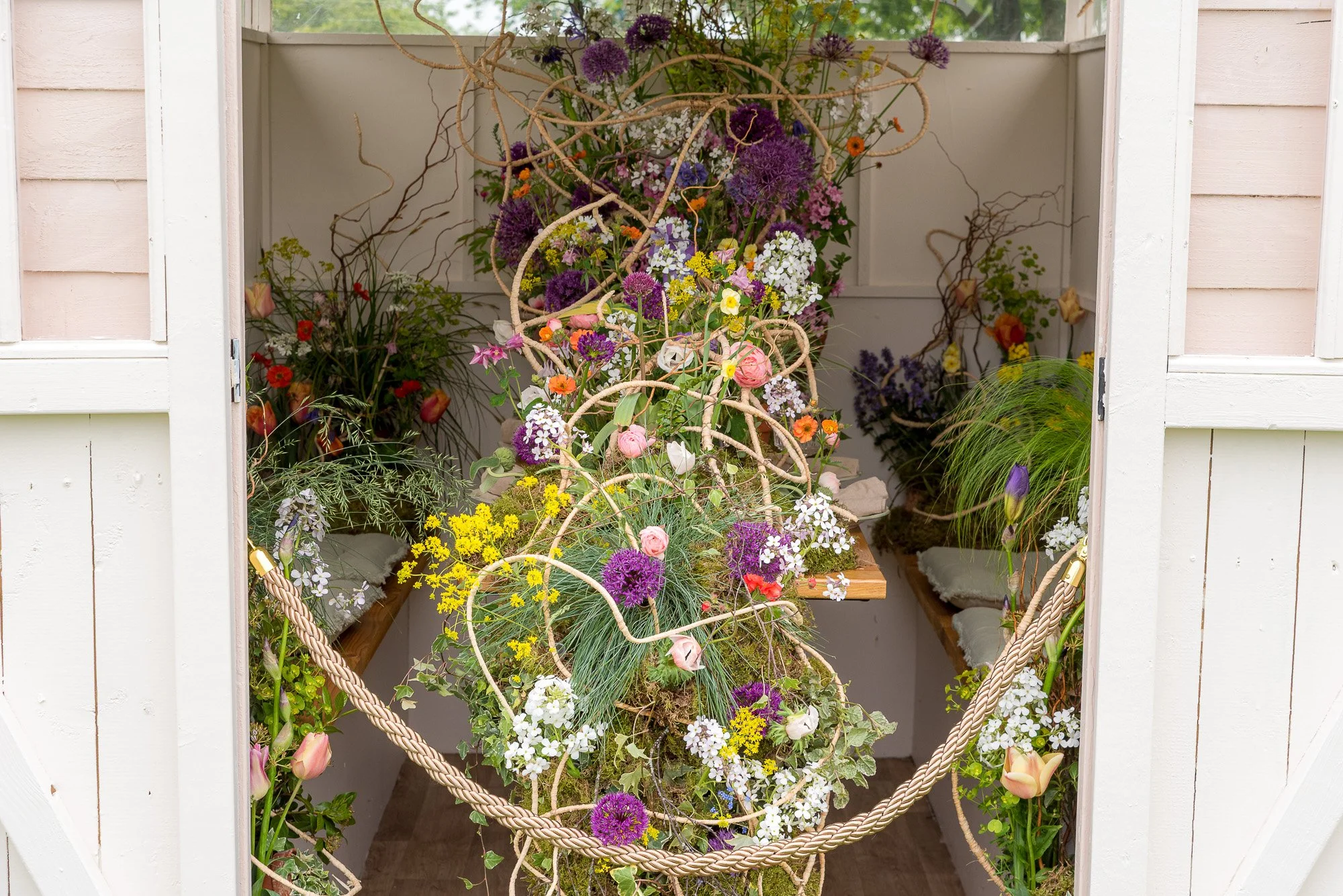
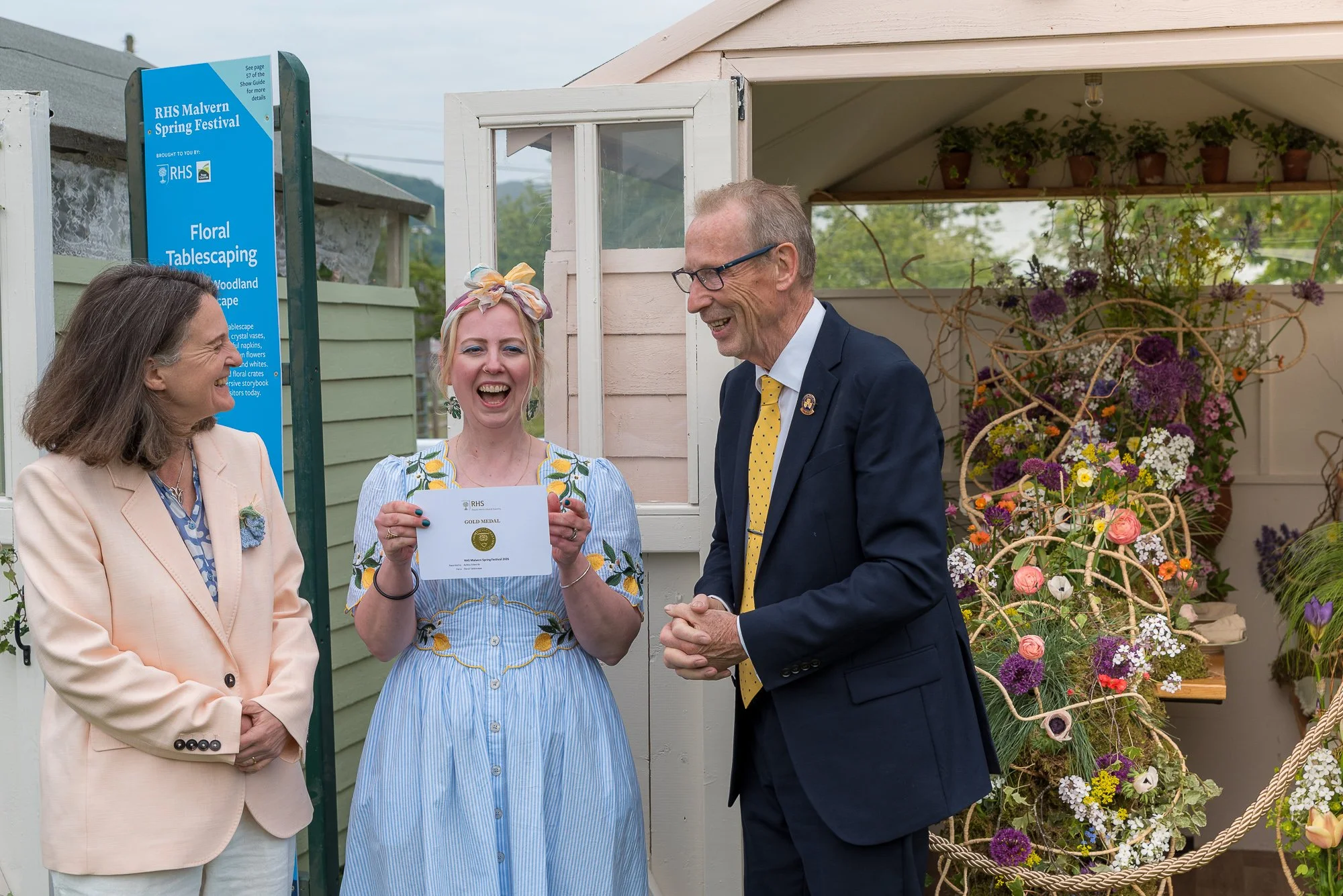
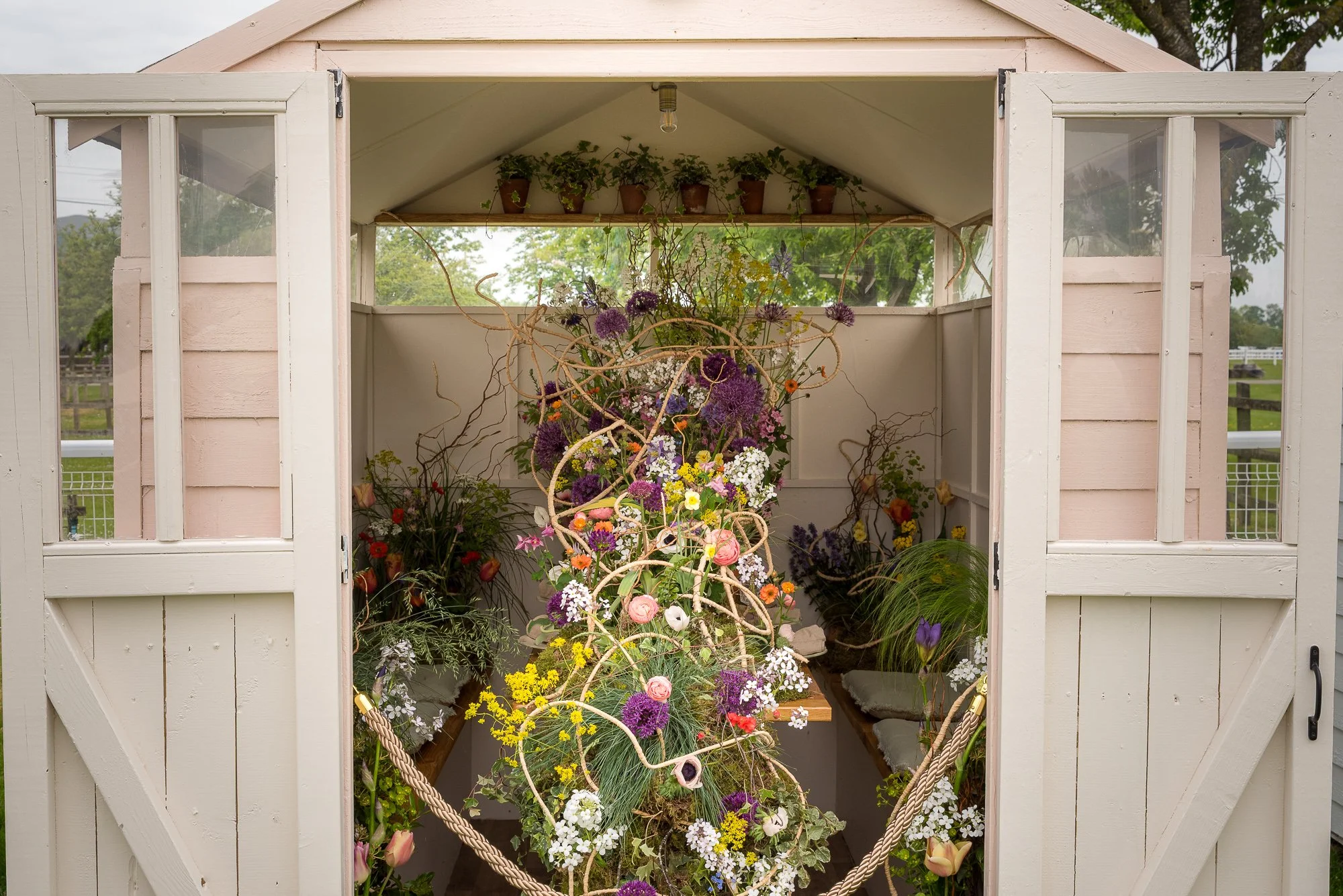
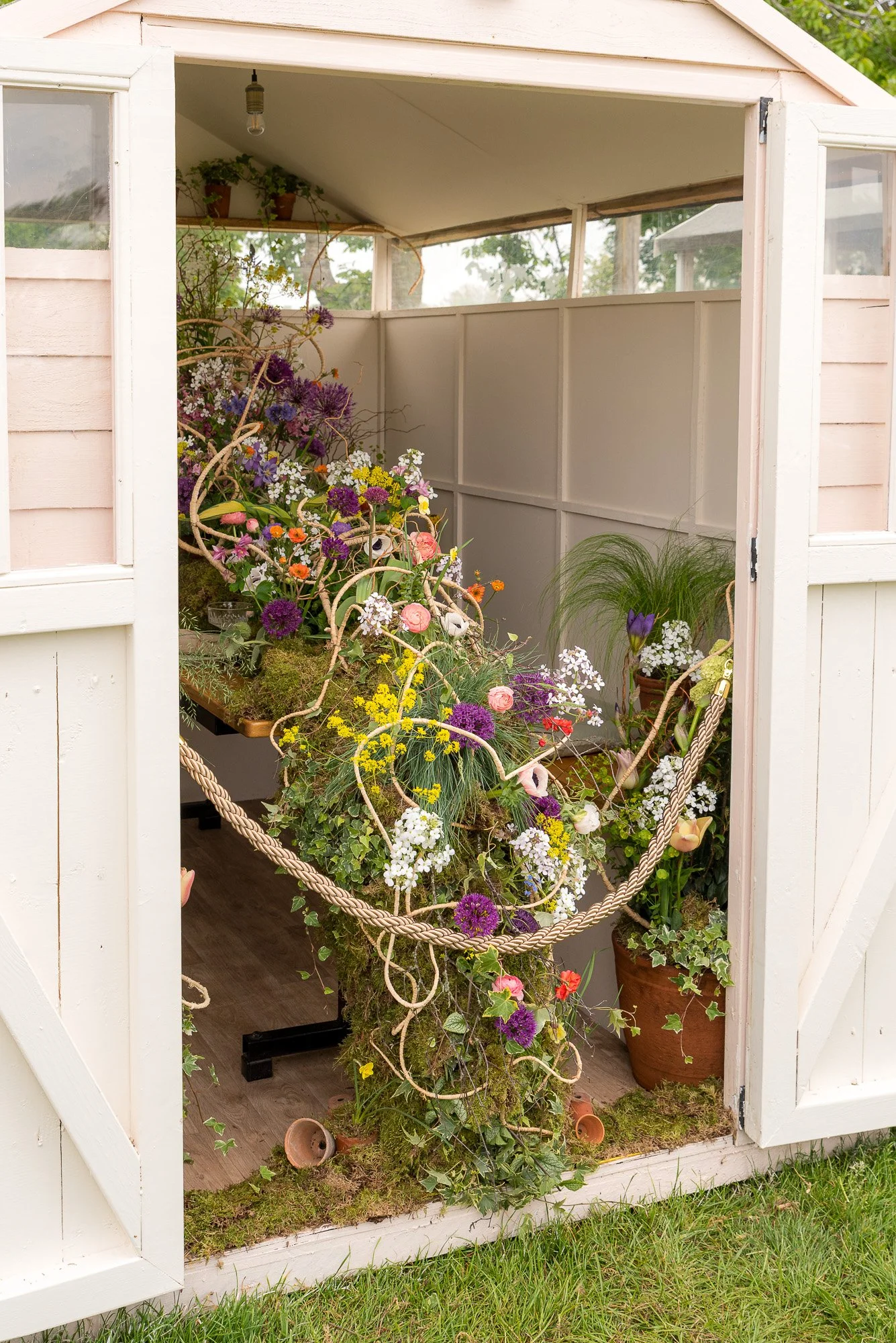
Ashley was understandably a little nervous, but she needn’t have been. I was fortunate to be around when she received her coveted RHS Gold medal, and then was a awarded the Best floral tablescape prize. The surprise on her face is palpable but I’d assured her before hand that her design was my favourite. I thought her design and execution was fantastic, using a mix of bulbs, foliage and florals to bring to life the season. I adored the hand wound root like structures that weaved through the design. The intention was for it to look as though things were growing up through the table, rather than having been placed upon it. And I think Ashley achieved this, also using form and perspective to lead the viewers eye through her tables cape. It was a great honour to have some of my photos featured alongside this article in Flora Magazine.
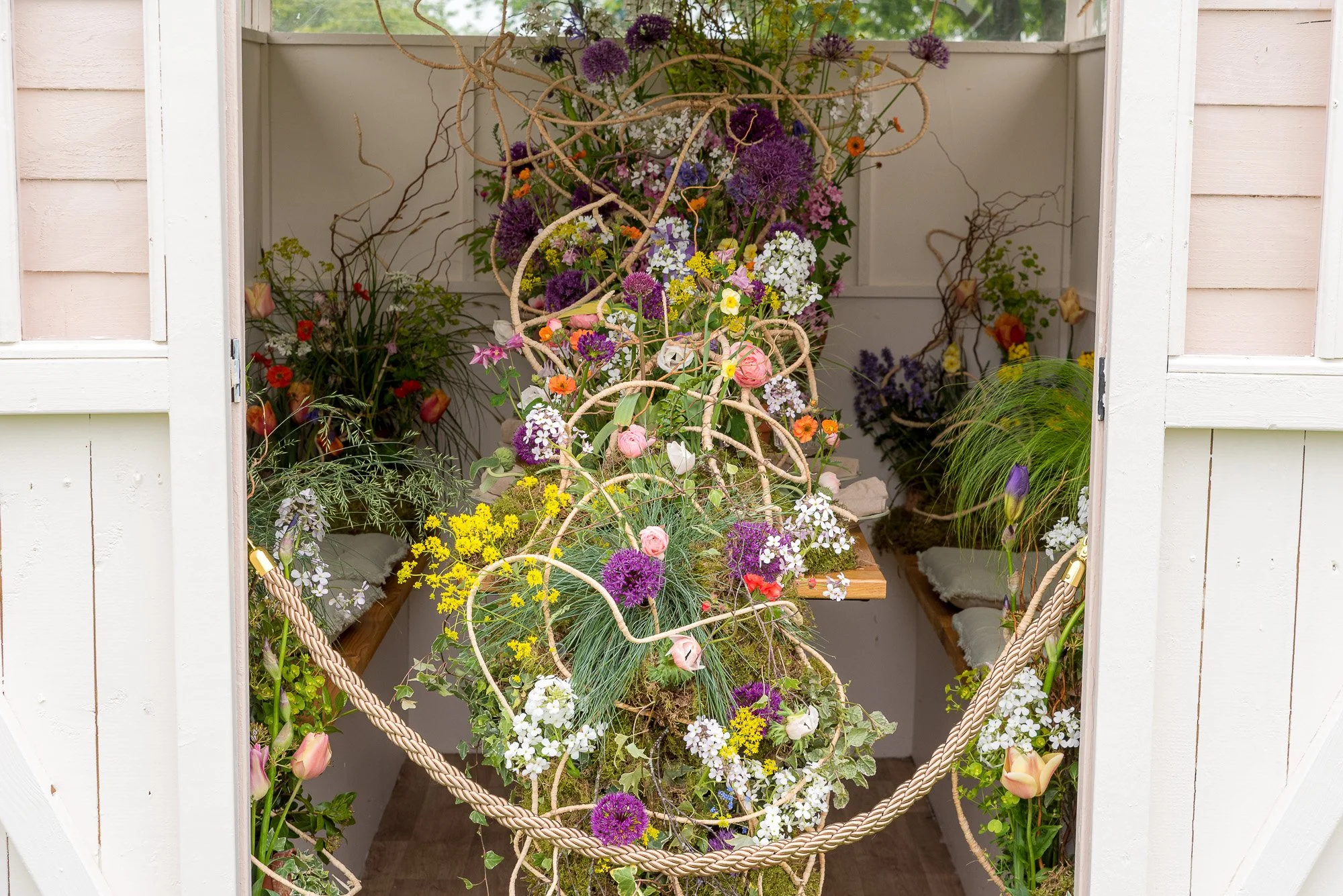
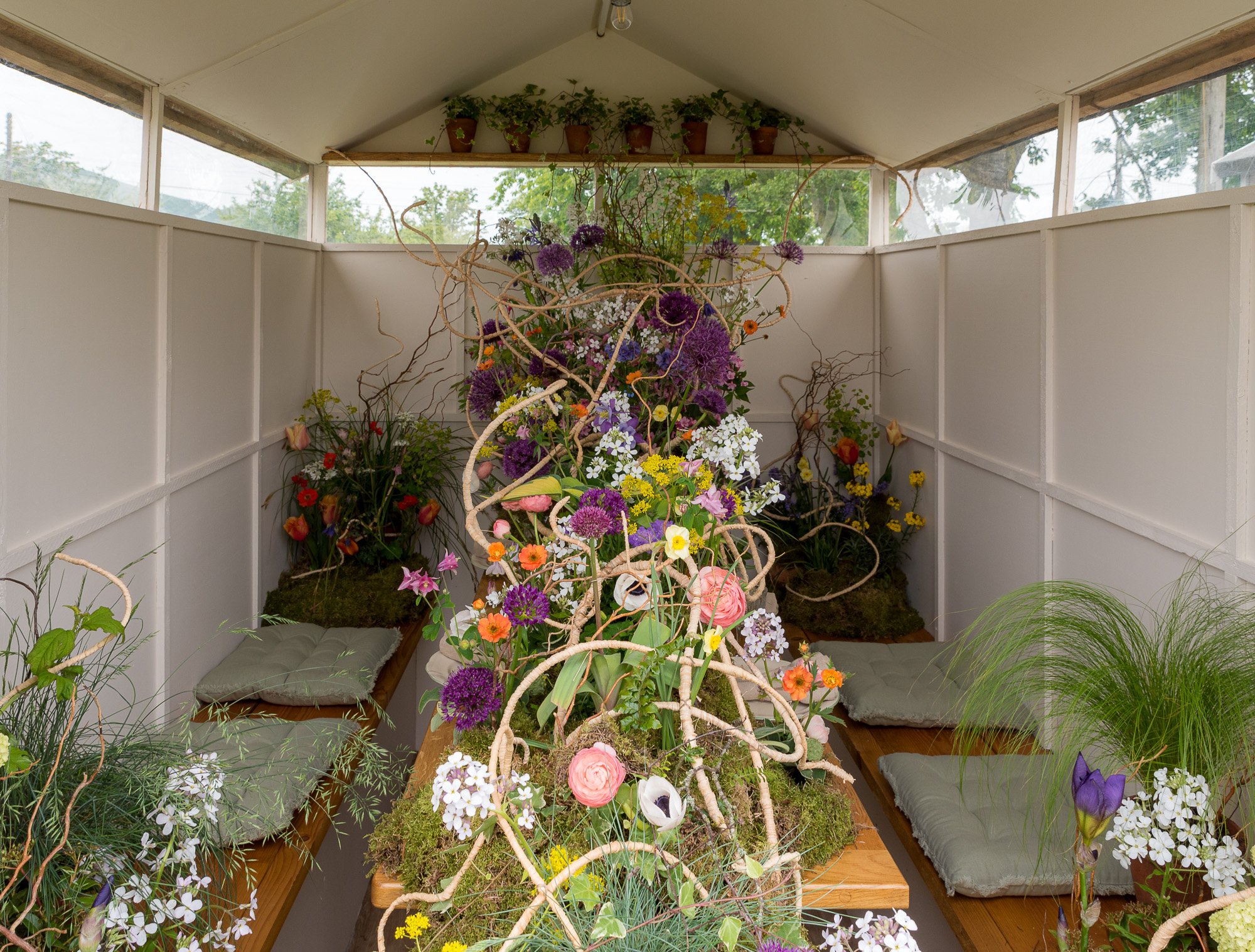
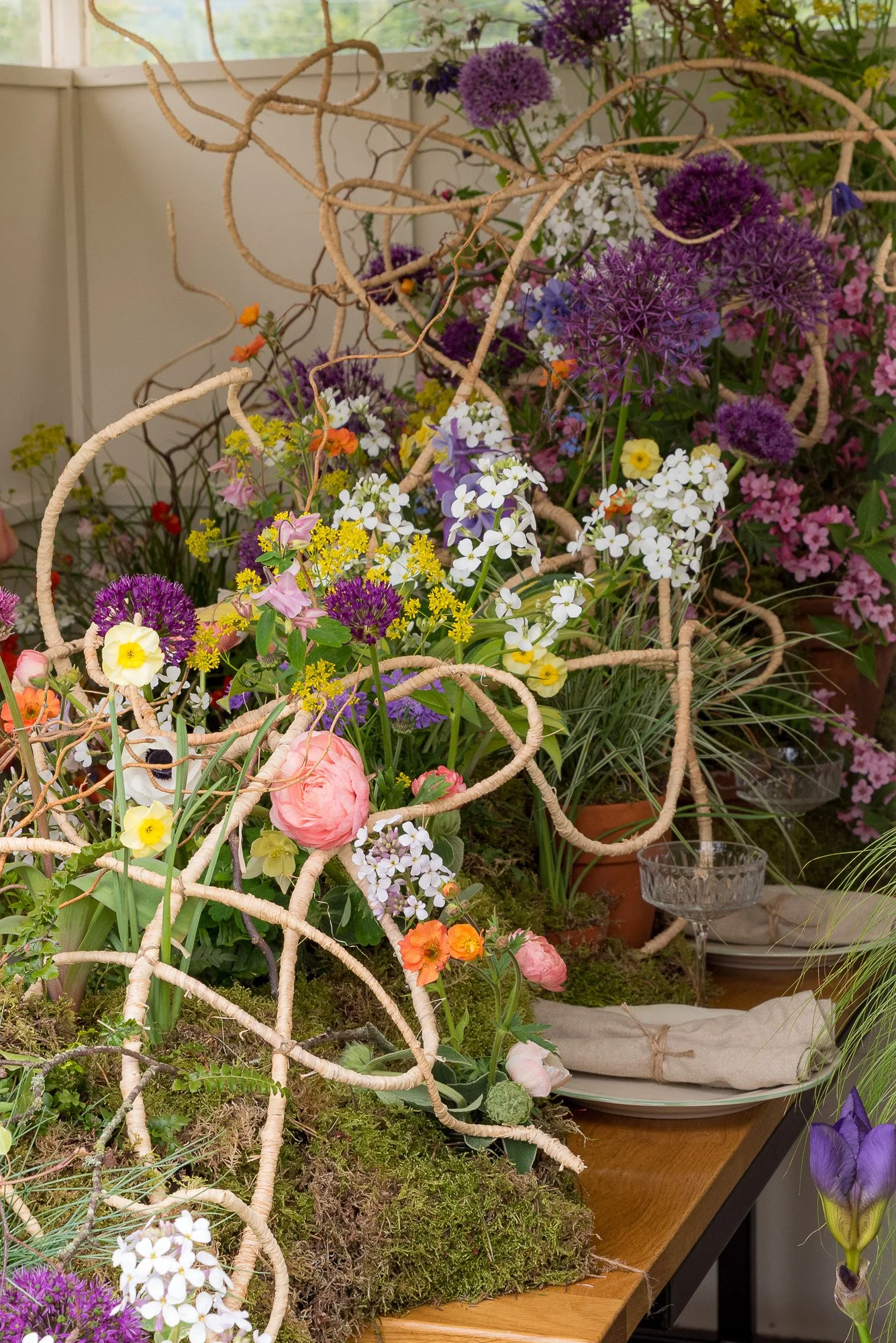
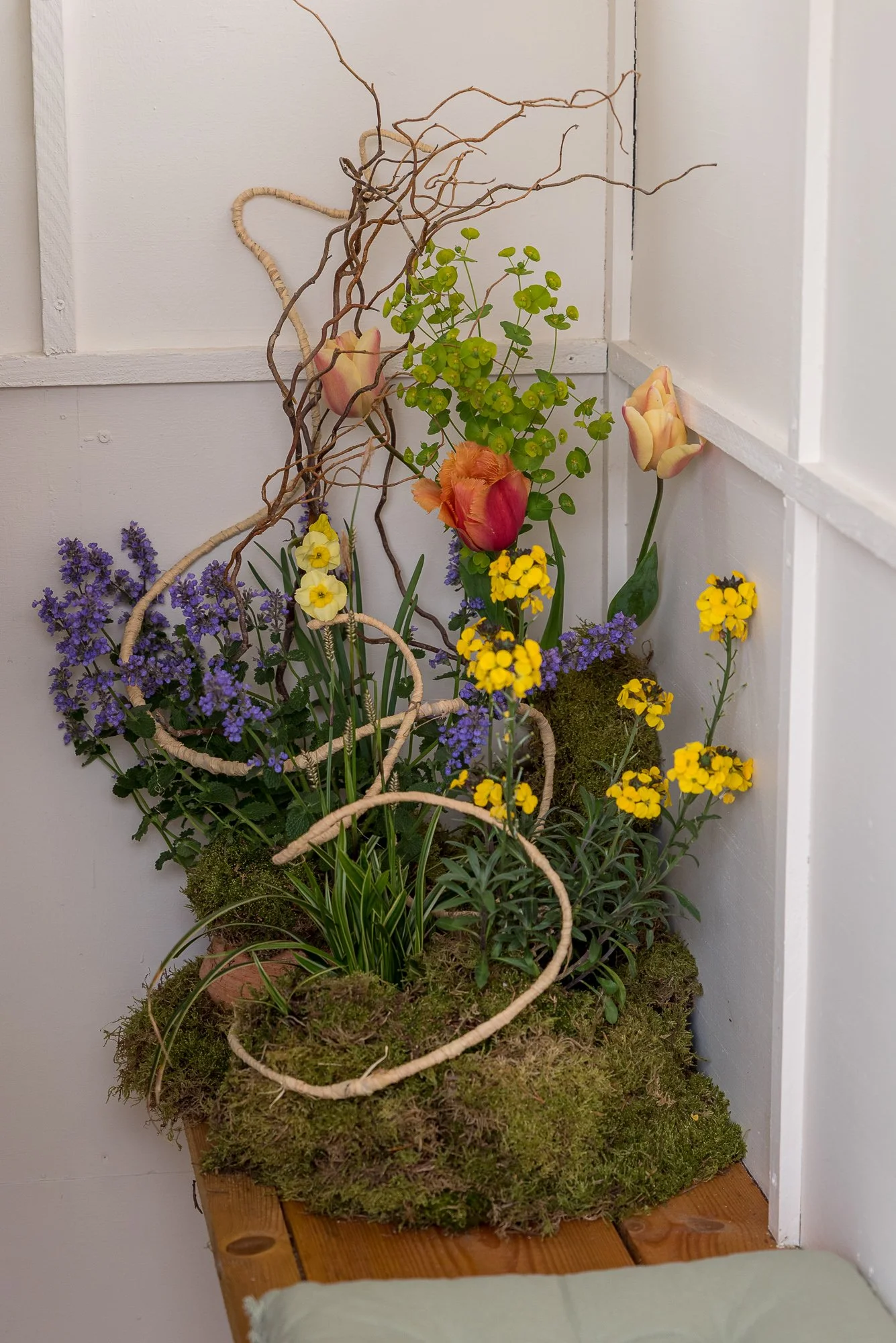
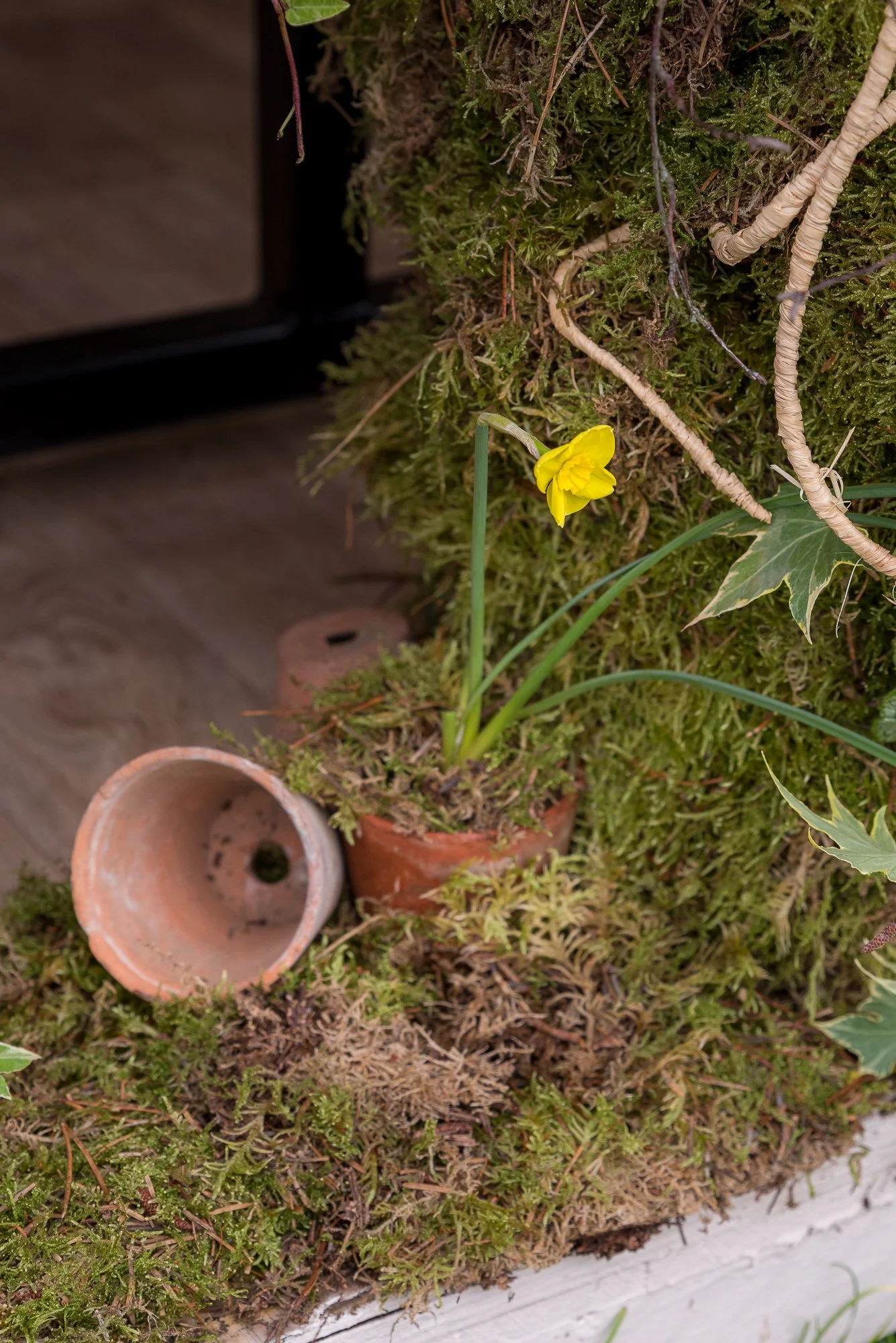
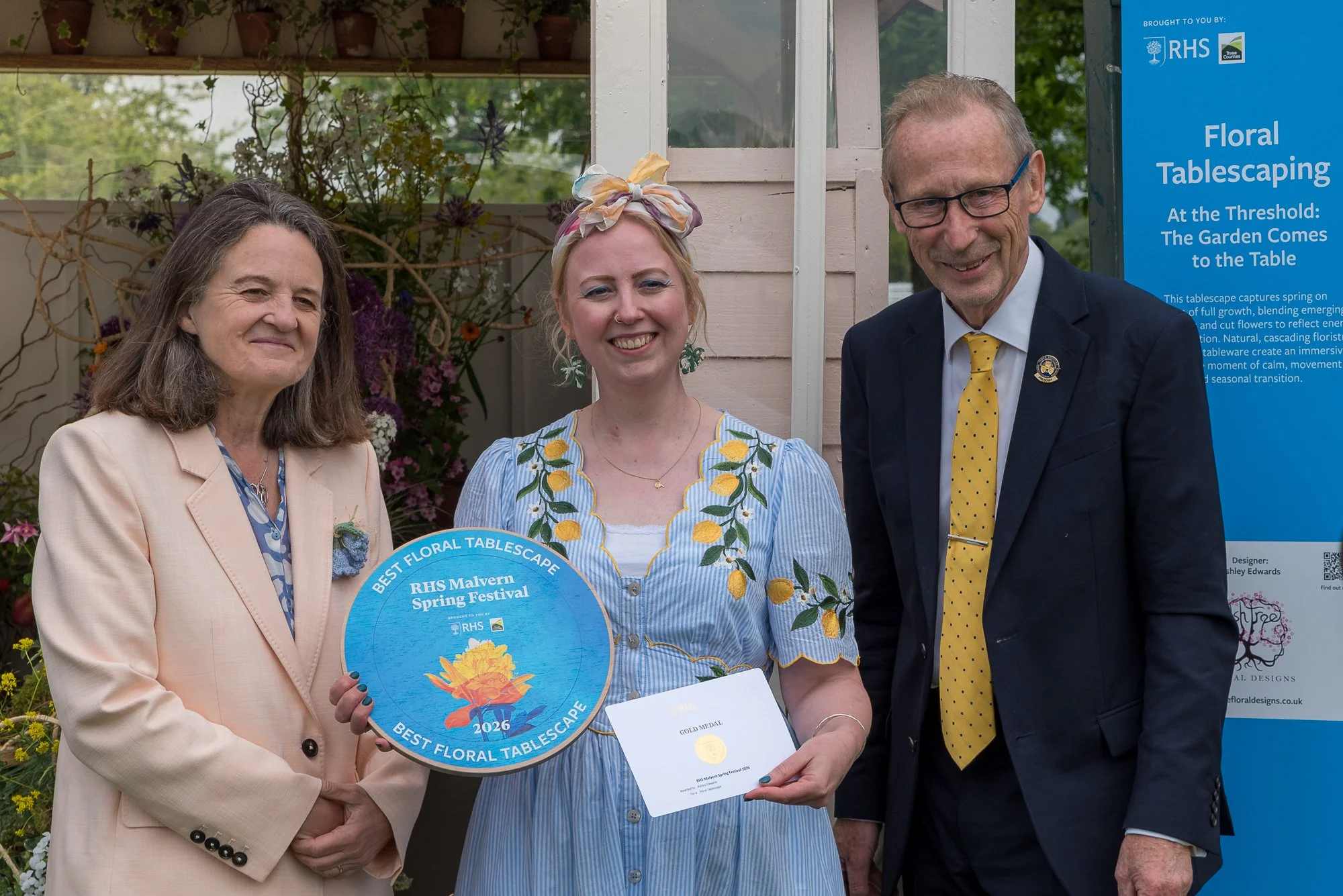
By the time I’d caught up with and congratulated Ashley the sun was fully up and the cloud burning off, not a great time to be photographing outdoors. So I took myself off to the festival of house plants to see the indoor gardens. As an owner of more than a few peace Lillies myself, I enjoyed seeing the diverse array of plants on display so sought some inspiration.
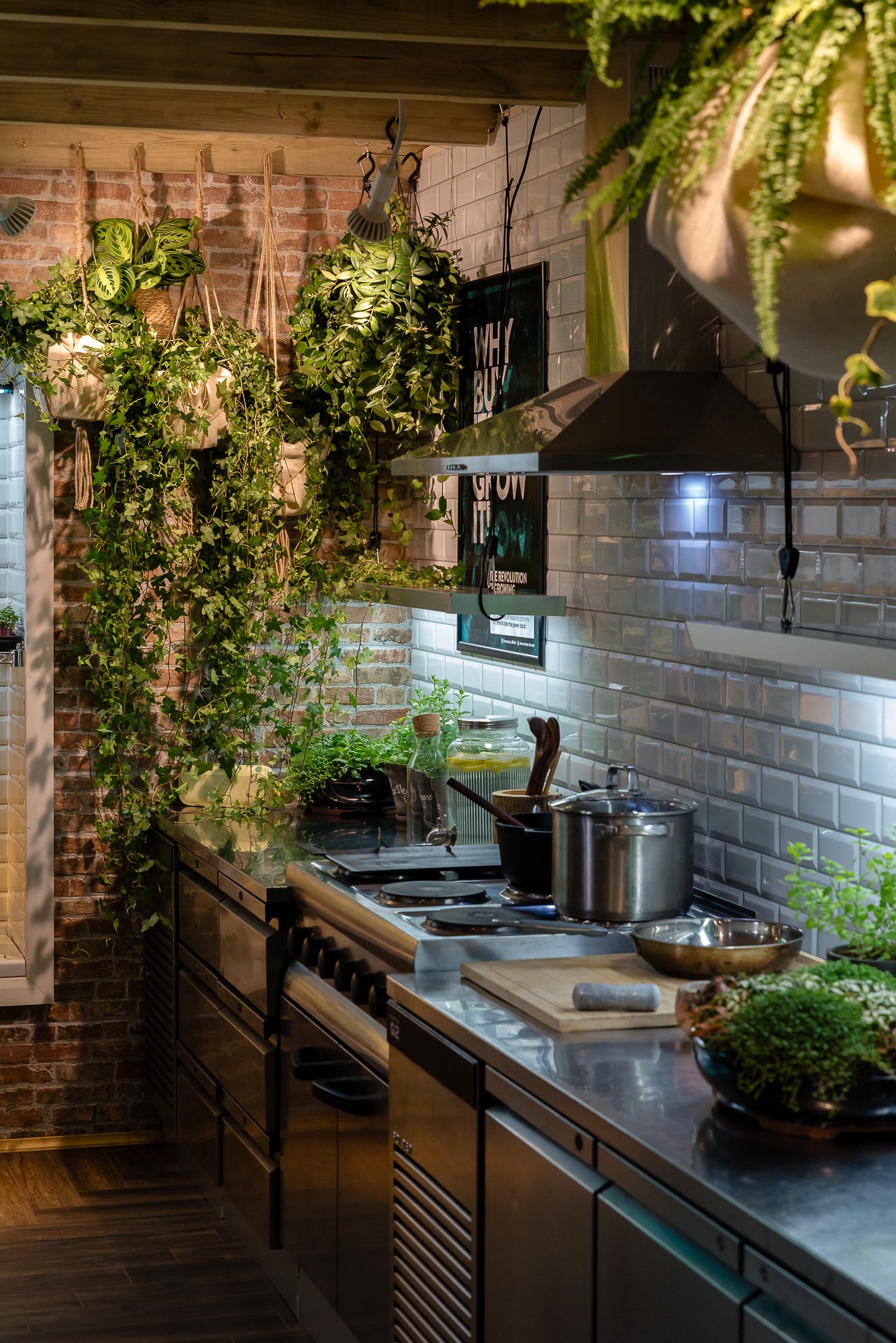
The hydroponic system featured in Canna’s ‘The Science of Sustenance’ kitchen was wonderfully set off by the neon signage. The central citrus tree in the kitchen island unit, grown entirely indoors from seed was quite the centrepiece. This was a high end design intended to show what could be achieved in modern kitchen designs. Oh, to have the space for a hydroponic system.
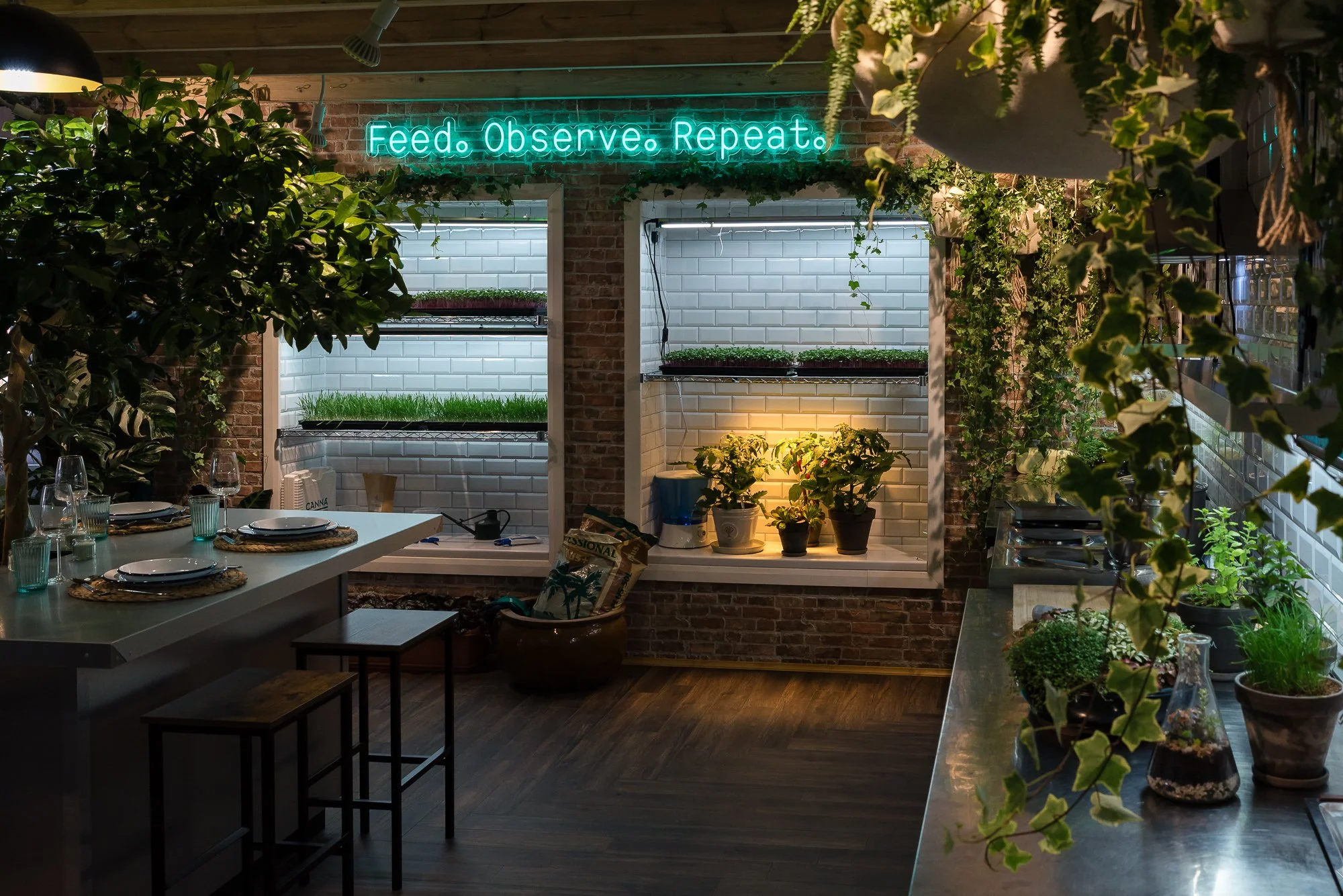
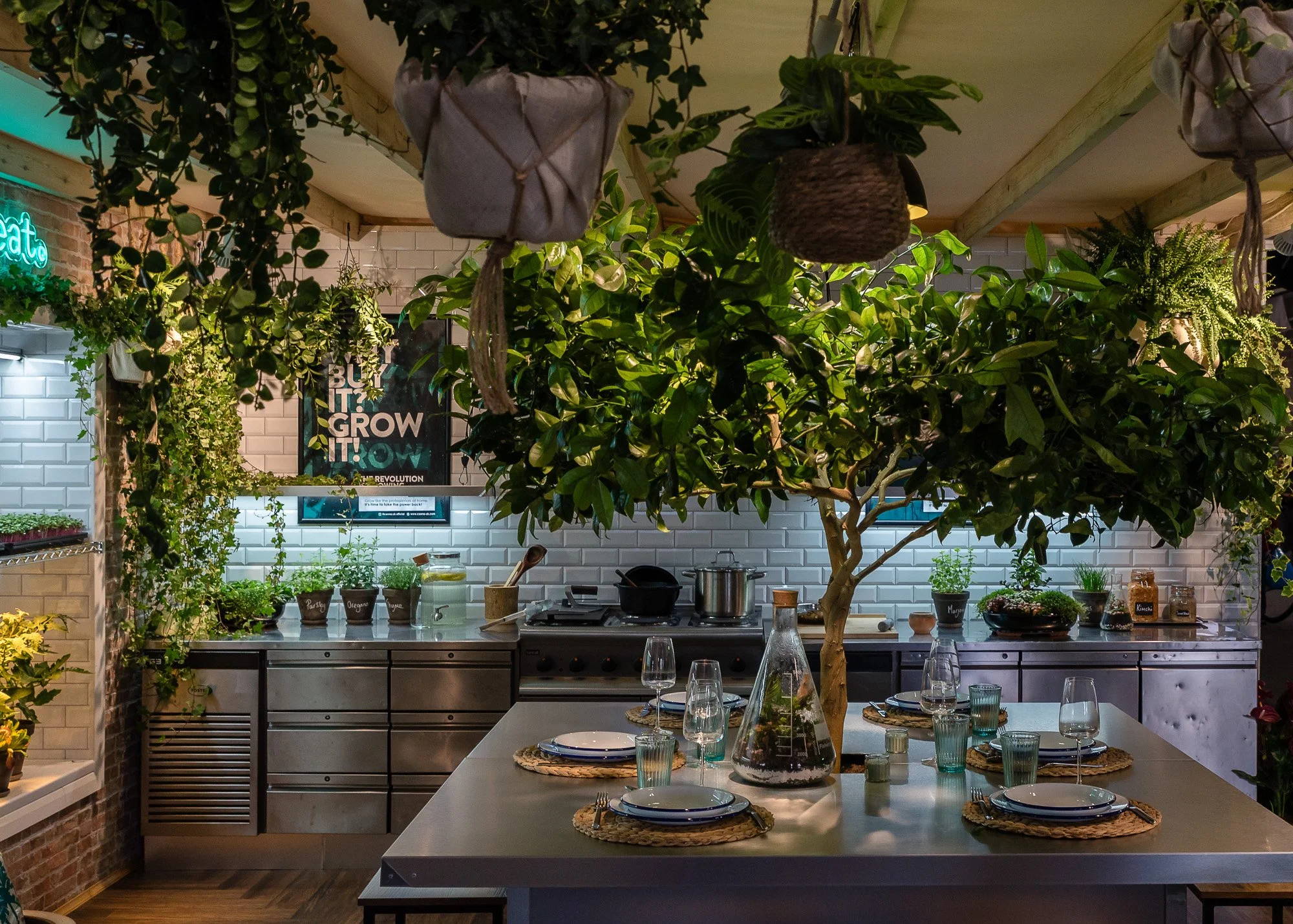
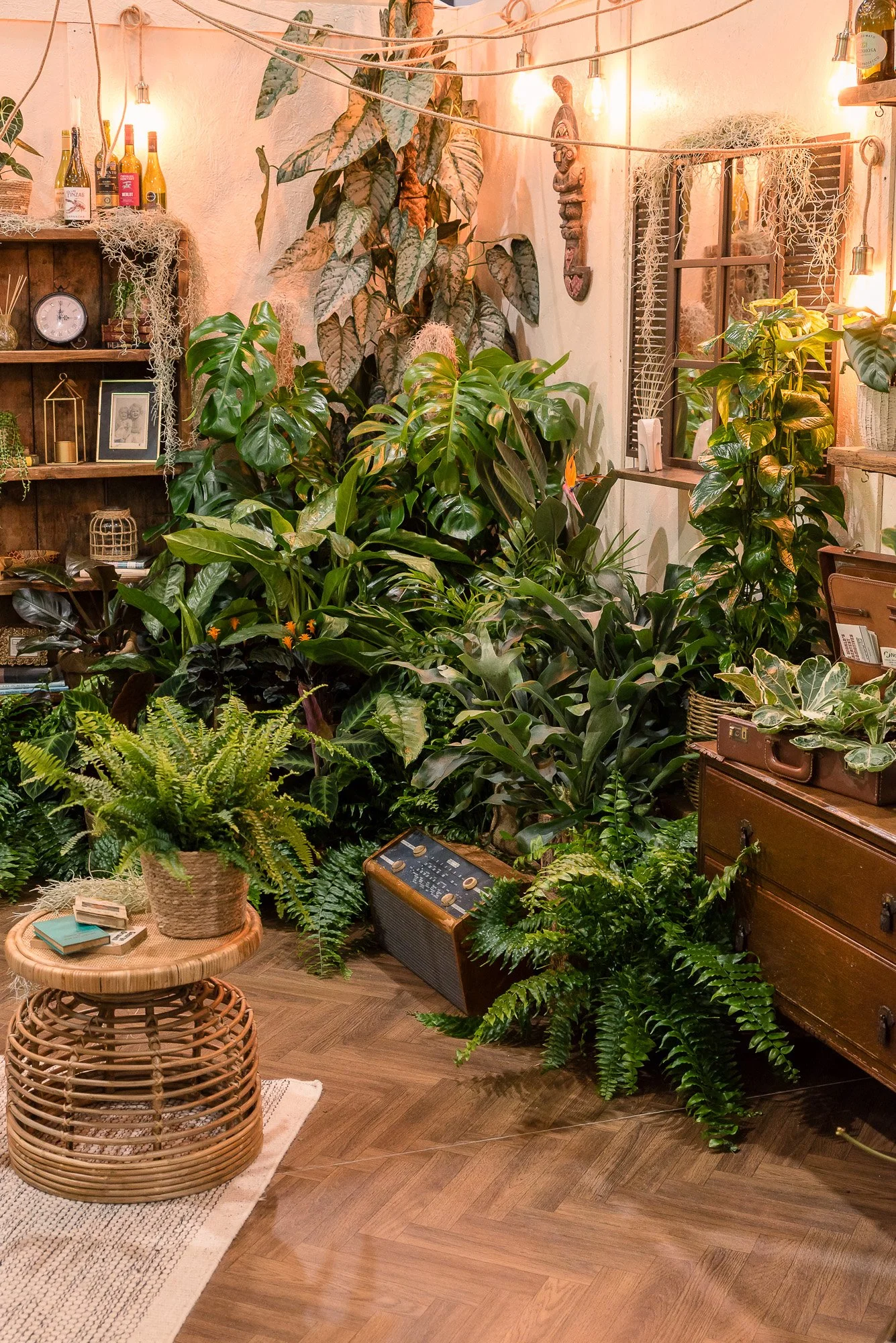
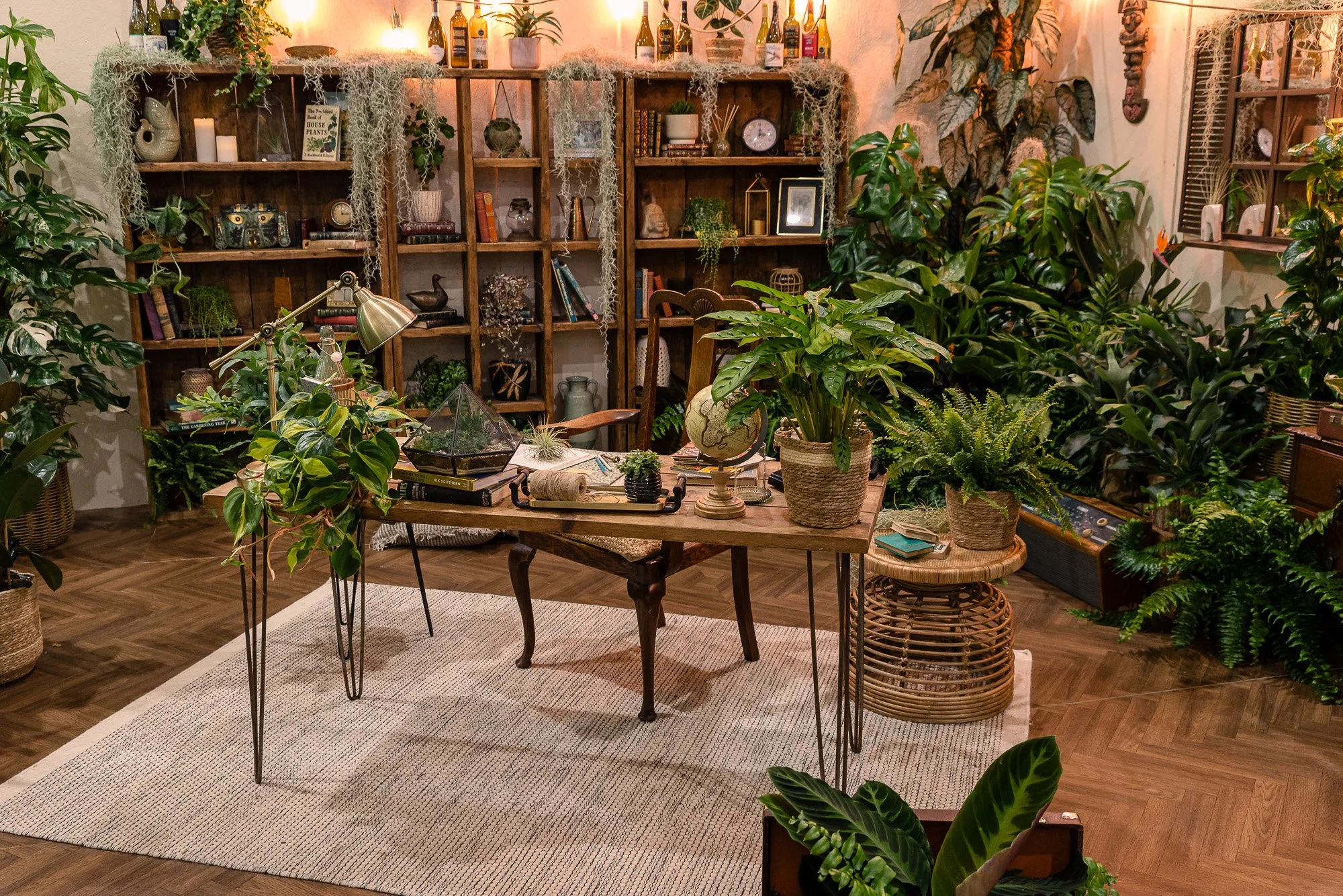
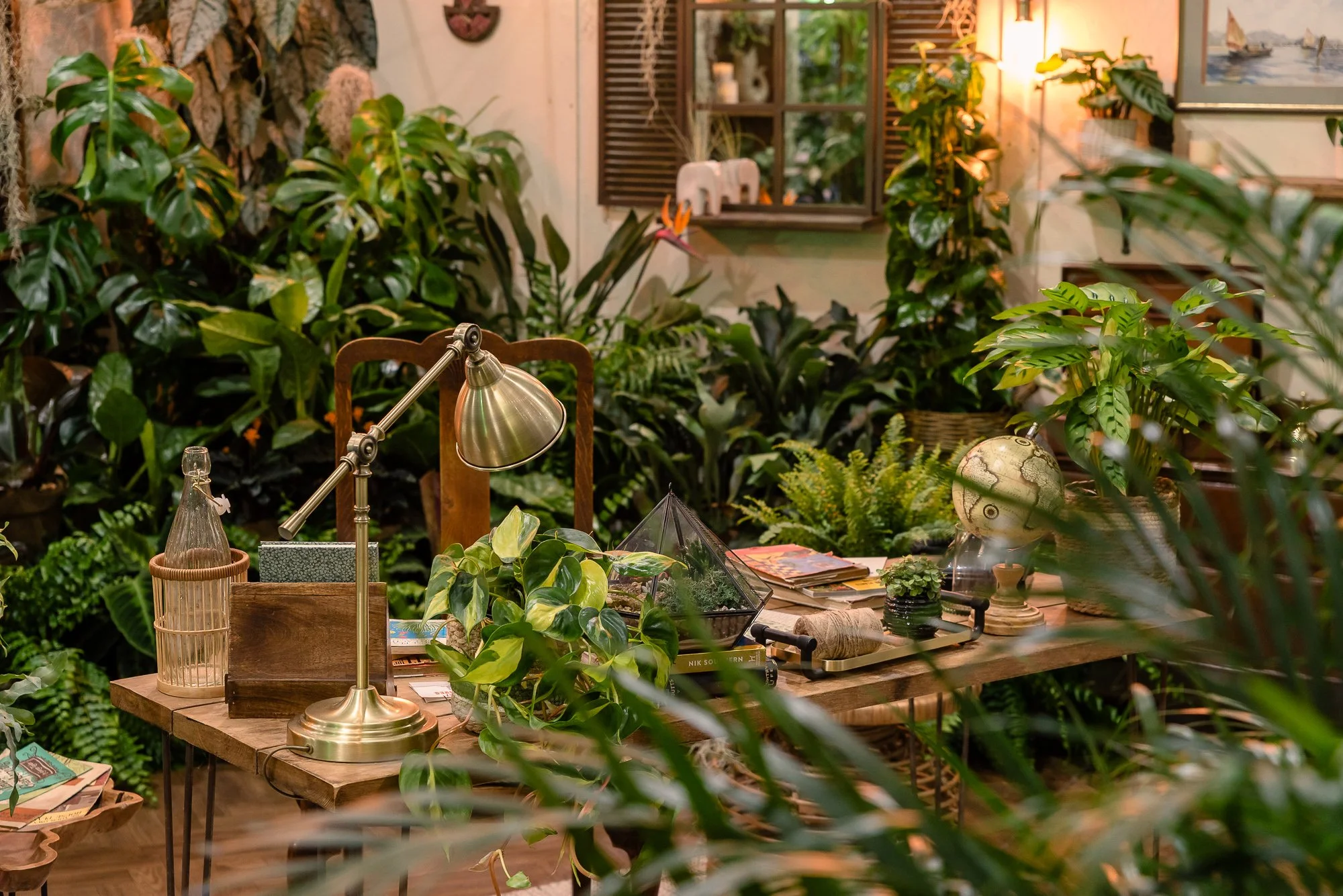
Next up I enjoyed the warm wood tones of ‘the scholar’s jungle’, created by Botanic York, which beautifully complemented the diverse array of planting. Again, my photographers eye was drawn to contrast, this time in the texture of the leafs - from the fine fern fronds to the sharp spikes of the Sansevieria. I loved the narrative surrounding this ‘garden’, bringing green into the workspace for wellbeing and stress relief, as well as displaying how how indoor plant can thrive in peat-free planting medium. In reality, this design felt achievable in most homes with enough time and inclination.
Lastly, I enjoyed seeing the Grow Tropicals ‘Biophilic Design’ feature garden, an evolution from their 2025 RHS Urban Show exhibit called ‘Happy Houseplants’. The dark aesthetic really made the greens of the tropical plants on display pop out. Whilst perhaps taking things to an extreme (that sink, anyone?), they show how humans can live in harmony with plants within their homes.
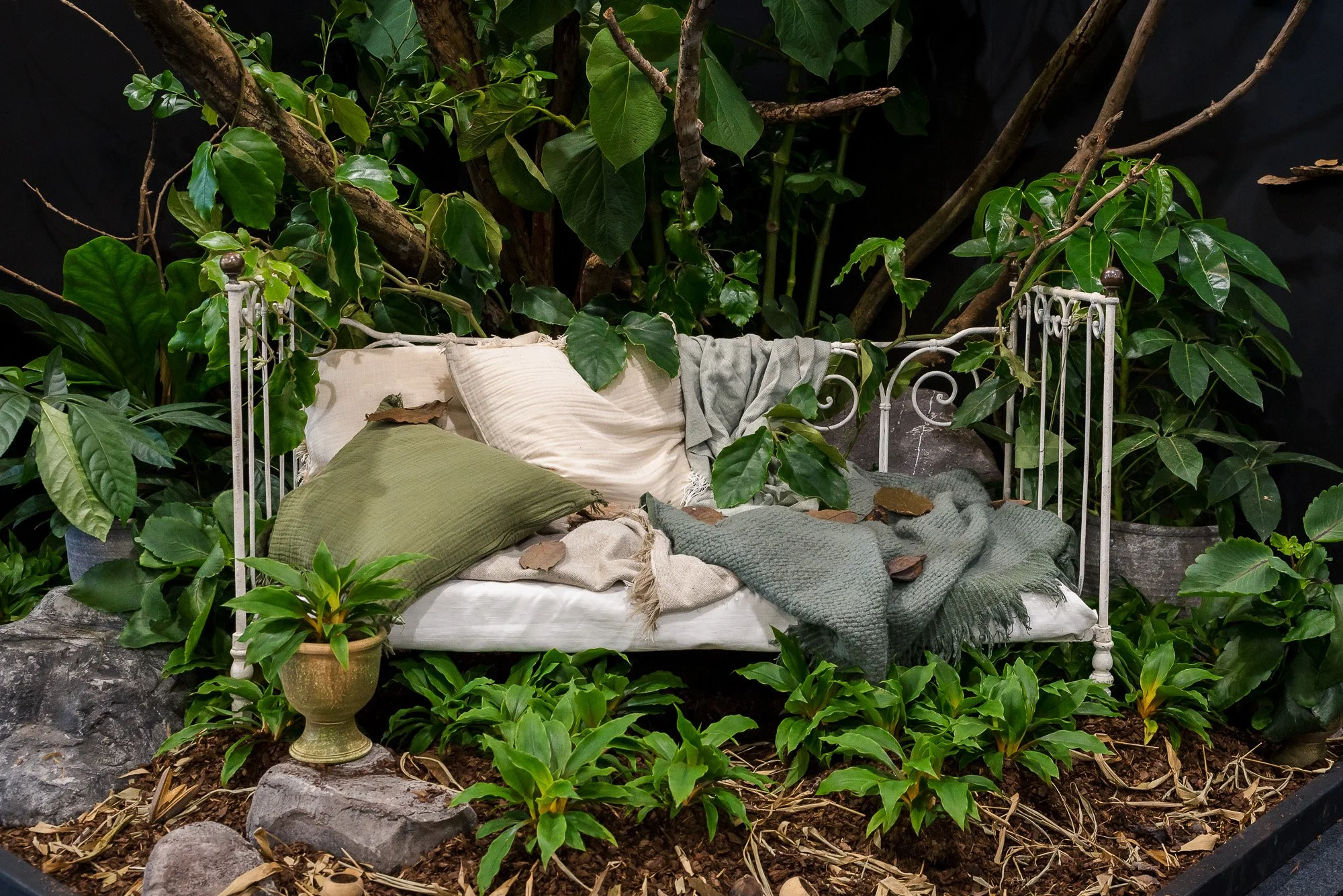
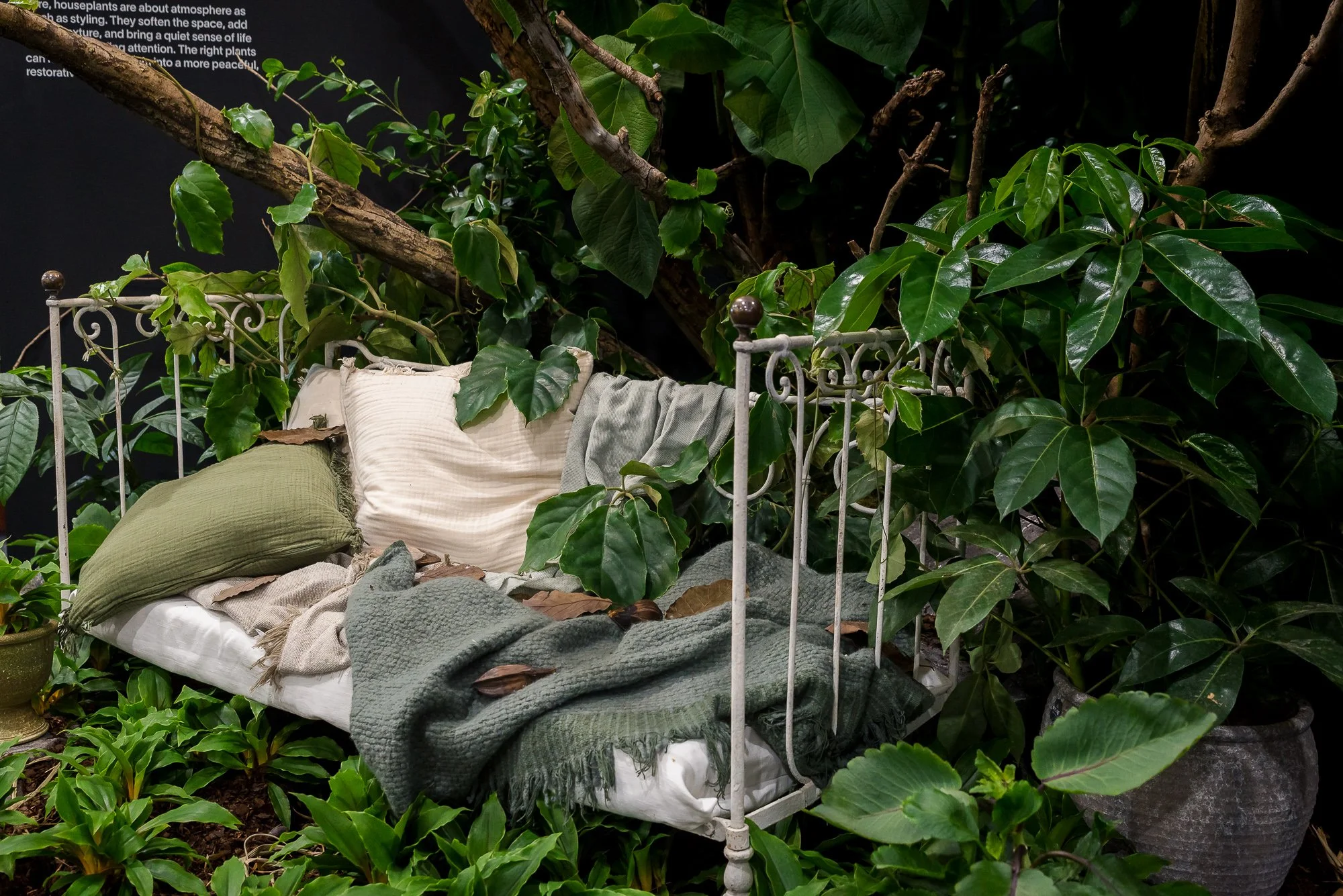
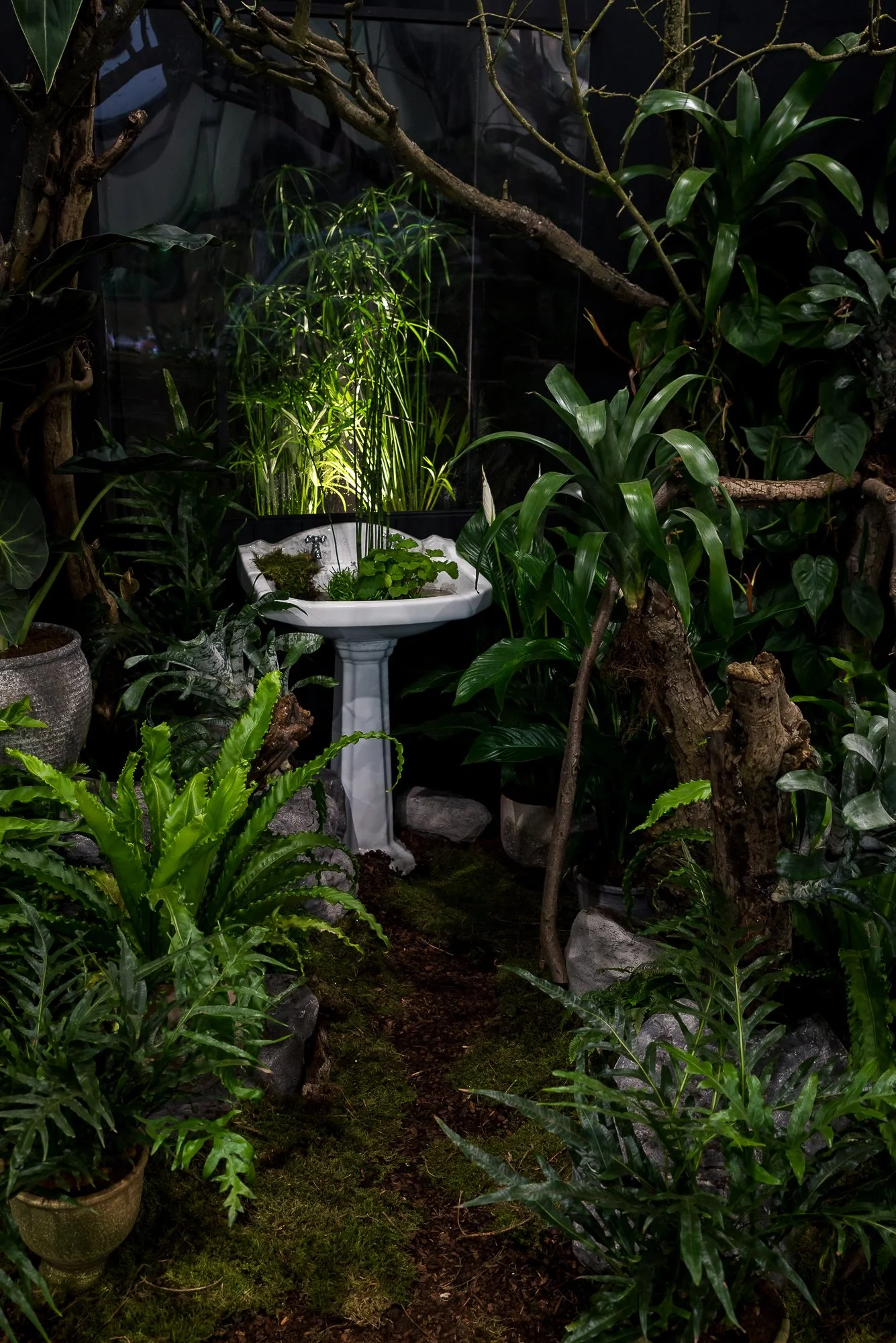
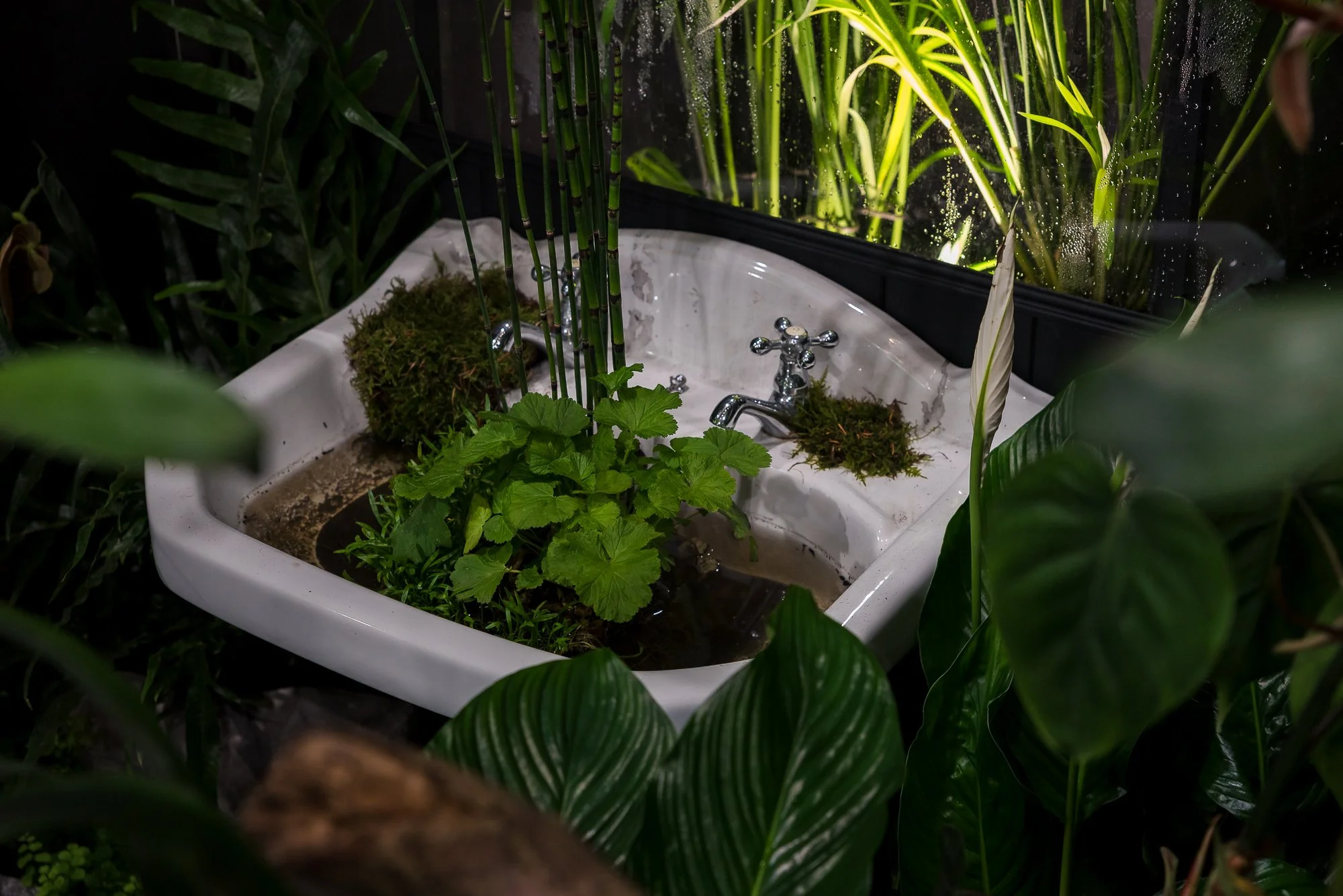
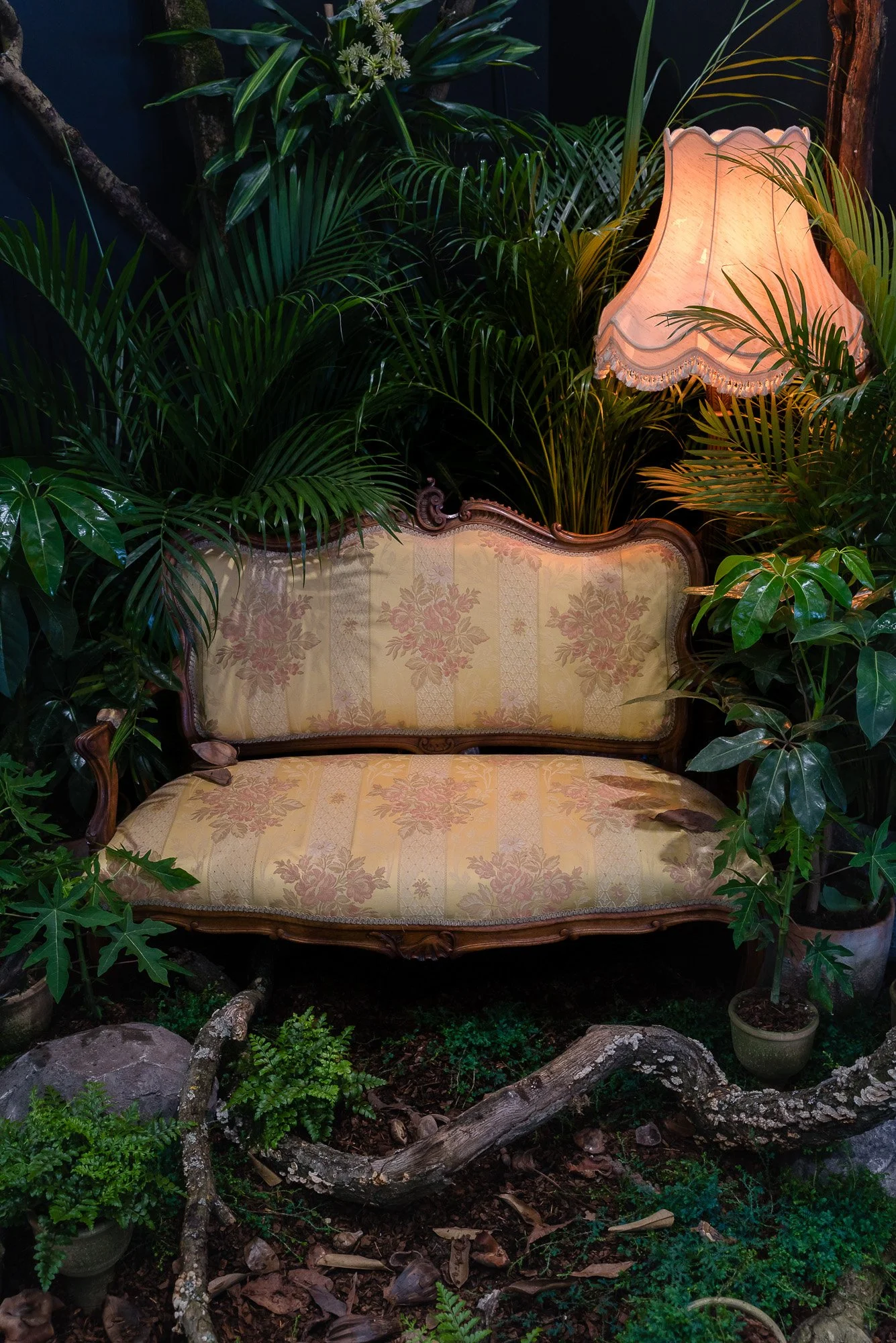
Overall I had an enjoyable and productive working trip to RHS Malvern as Garden Photographer. I’ll definitely be back in future years as it’s a wonderful start to the garden show season with some of the friendliest and most talented designers within easy reach of my home in the midlands. And how can you overlook the incredible backdrop of the Malvern Hills?
I am available for commission by any designers looking to document their designs coming to life at future shows, I can offer a range of coverage packages depending on what you need and size of your show garden, so please don’t hesitate to Contact Me first to discuss how we can collaborate.
What’s going on at RHS Wisley?
A whistle stop summary of my GMG/PGPA visit to RHS Wisley in April 2026
I was rudely awaken by my alarm clock when it went off at 4:10am.
I was upright, showered, dressed and out of the door with Thermos flask in hand by 4:30am. My fully laden camera bag was on the passenger seat next to me and my tripod loaded in the boot of the car.
I was on my way to RHS Wisley for only the second time in my life. This time for the Garden Media Guild arranged visit in April 2026. I was fortunate to secure a place after being put on a waiting list for the event, kindly organised by Jill. I and other members of the Professional Garden Photographers Association (PGPA) had been granted special early access from 7am, hence the incredibly early departure from Birmingham. The 2 and half hour drive was punctuated only by a brief service stop to scoff my overnight oats and glug a cup or two of steaming hot coffee.
Upon arrival I got lost circling around the giant, empty car park but was eventually greeted just after 7am at the main entrance by writer Jill Anderson who had organised the visit on behalf of the GMG and, Liz Woznicki RHS Director of communications who would be coordinating the day. After a brief natter about how great the potted tulips by the entrance looked I was guided through the old laboratory building into the gardens and was instantly taken aback by the scale and diversity of the gardens.
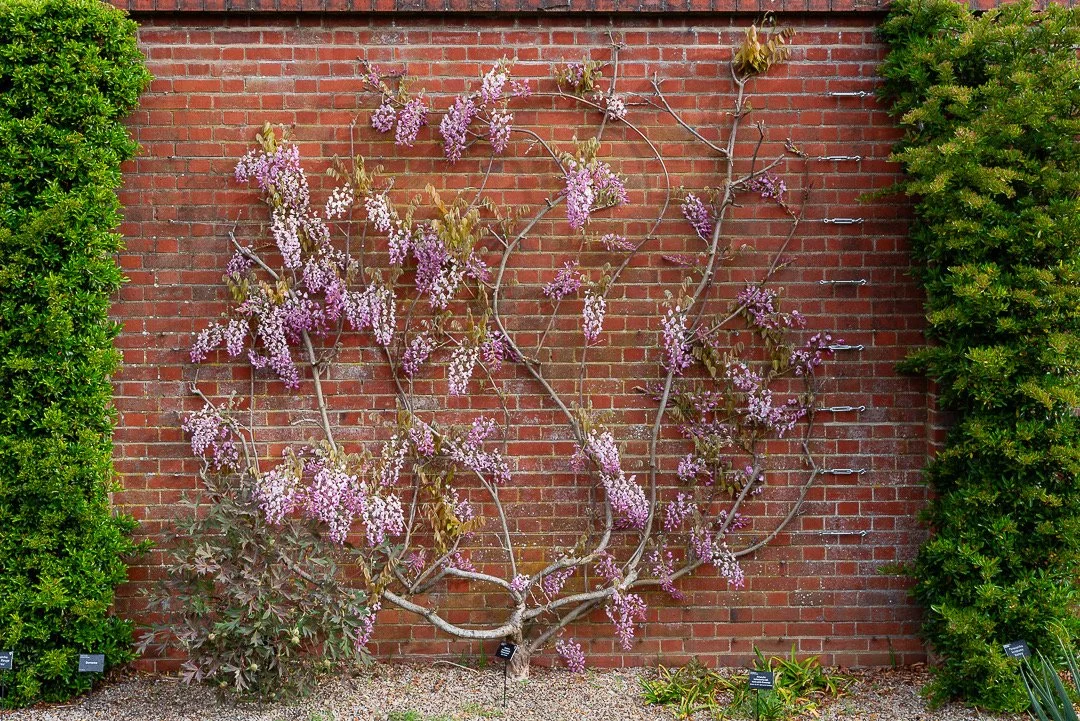
I’d planned ahead and knew I wanted to head to the box hedge trials in the Walled Garden as well as Oakwood but my plans were sidetracked as I was drawn like a magpie to all the shiny things. There were small Acers being kissed by soft morning light in the Alpine Meadow, Wisteria brachyborys - 'Showa-beni' blossoming in the warm side light and tulips everywhere, but especially lining the Jellicoe canal. So my best laid plans to stay calm and focussed on a few areas went straight out of the window as I dashed from place to place.
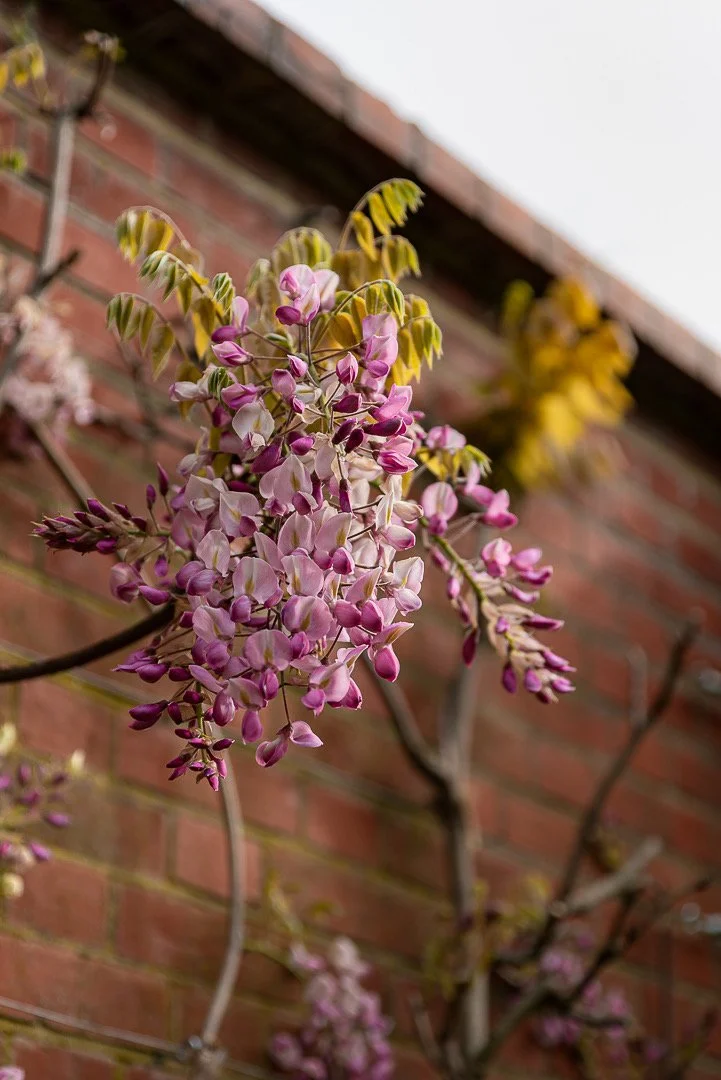
Wisteria brachyborys - 'Showa-beni'
I had a quick word with myself and get back on with my initial plan, spending some time by the Japanese pagoda in 7 Acres, taking in the vibrant acid greens of the Acer negundo - ‘Winter lightning’ and woven willows, underscored by deep hues of the Spanish bluebells.
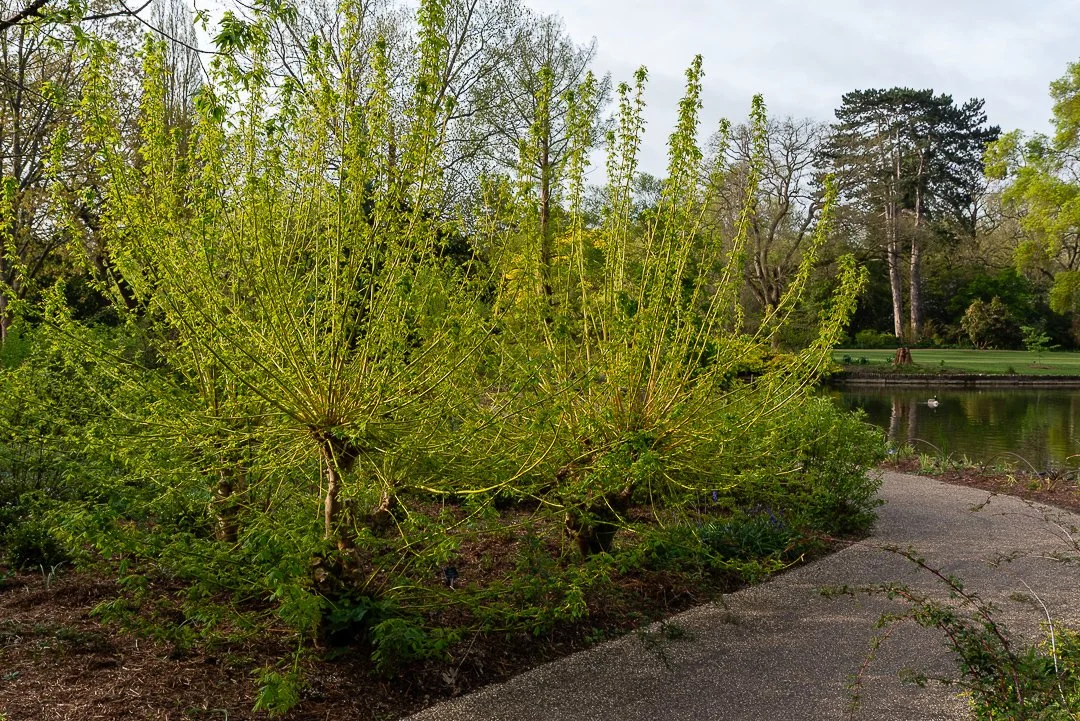
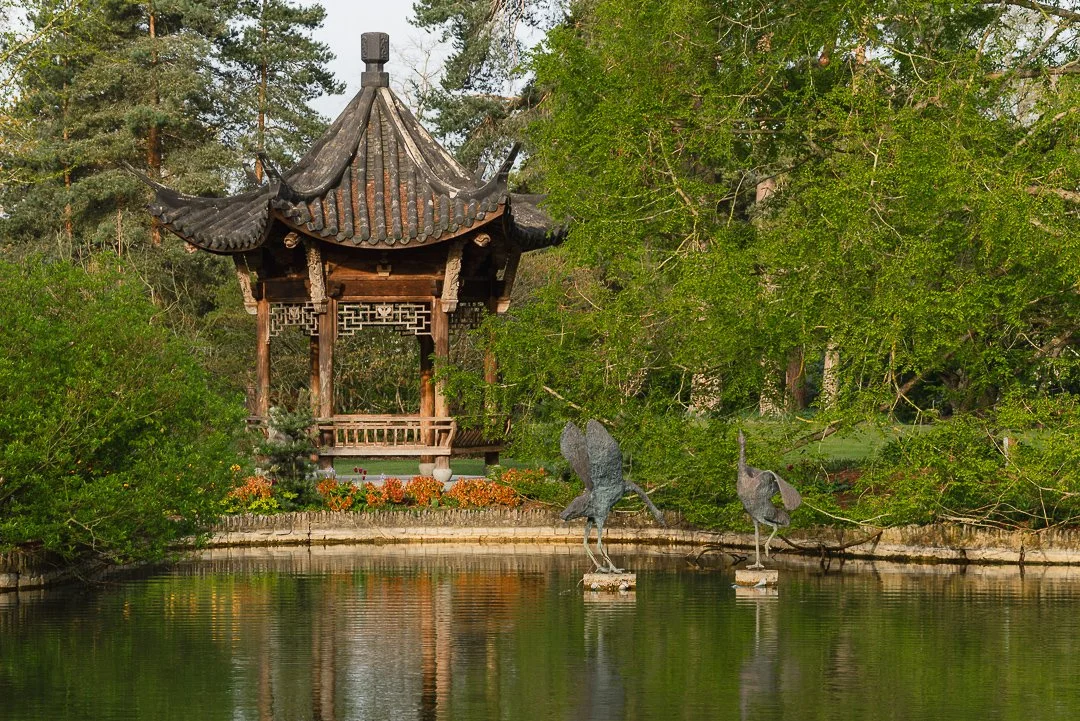
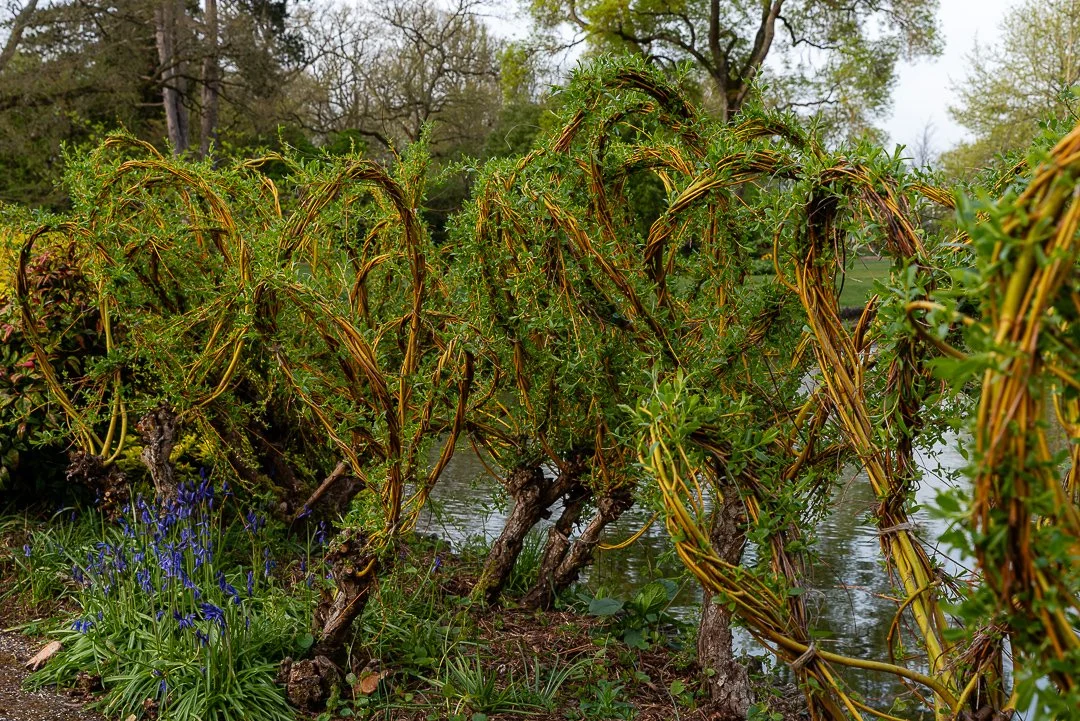
For some of the time the sky was overcast and the light rather flat and uninspiring. That said, this did give me the opportunity to bust out my graduated ND filters to balance the exposures of the bright skies and darker foregrounds. When the sun did occasionally broke through, it provided some pleasant warm tones to my images. Such as these ones of the pagoda and nearby giant redwood in the 7 Acres area of the garden. Meandering through Oak Wood was also a joy, with camellias, rhododendrons and bluebells all in bloom.
I was lucky to have found my way back to the walled gardens and Water lily pavilion just before a brief downpour, where I met PGPA member Nicky Flint (@sussexstills). We waited out the shower under the shelter of the pavilion and caught some sun breaking through the clouds over the diverse array of alternative hedging. It was quite the decorate array of buxus alternatives; Ligustrum, Osmanthus, Euonymus, Lonicera, Berberis and Taxus to name just a few.
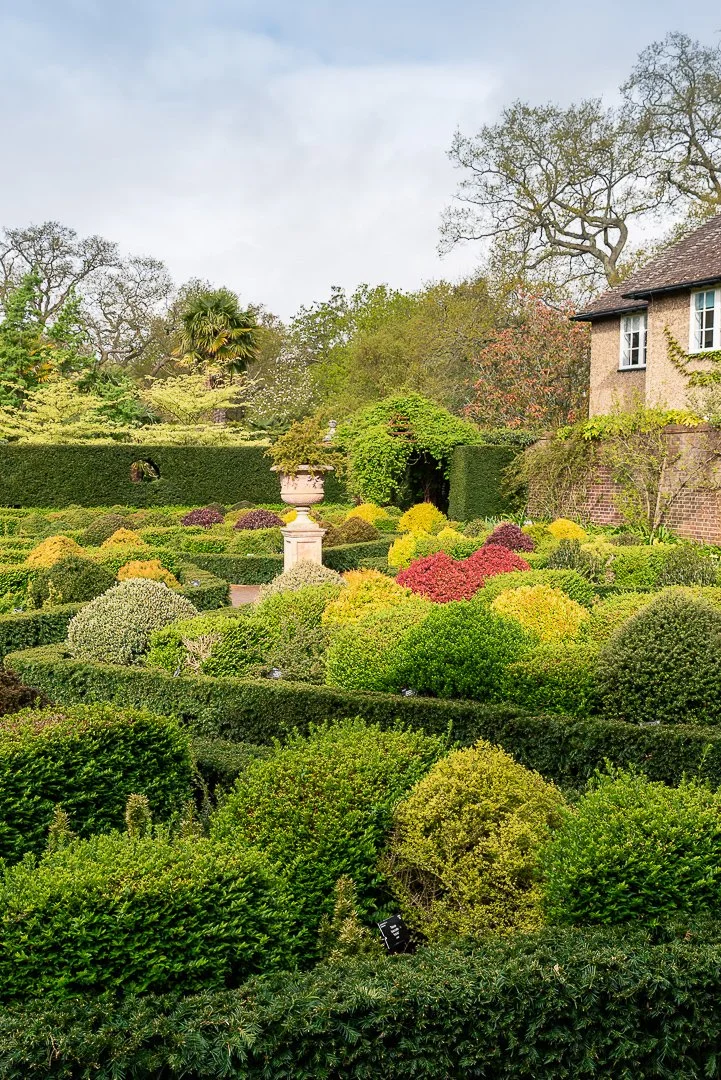
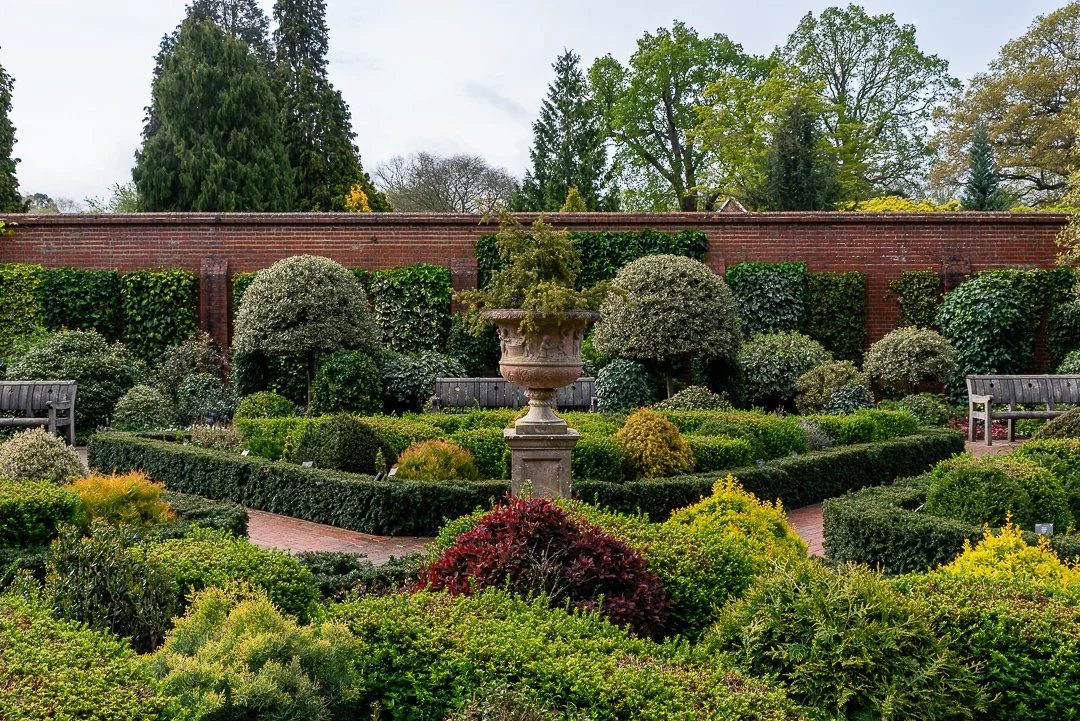
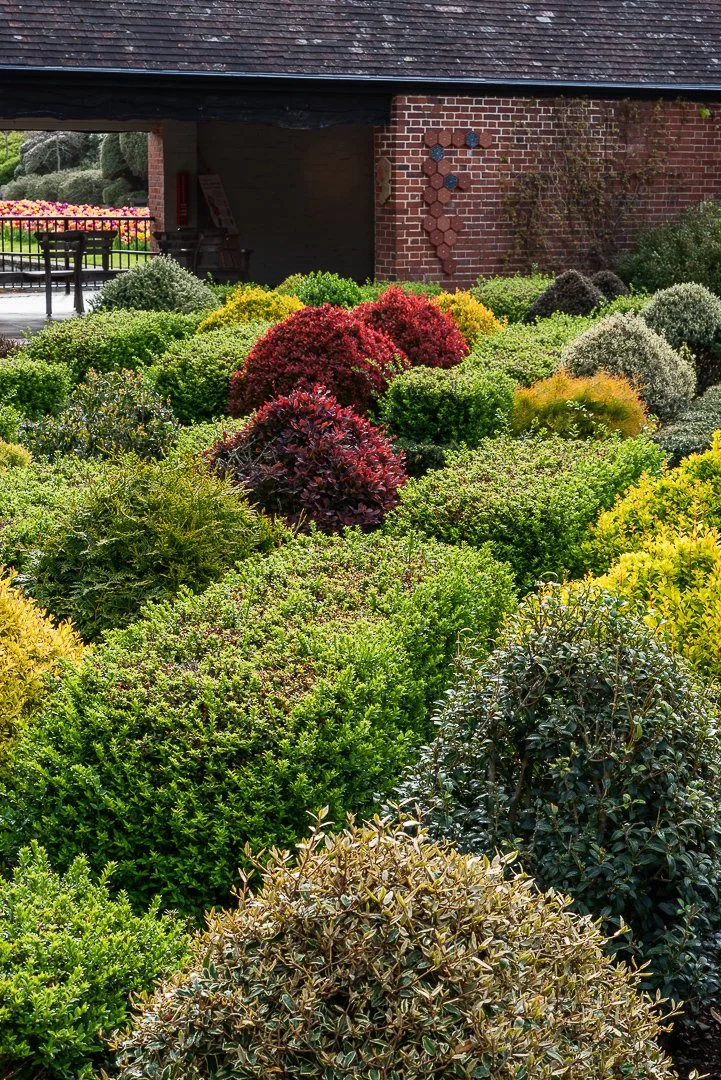
Not long after this, having spent time admiring the jewel like colours of the tulips lining the Jellicoe canal (which I later learned used to be the original propagation greenhouse),we met up with other GMG members for an introductory coffee. Fortified with caffeine and pastries, we were taken on extensive, informative tours of the garden by a range of RHS staff. I quickly learned I’d barely scratched the surface of the gardens during my early morning shoot. We took in more of Oakwood, some of the transitory ponds by the Rock Garden, the Piet Oudolf landscape (with thousands of perennials and bulbs planted over couple of years) and onwards to the Trials gardens. The staff spoke eloquently and effusively about the work they and their colleagues undertake to preserve and enhance the gardens.
During what was intended to by an extended lunch break I was fortunate to tag onto an impromptu tour of Battleston Hill, led by independent gardening expert Peter Mills and accompanied by Mark Packham. Peter passion for gardening and wildlife was infectious. Mark and I were treated to his wealth of knowledge about scented rhododendrons amongst other trees and shrubs. Peter also identified a host of insects and birds by eye and eye. We were astonished to see quite how early a lot of things had flowered this year, including the Viburnum and Paulownia.
By this time my stomach was grumbling (I’d been on the road since 4:30 after all) so we wrapped up our tour and met some other GMG and PGPA members for lunch at the Hilltop centre. Fortunately this was well located for our post lunch activities of a tour around the World Food Garden. It was a relief to hear that the RHS has ceased using any harmful chemical insecticides, instead, they use natural and manual treatments to deal with insects which may unduly harm their crops. We saw upturned terracotta pots stuffed with straw to trap earwigs, and were regaled with tales of the hours of times staff and volunteers spend removing apple ermine moth caterpillars from their young trees. They also endeavour to attract natural predators such as birds to the garden, creating a balanced ecosystem to cut down on the need for human interventions.
Our final session of the day was a tour of RHS Hilltop - ‘the home of gardening science’ by Dr Alistair Griffiths, Director of Science and Collections. This was right up my street because Alistair spoke extensively about the research the RHS have undertaken into how gardening can contribute to Wellbeing and Climate Change adaptation. We were privileged to get a peak inside their extensive, climate controlled herbarium as well as to learn about the industry leading and knowledge sharing research the RHS are doing on the transition to Peat free growing. Alistair was clearly passionate about the work the RHS are undertaking, and most importantly, about sharing that information with gardeners and those in the horticulture industry so that we can all benefit.
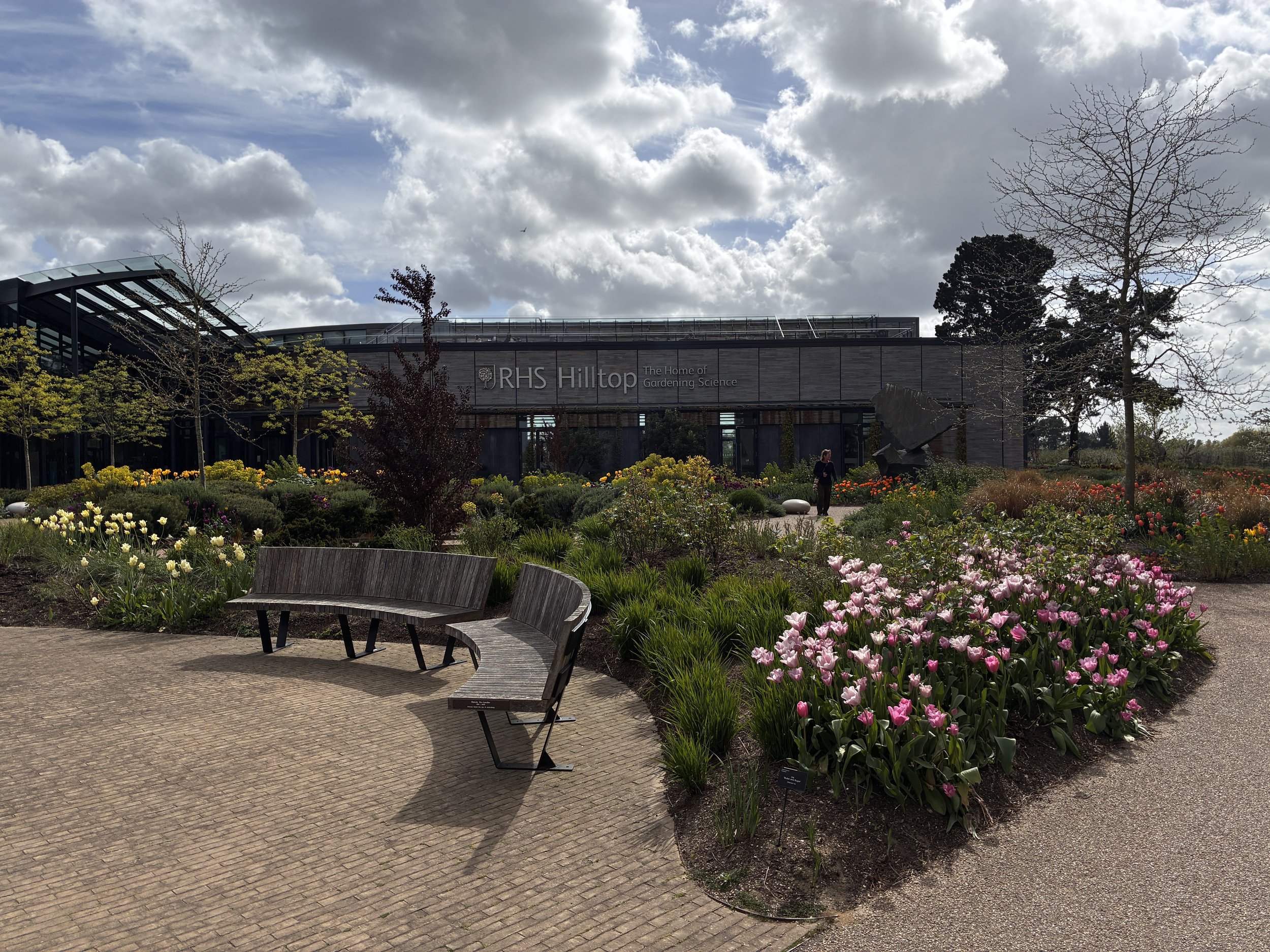
I was really fascinated to hear about the impact gardeners can make on the natural environment in terms of providing ecosystem services, such as flood reduction through water capture and storage. A lot more information about this can be found in the RHS “State of Gardening” report.
I have to say, by this late stage in the afternoon I was flagging. The day had been both visually and mentally stimulating with so many incredible vistas and so much in depth knowledge to take in. After saying my thanks and goodbyes to the other PGPA and GMG members, I hit the road to miss the worst of the M25 traffic. It was such an incredible first taste of GMG visits, the various members I met and chatted to were all so friendly and encouraging of my new career. Plus the RHS staff were all so welcoming and enthusiastic. Wisley itself was awe inspiring, I couldn’t recommend it enough as an example of gardening through the ages, from traditional cottage style gardening through to cutting edge techniques and practices for sustainability and remaining beautiful despite the effects of climate change.
My Services
Who do you work for then Dave and what do you do for them?
Well let me lay out a range of services I provide by writing about who I currently and would like to work with in respect to my Garden Photography business.
My goal is to be photographing gardens, plants and flowers full time in order to show off their beauty and form. The primary objective is to be published in major UK and international garden magazines. I love to provide an artistic representation of place and time using natural light to bring out design elements, highlight the form and texture of planting and evoke the emotion of what it feels like to be in the garden. I can also accurately document seasonal occurrences or organised events. Such as the first flush of snowdrops in winter; the proliferation of spring bulbs through, the explosion of colour in summer, or the turning of leaves to red and golden hues in Autumn. Capturing the ever changing nature of your garden. I’m accustomed to working at events as well, capturing candid shots of participants enjoying your garden or workshop. As well as bringing my own unique editorial style, I have the necessary tools and techniques to accurately reproduce colours for print and publication if the need arises for your brand.
The services I carry out can meet the diverse needs of a range of individuals and organisations. Let’s dive a little deeper into that.
Garden Designers may need professional garden photography for a plethora of purposes. It may be to update their website or printed portfolio to demonstrate to their prospective clients their artistic vision and completed projects. They may be creating a show garden and wish to document the entire journey from inception through to final completion of the project. Or they may be entering a prestigious industry accreditation or awards which have very specific image submission guidelines, and obviously you want to show off your work at it’s best within the confines of these restrictions.
Before and After images are also a valuable addition to a designer’s website, showing the transformation and value you add through your own artistic vision.
Working with designers and cultivating that relationship over a period of time is important to me, in order to achieve the best possible photographic outcomes, understanding their intention for the photoshoot is key. Is it intended to convey a feeling from the garden as a whole?; capture the attention of prospective clients?; or is it to demonstrate the designers technical and artistic skills in implementing a certain design aesthetic or create a harmonious planting scheme? I pride myself on being able to capture a mood and tell a visual story about the garden, taking viewers on a virtual journey through the space. But also having an eye for the detail and capturing the designers attention to the finer aspects of the brief and actualisation of their vision.
I’d love to talk to any garden designers about collaborating on a project, no matter how big or small and tell their story of how they create wonderful garden designs for their clients.
The range of services I provide can also be of use to Garden Owners (both private and public). They may wish to have some images for use on their website or social media in order to attract visitors. They may also need high quality imagery for use in printed collateral such as posters or brochures. It could be that they are hosting specific events like open days, or craft workshops and would like to visually document the event for posterity or future advertising. I really enjoy working with garden owners and event organisers to capture the energy of their garden.
Writers and journalists are another potential group of clients who may need quality images of a specific garden for a book or magazine article they may be working on. If this is you, I would love to discuss your needs and see how we can work together to add stunning visuals to your writing.
Product and archival imagery may be required by Growers, nursery peopled and national collection holders. This could be for their advertising and marketing, or simply for cataloguing or archival purposes. You may also wish to feature in magazines or periodicals. I can meet your needs with clear, well composed imagery using neutral or artistic backdrops.
Why would you pick me then?
Well I am excited to work with a range of people in the gardening world and spread that excitement through the quality of my work. It’s my pleasure to capture the essence of a garden and create visual stories to take people on a journey. I enjoy working collaboratively with my clients and am flexible and professional in my approach.
If you’d like to work together on a project then don’t hesitate to get in touch, we can book an initial consultation to discuss your needs and I can tailer a package to meet your needs.
How I have become a garden photographer
Today I am going to reflect upon my journey so far towards becoming a garden photographer. I’ve touched previously upon how I stumbled upon this potential caster move but what did I do next?
Well, whilst I knew I enjoyed gardening and photography I was under no illusions of being a ground breaking, or event competent, photographer. I was aware I needed to up my skill level behind the lens. So I began researching what training or courses were available.
I started with some industry research - basically binging some gardening magazines - and it became apparent that a handful of artists featured frequently. So I started stalking them online via their instagrams and websites. This is how I stumbled across Jason Ingram whose Create Academy course he had not long before published. I instantly signed up to this and was greeted with an excellent virtual course covering all manner of topics from lighting and composition, gear tips, how to take garden landscapes and plant portraits in the garden as well as setting up still life subjects indoors, right through to some post production and photo editing tips. The production quality of the videos is excellent as are the locations where they are shot. Jason explains things in a very calm, clear and engaging manner, so I’d say the course is accessible for the enthusiast photographer through to someone with a lot of experience. He’s very open and forthcoming with how he plans and achieves the incredible images he makes, it is no surprise he is well known and respected in the industry, to the extent he has shot Highgrove Castle for HRH King Charles.
I’ve used a lot of Jason’s tips in my subsequent photographic practice, most notably, using graduated ND filters to balance wide dynamic range in exposure which, is often experienced during sunrise and sunset. I find the effect it creates more pleasing (and less time-consuming in post) than bracketing exposures or using HDR effects in Lightroom. My other key take away has been searching for the best light and shooting at the extreme ends of the day, as well as shooting contra-jour, or into the sun. This was something I was discouraged from doing in my youth, granted that was back when I was taking holiday snaps on a 35mm point and shoot camera. Modern digital cameras and lens coatings have less tendency to flare or lose contrast.
To put into practice what I had learned I needed some willing subject matter. So I took myself off to some local public gardens such as Winterbourne and Castle Bromwich Hall Gardens. I whilst I couldn’t yet access these during sunrise or sunset, I was more intentional with my compositions and it gave me experience practicing Lightroom editing. I learned about the various contrast tools, sharpening, selective colour editing as well as how to use the various masking tools. Below are some of my 2024 practice shots.
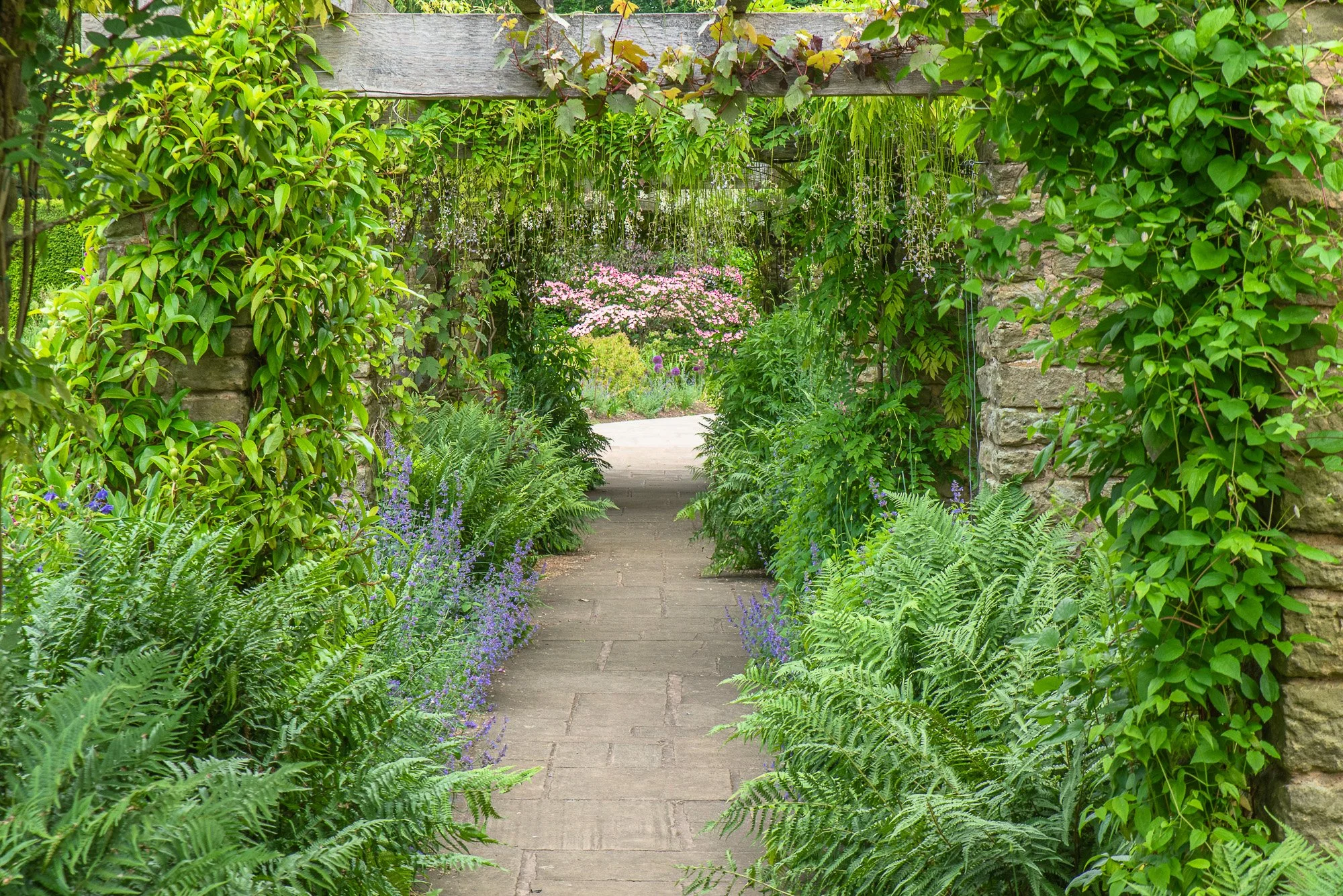
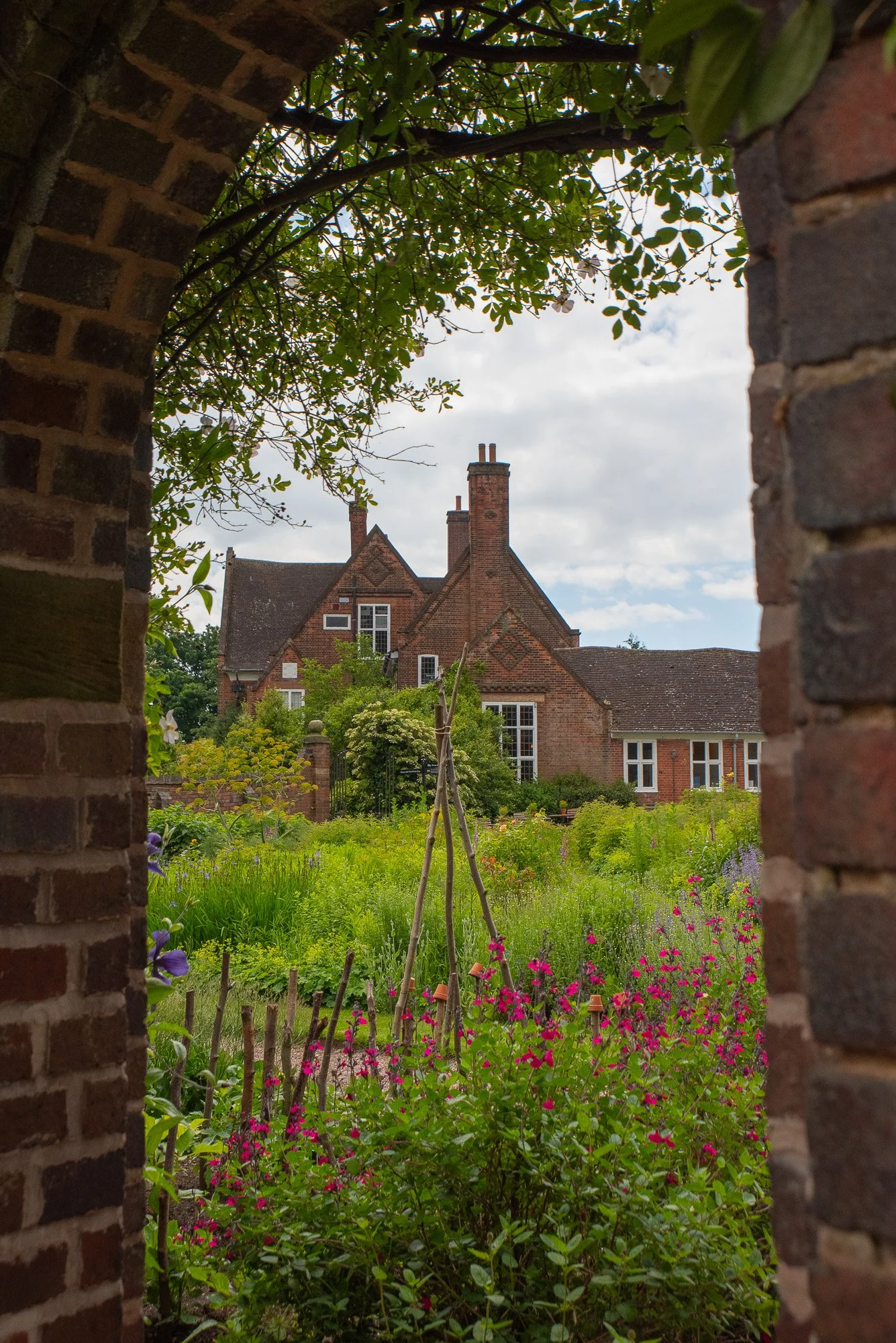
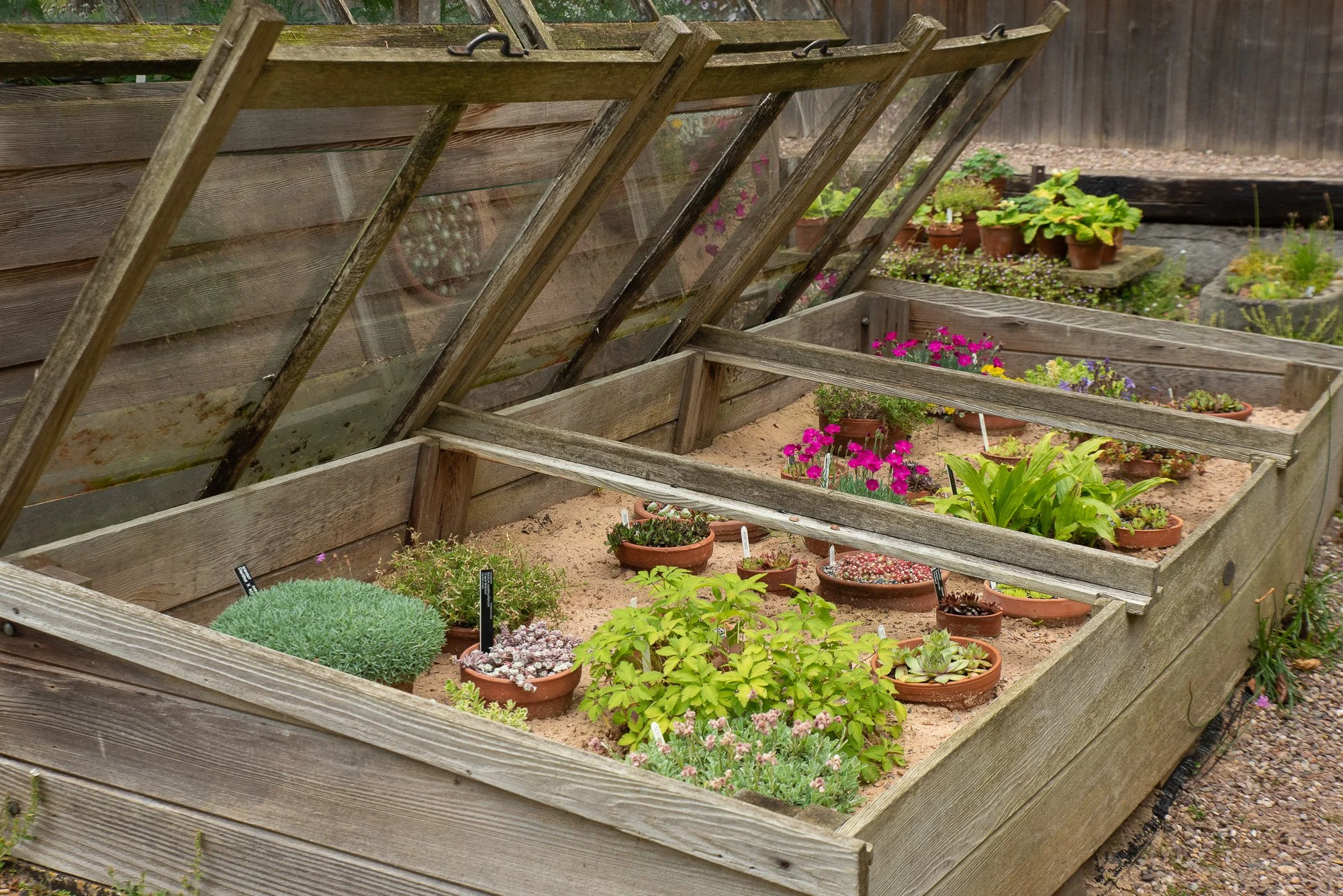
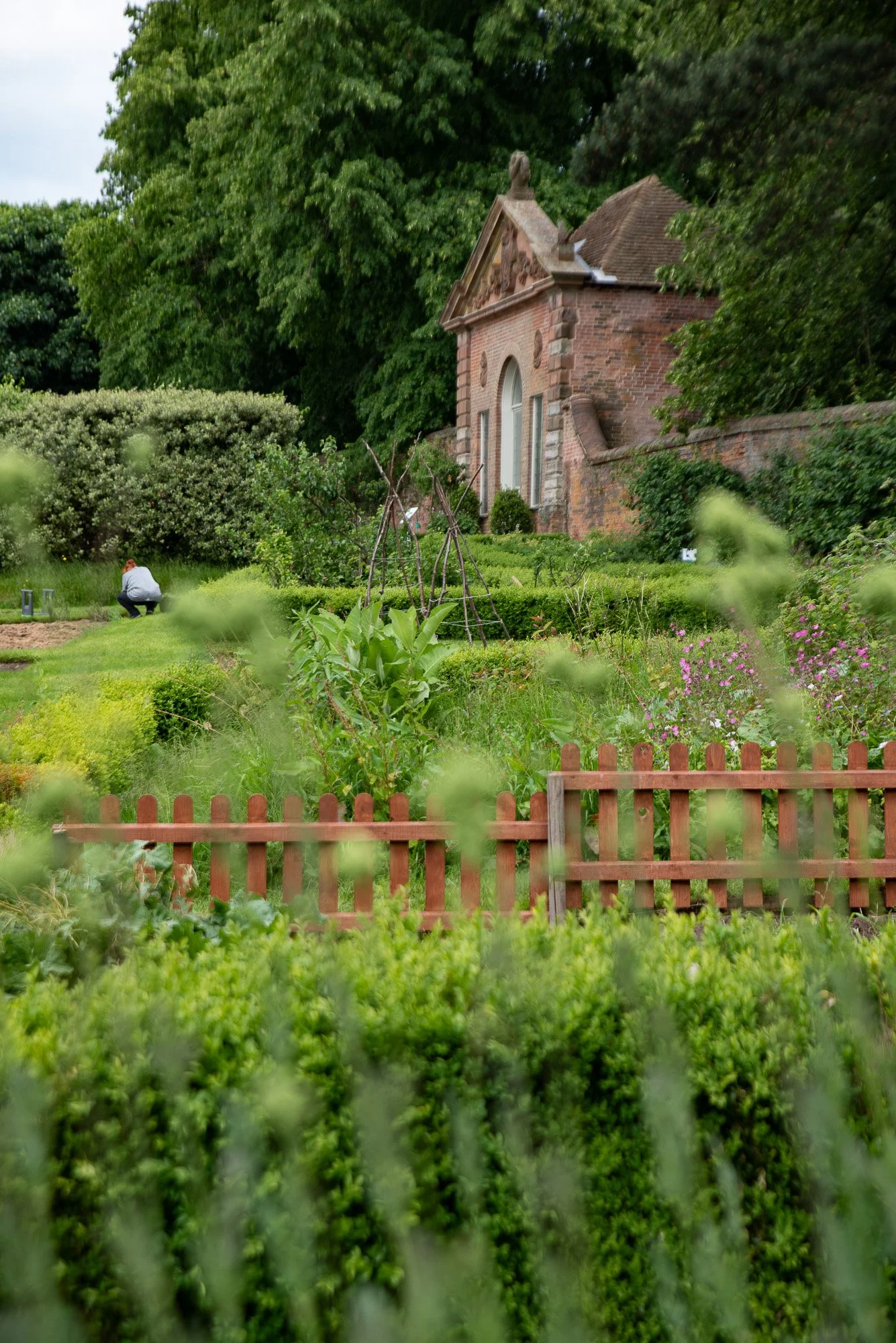
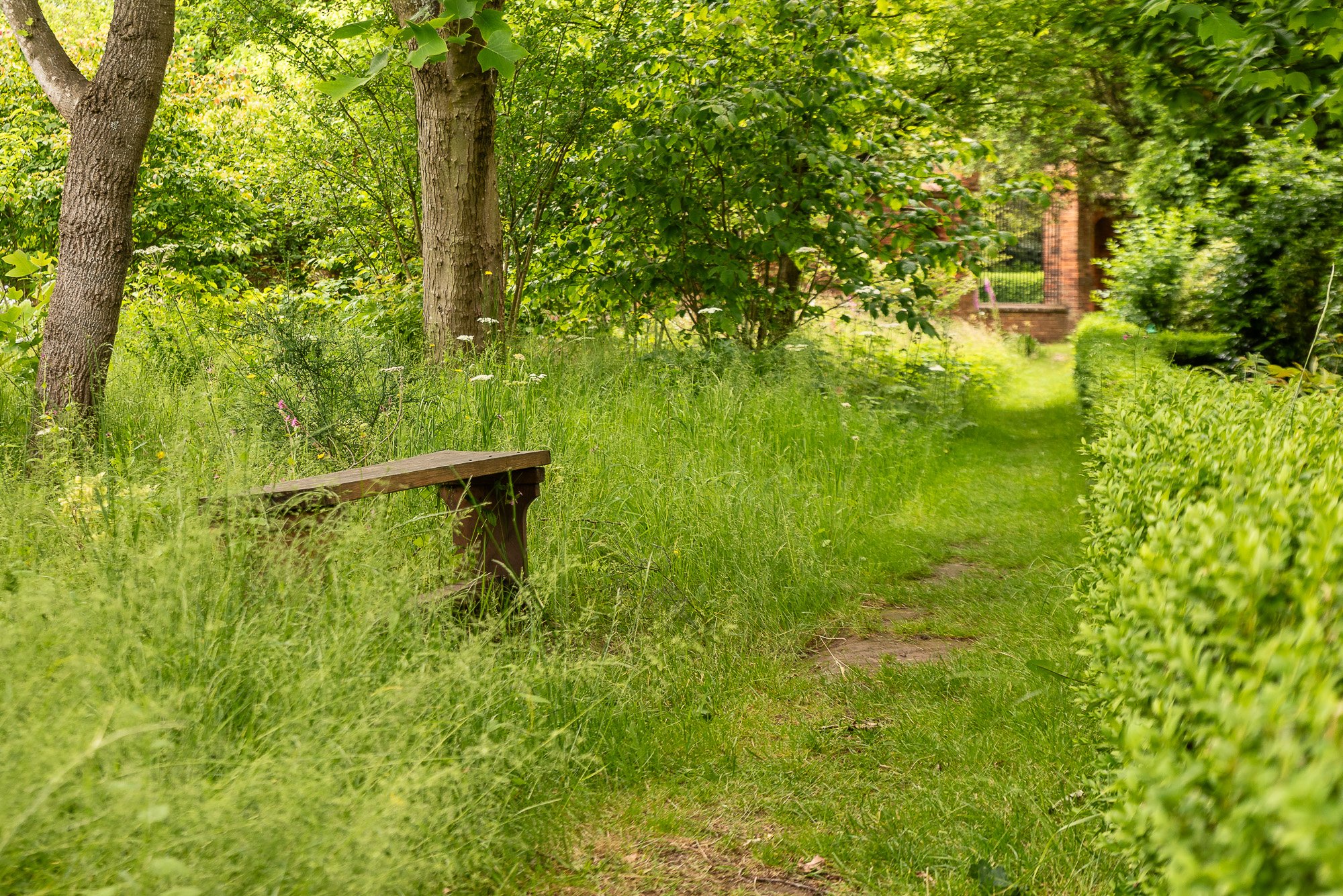
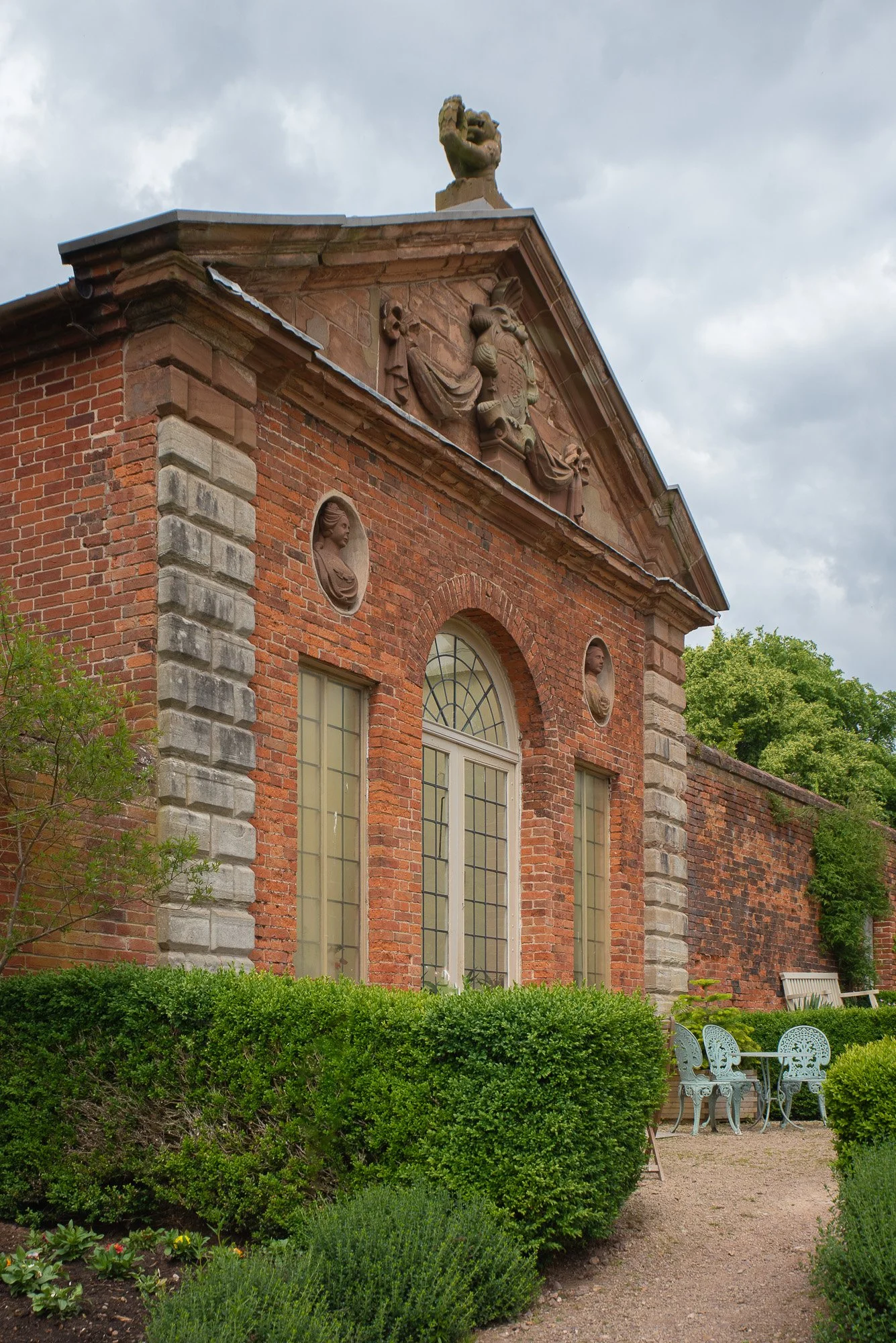
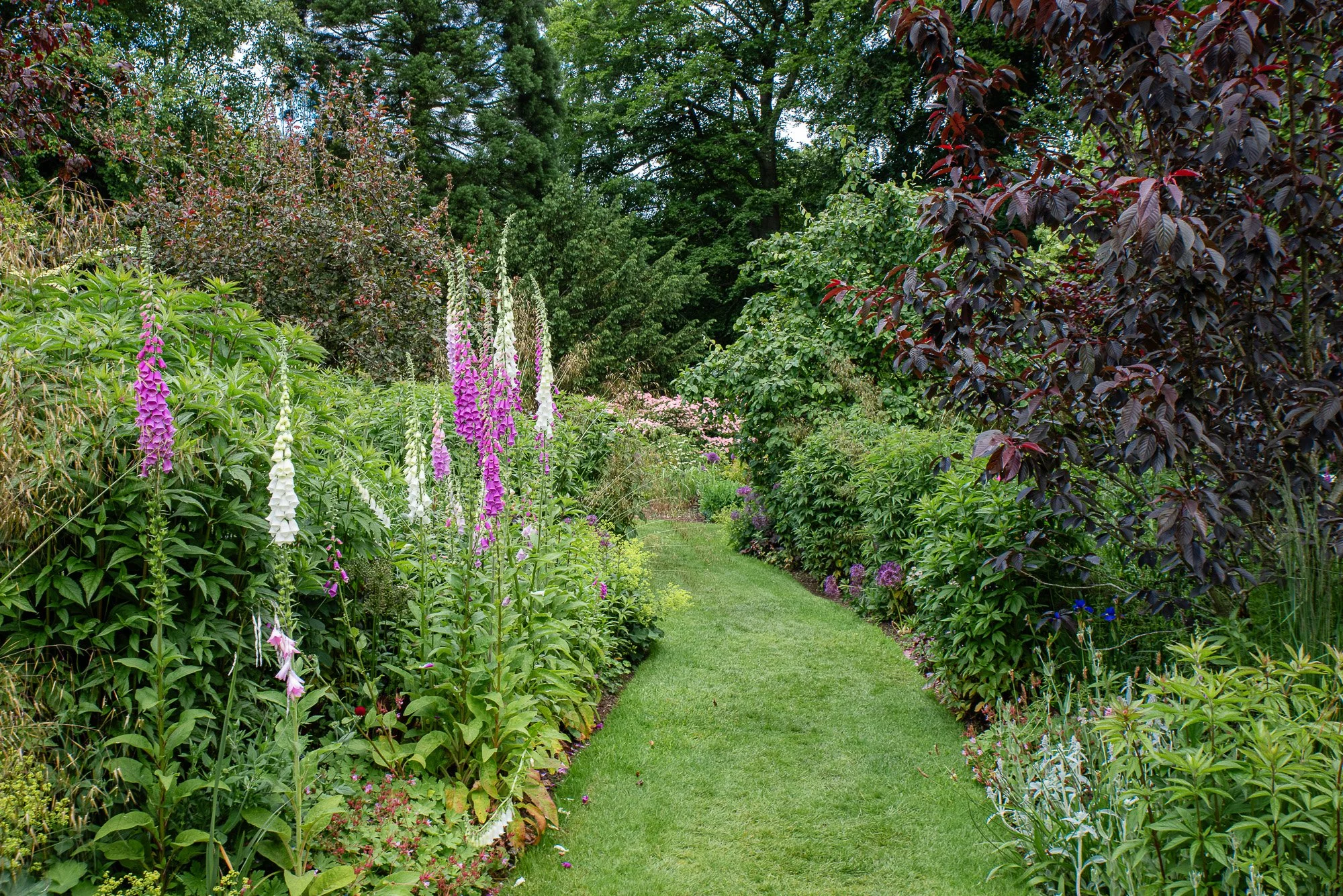
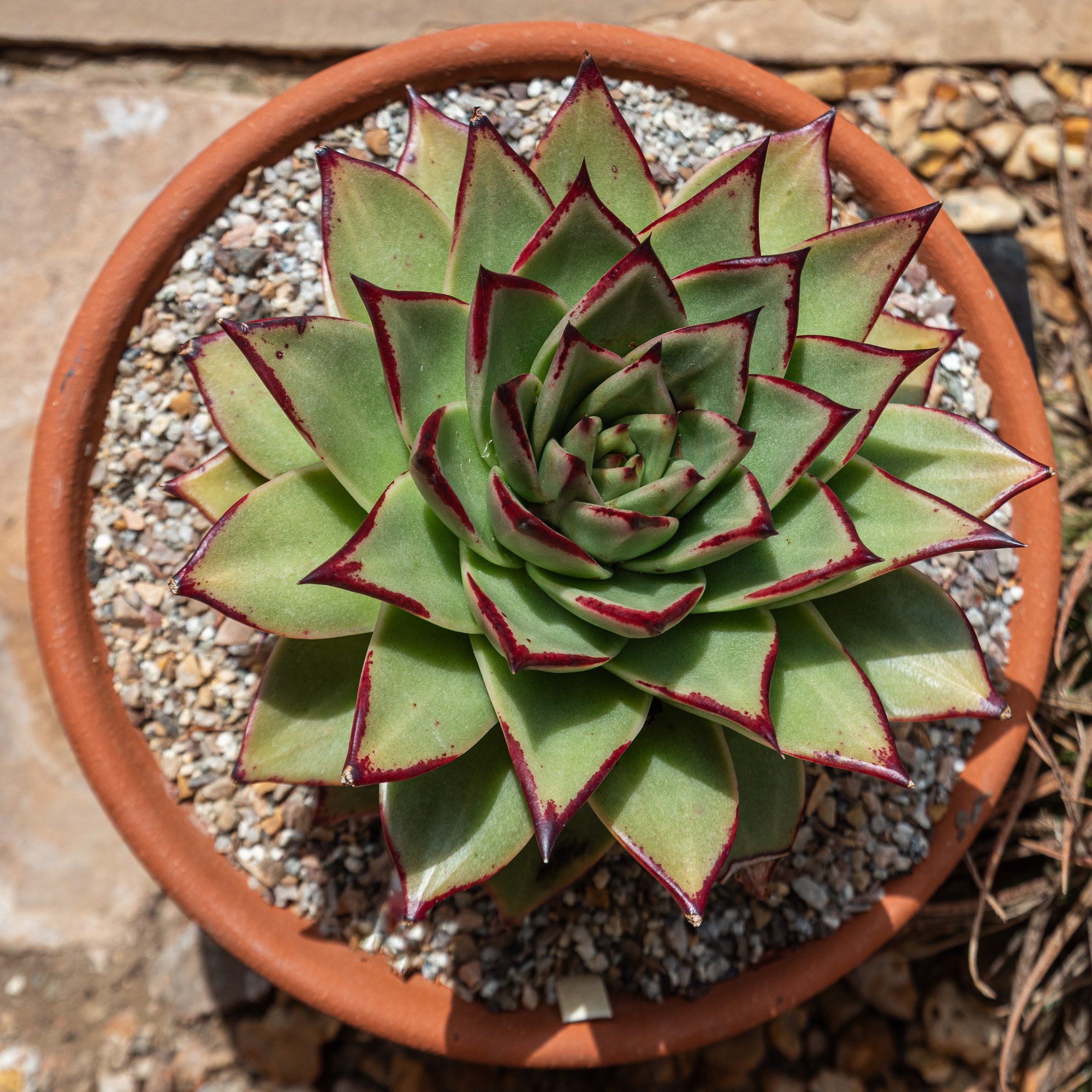
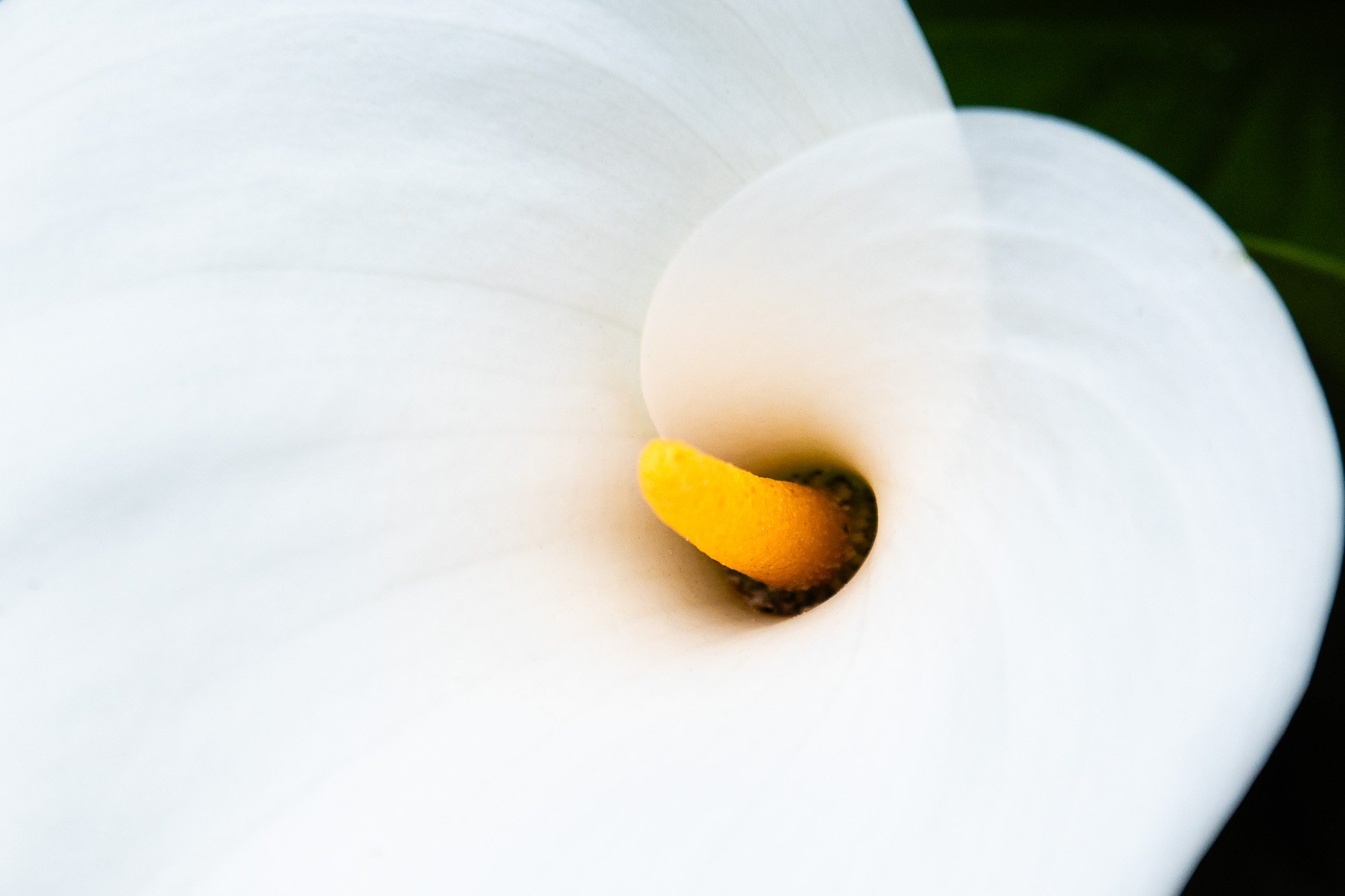
I don’t have a background in film development and darkroom printing, historically I had relied upon the JPEG colour profiles and ‘film simulations’ baked into digital cameras, or heaven forbid, ‘Filters’ available in smartphone and social media apps. I therefore had little experience of making a photo in a digital post production environment. That said, ever since acquiring my first “proper camera”, a Nikon D40 DSLR in 2009, I knew shooting in RAW as well as JPEG would offer most editing latitude, when I eventually got around to learning how. I am grateful I made this choice as it has given me the opportunity to revisit some old photos and better edit them to my current tastes. Let me know if you’d like to see some of these old shots in future blog.
Around the same time in 2024 when I was viewing Jason’s online course, I also attended a series of Camversation talks by Molly Hollman, the award winning flower photographer. The top 3 things I learned from her sessions were
Shoot regularly to get lots of practice - she shoots at least 1 day a week, if not more, even if it is just subjects in or from her own garden.
Explore creative possibilities e.g. use of backdrops, a Lightbox, macro photography etc.
Improve your post production skills, including using layers, object selection, blending etc. in Photoshop
As my knowledge improved I needed ever more practice, so I made contact with some local National Garden Scheme (NGS) gardens and arranged some visits to practice shooting and delivering a range of images from wide shots, to midrange detail and plant portraits. Some of this work is now viewable in my portfolio.
An important part of my practice has been to review and reflect upon my work. I intermittently revisit images from the last 2 years to see how I have progressed. As I learn new skills and techniques I find new ays of approaching old images I previously didn’t rate that highly. I may also find an image I previously liked not longer is to my taste or is not consistent with how my style has developed.
In late 2024 a locally run course caught my eye. It was a documentary photography course run by PRISM CIC, a Birmingham based network for photographers. The course covered some technical aspects of photography but what drew me in was that it was a project based course, centred in the up and coming residential suburb of Stirchley. It offered some structure and built towards an exhibition or participants work and throughout the course, we’d receive critique from professional photographer and visual anthropologist Oxana Bischin. I really valued Oxana’s comments and critique throughout the course, I admire her graphic and bold aesthetic combined with the social anthropological approach she has to her practice. As a group we were very proud of the exhibition we put on at The Old Paintworks in Balsall Heath during April 2025, my images are below
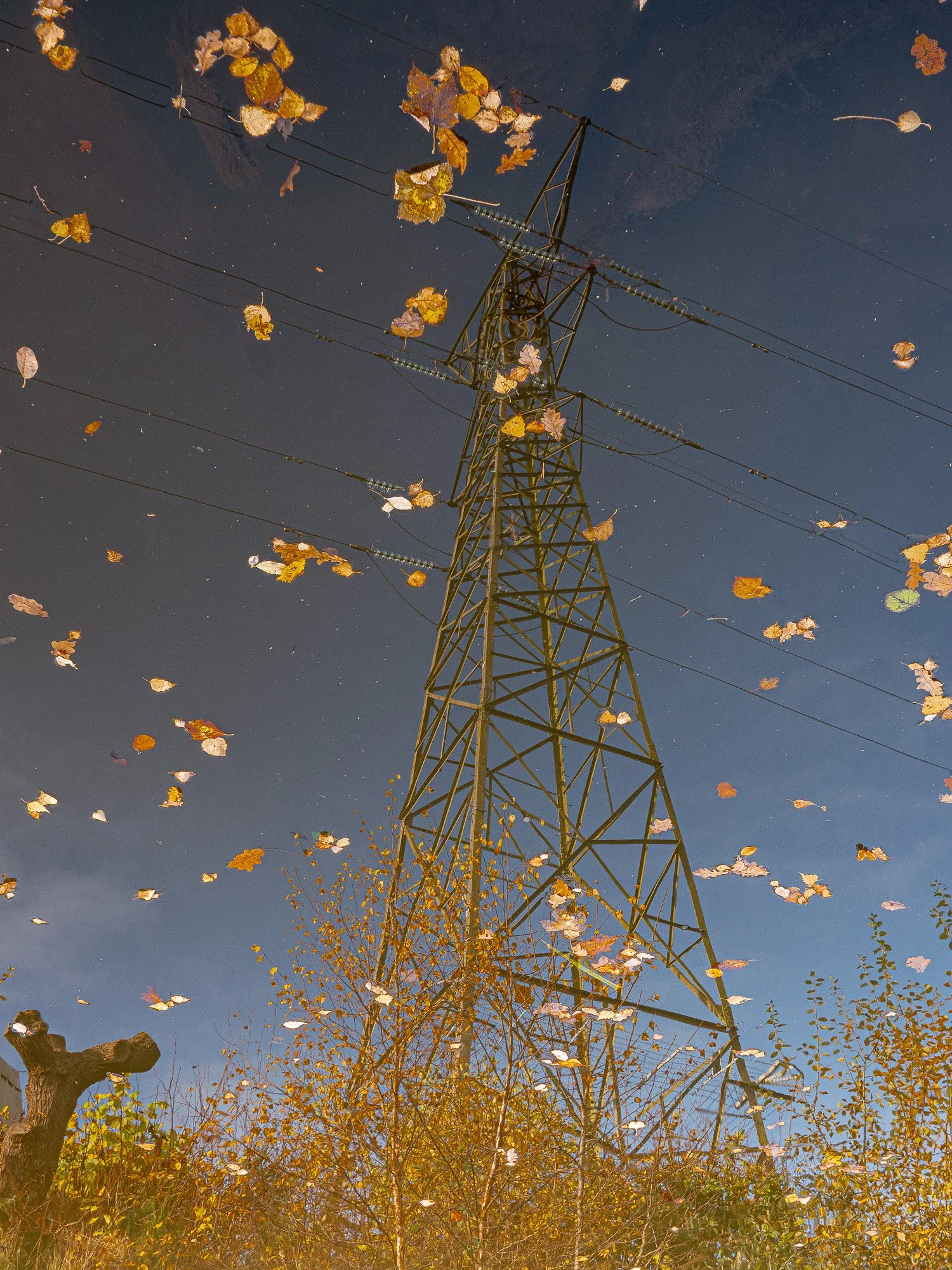
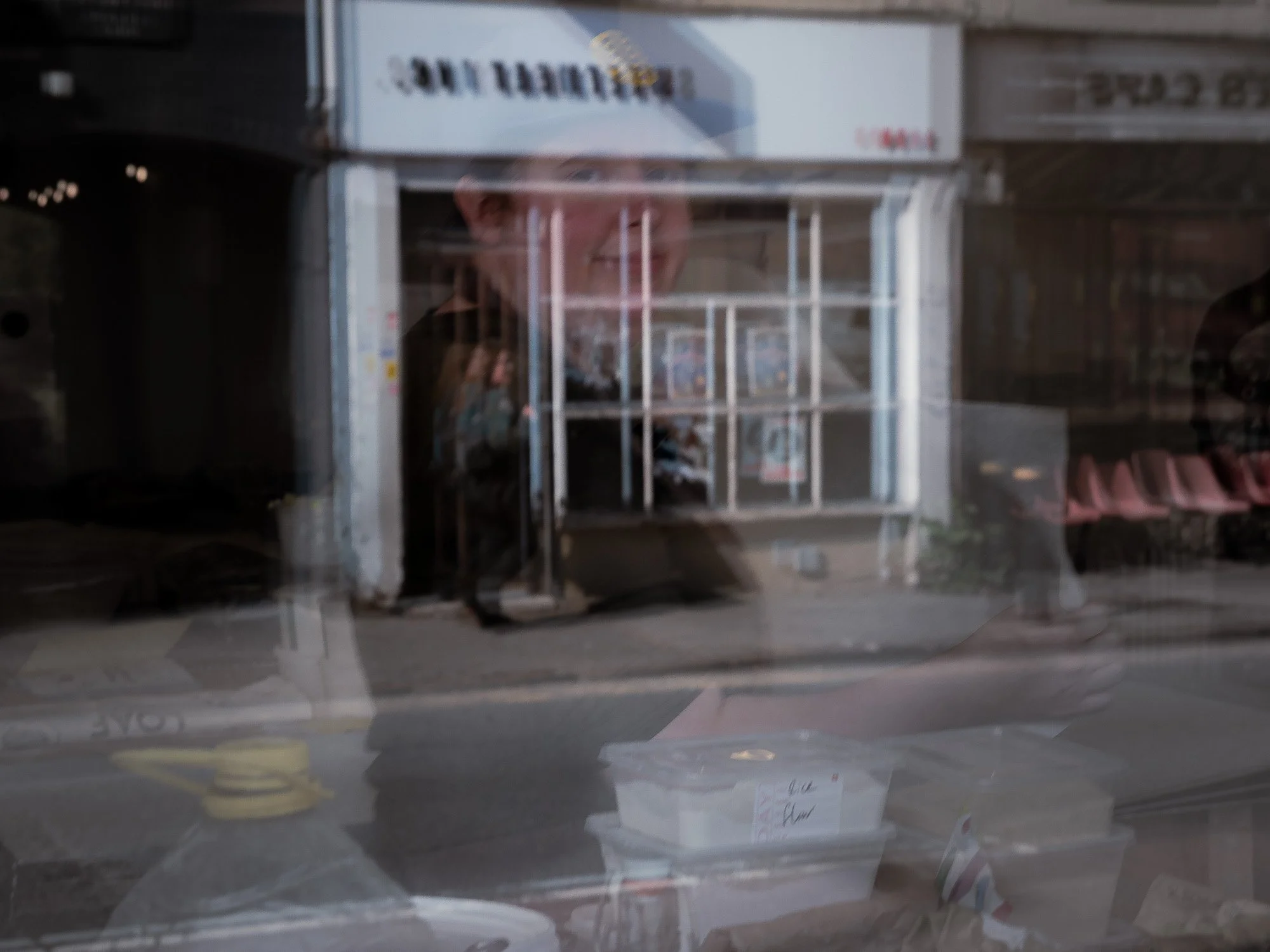
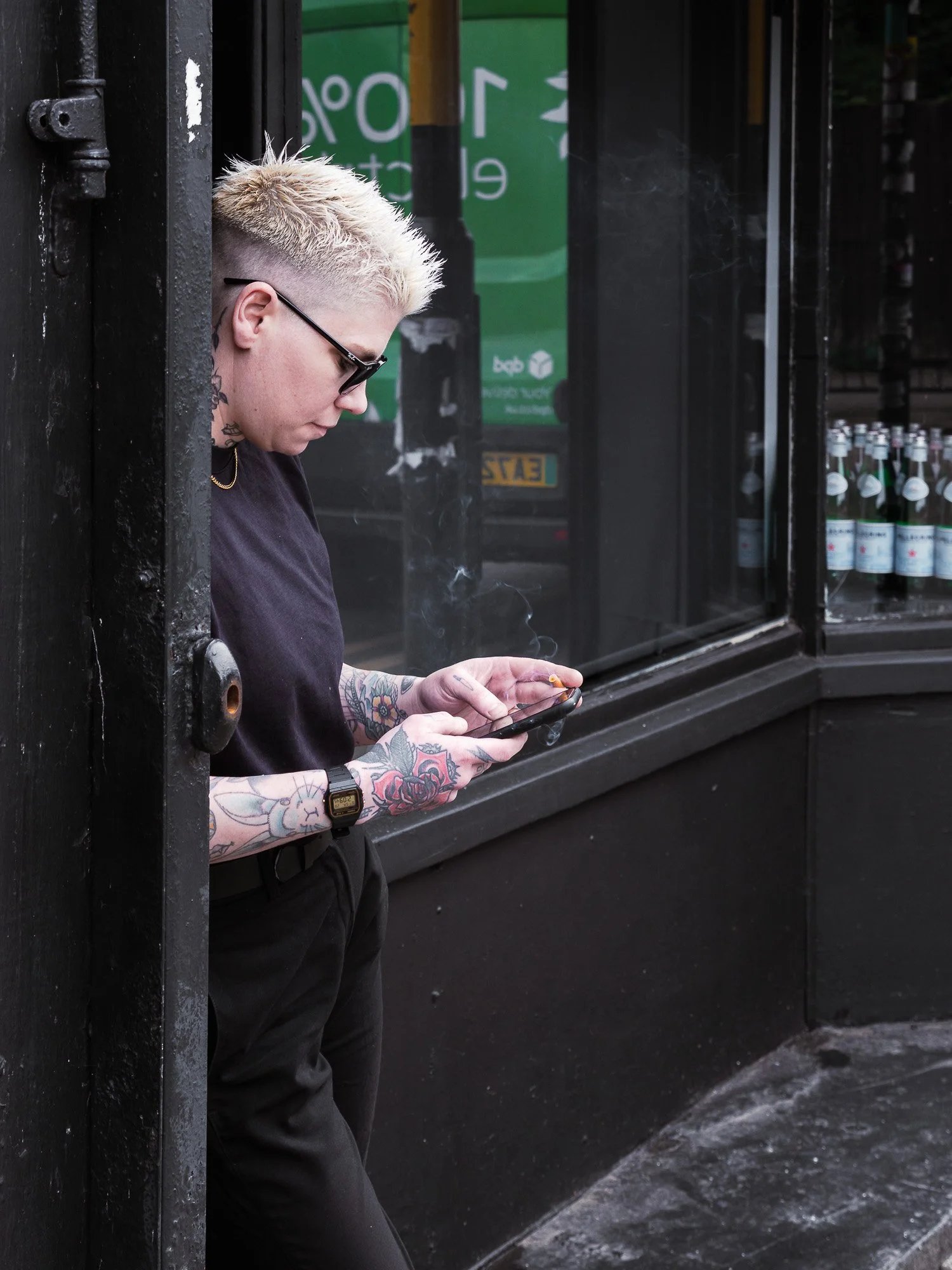


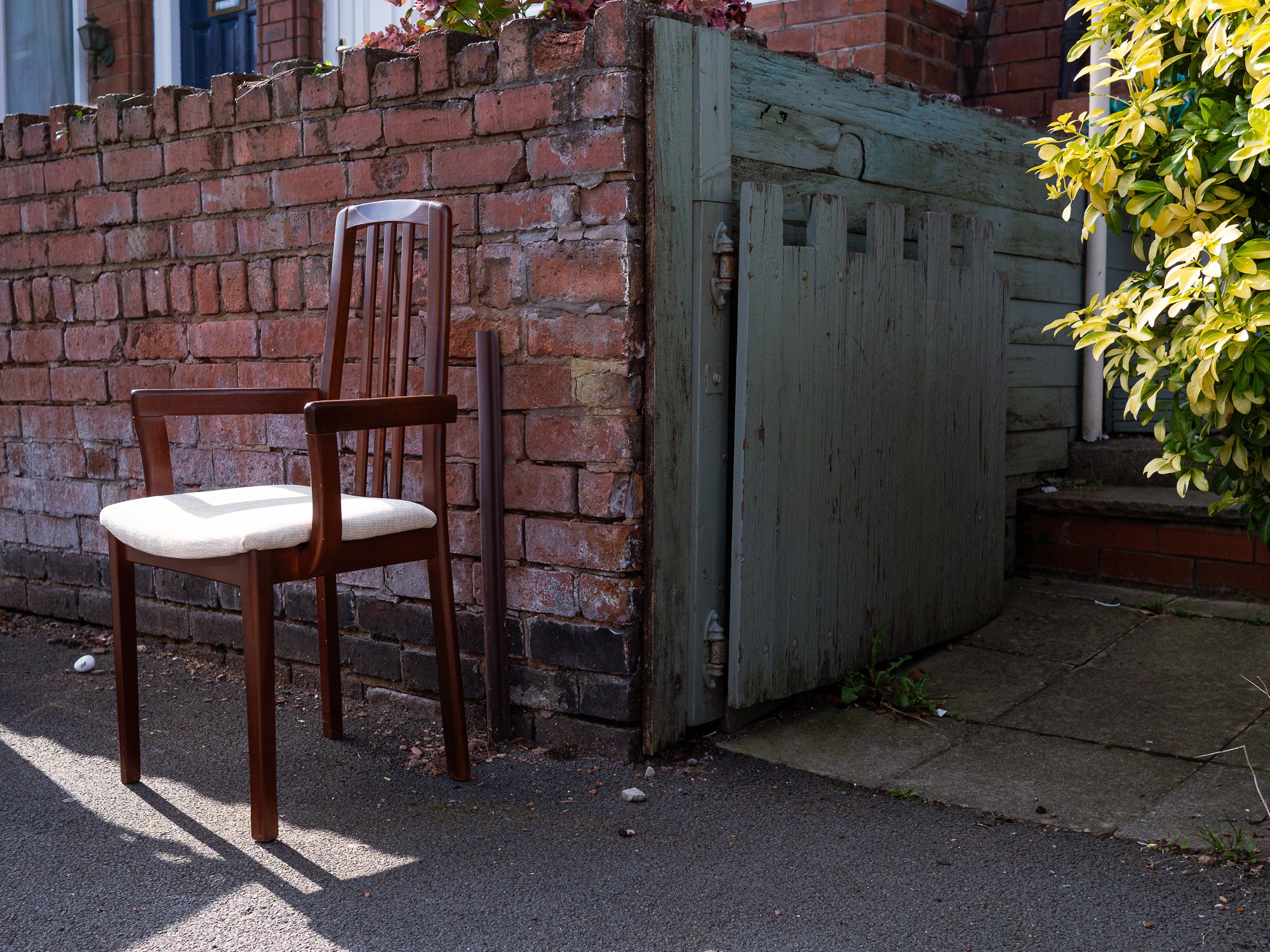


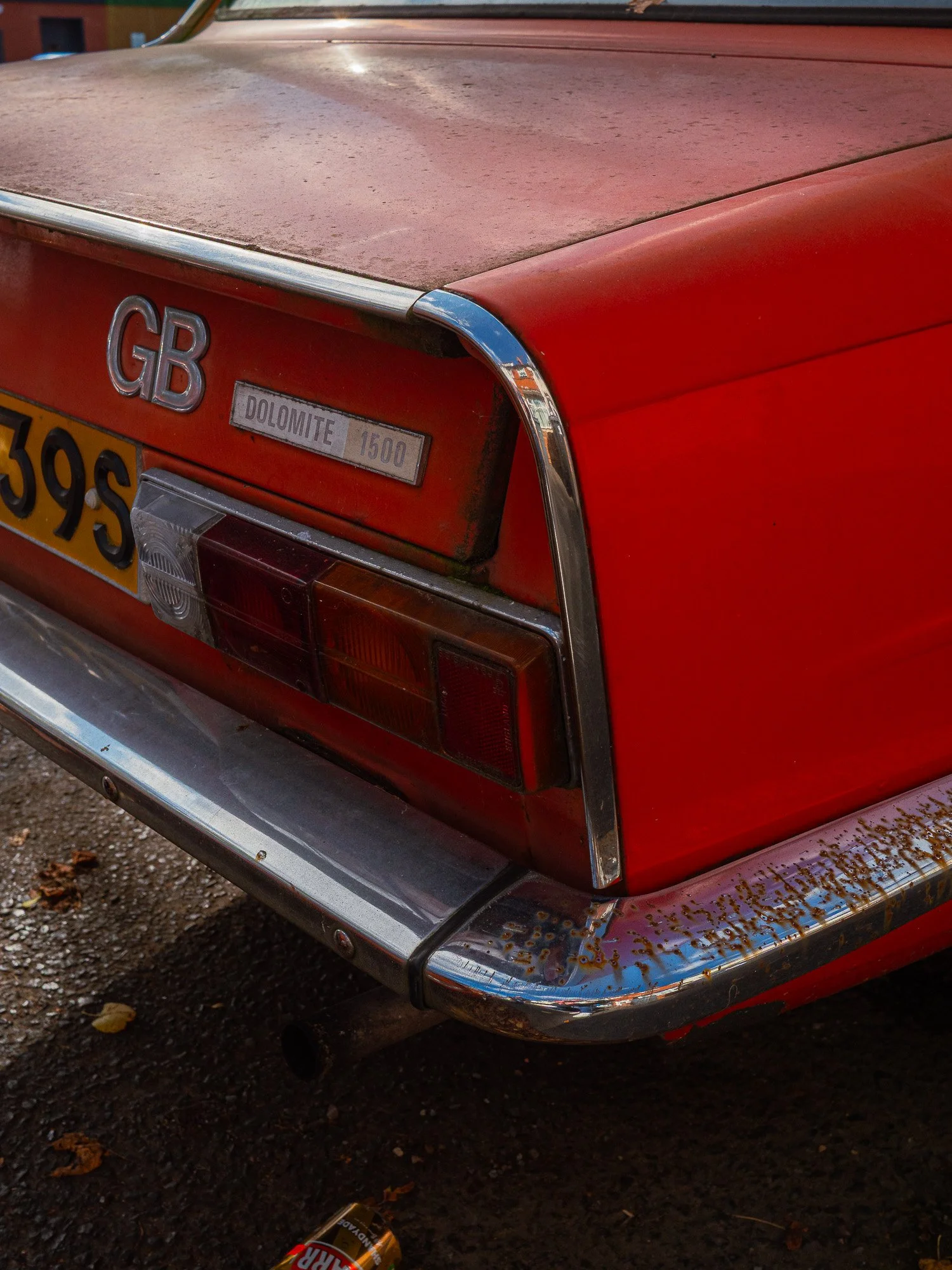
As I amassed a portfolio of images I was proud of I knew I needed a means to present this to the world. So in 2025 I acquired the domain www.davefennellwells.com and created my first website using Adobe Portfolio. This was a relatively easy way to set up a photography website because it came bundled with my Adobe Lightroom subscription and included various templates that were easy to edit. As my career aspirations have developed I have decided I needed additional website functionality that the basic Adobe package didn’t offer, so I’ve chosen Squarespace because it includes a number of business oriented features which will by useful as my business grows.
After leaving my previous job in April 2025, I knew I would need further support in my new venture and a means of learning about the garden media world. I was essentially taking a massive step in to the unknown career wise which was daunting and exciting at the same time. Luckily my wife (who has previously worked in horticulture and is now an environmental consultant) mentioned she was aware of an organisation called the Garden Media Guild (GMG). My research led me to discover they have a sub-group called the Professional Garden Photographers Association (PGPA). I decided to work towards obtaining membership, luckily they accept new ‘probationary’ members, people like me who are starting out in their career. They offer regular webinars about various topics aimed at writers, photographers, presenters, content creators and influencers. They also run an annual awards ceremony recognising the talents and contributions of people from across the industry. It’s been a fascinating way to learn about the garden media from professionals with years of experience. I was very proud to be accepted not only as a probationary member of the GMG but my photographic portfolio was judged worthy of probationary member of the PGPA. You can find my page on the PGPA website here.
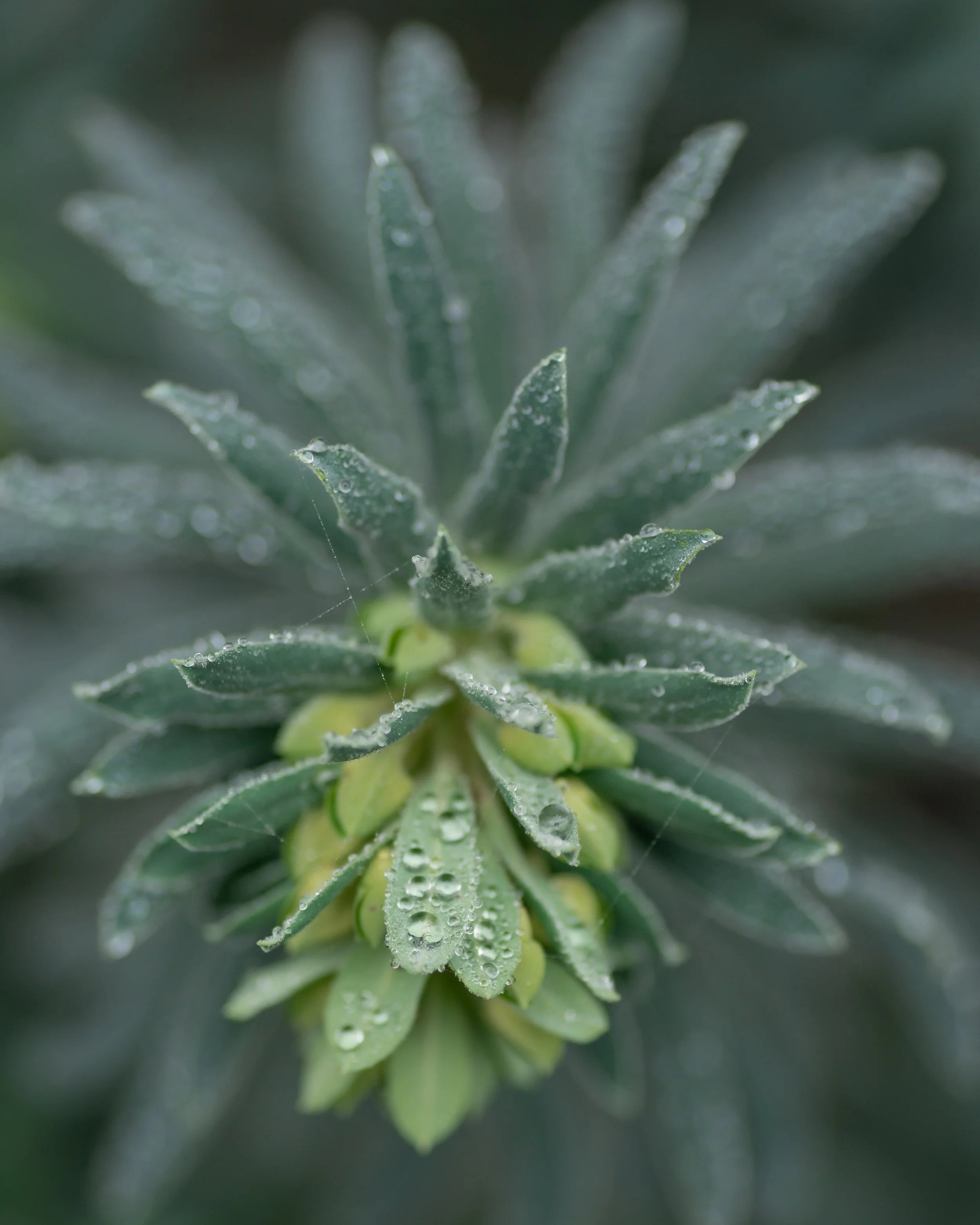
More recently, my professional development has been to work on Clive Nichols Learn with the Experts course. What I value most about this course is the opportunity to submit assignments to Clive for his professional critique. I was delighted to receive the below comments for the images below.
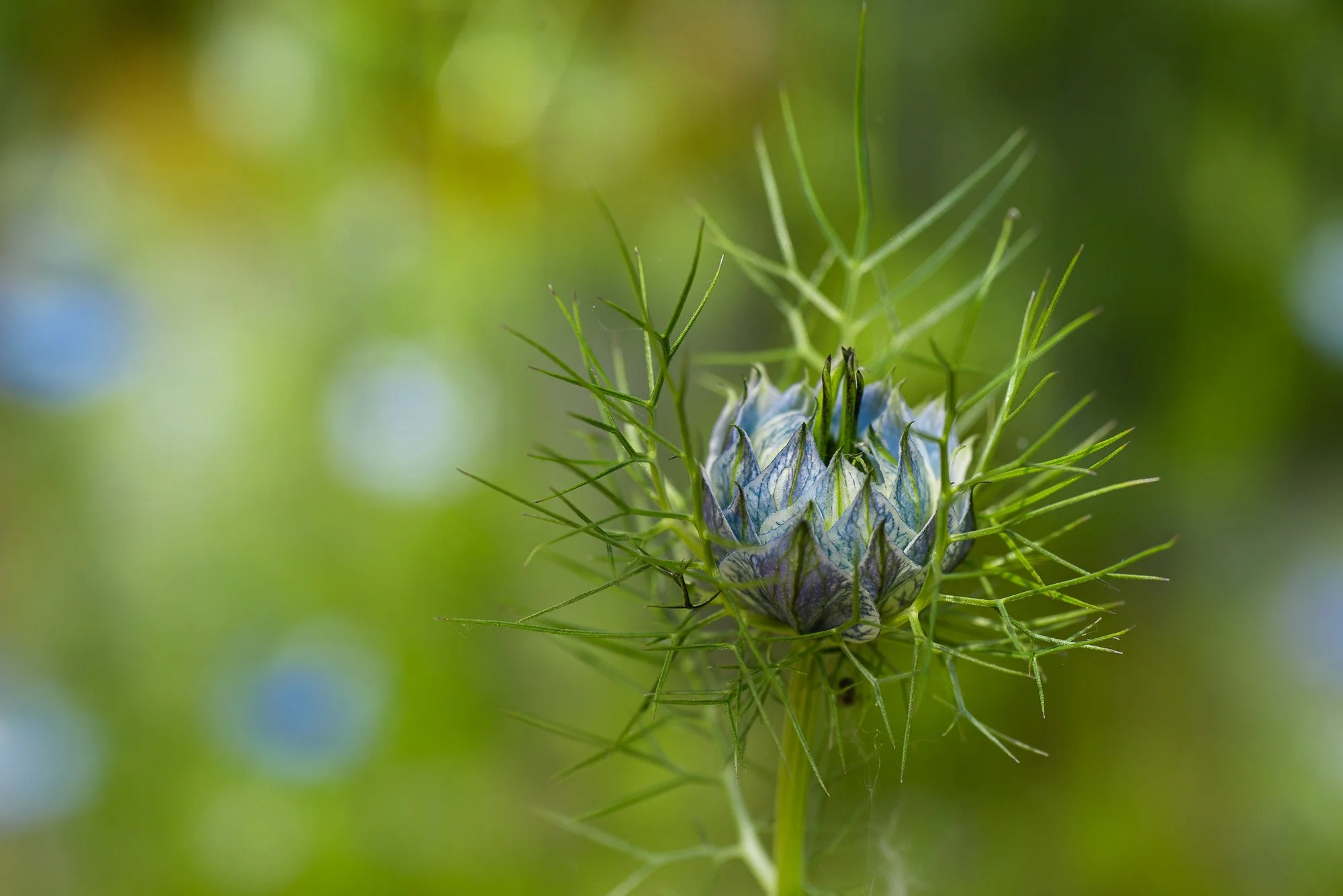
Love-in-a-mist
“wow- this is incredible.
Focus, depth of field and colour rendition are all spot on - your eye is drawn into the flowers incredible petals and you can really feel the texture of them - a great shot”,
Clive Nichols
Clive is one of the most well known and revered garden photographers, shooting for a range of magazines and prestigious gardens and estates. I’d say Clive’s course is aimed at the photographer who already has a strong grasp of the basics of exposure and is confidence controlling their camera in fully manual or aperture priority mode. The content will expand your creative horizons and enable you to get the best results no matter what quality of lighting conditions you’re faced with. I often cite the Norwegian phrase “there’s no such thing as bad weather, just bad clothing”, well the equivalent for Clive’s course would be “there’s no such thing as bad light, just an inexperienced photographer”.
So where have I arrived at today? Well I have spent a considerable time building my technical photography skills and now feel in a position to begin offering my professional services to the industry and seek my fortune, or should that be, seek a living from a more intentional career?
My next steps will be reaching out to more garden designers and owners to shoot their gardens, together with honing my ability to capture a range of shots for editorial features or commercial use.
I’ll lay out my professional services in an upcoming blog.
Why Garden Photography?
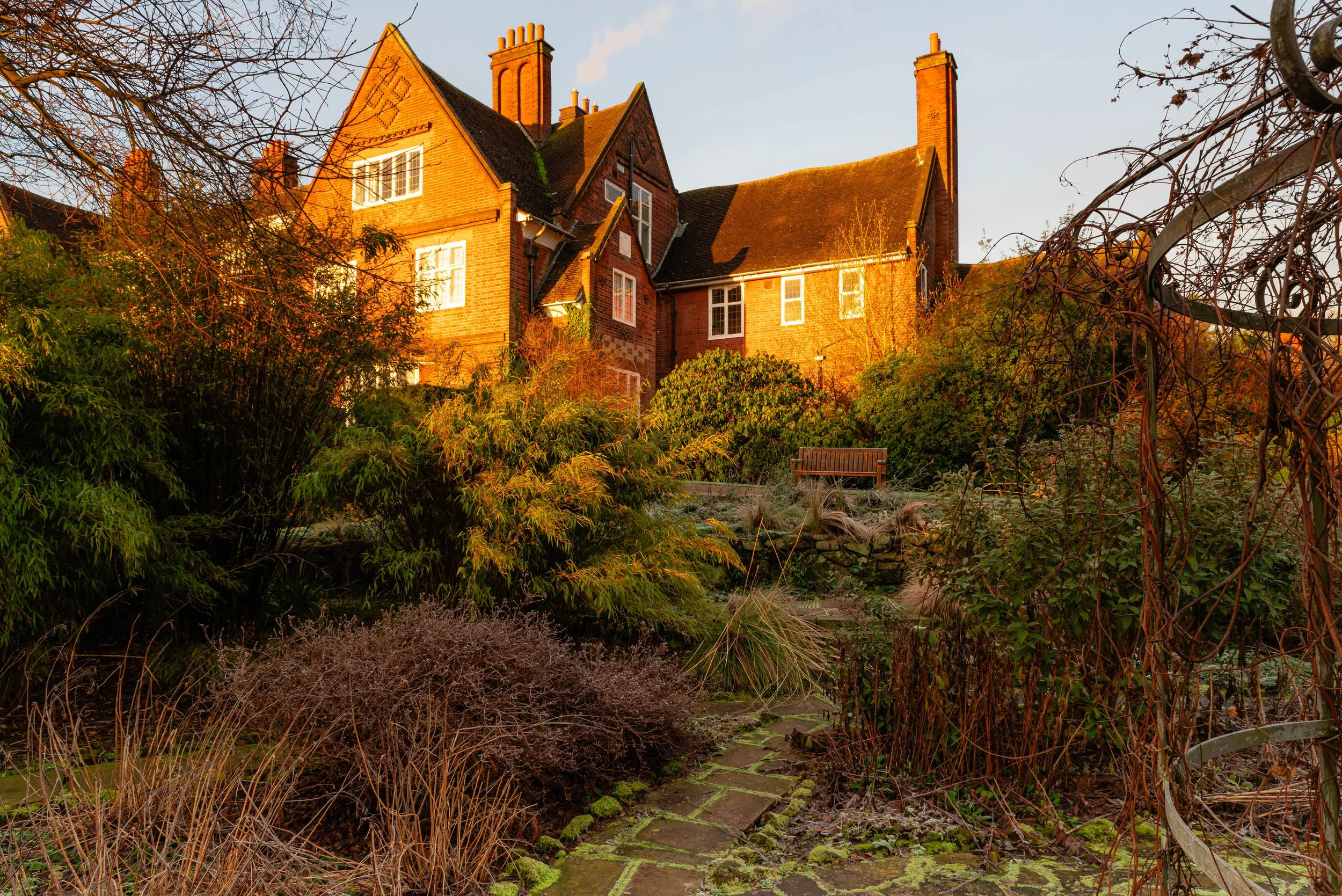
Winterbourne House & Garden at UoB
It’s the start of 2026 (can we till stay that in late January?) and I want to reflect on why I wanted to be a garden photographer.
As I mentioned in my introductory blog, I decided to pursue garden photography as a career move because it combines my enjoyment of photography with my love of being outdoors.
As part of the process of curating a new, more meaningful life for myself, the book Designing Your Life (Burnett & Evans) prompted me to complete a career oriented word cloud that culminated in me mashing together the words ‘gardening’ and ‘photography’. At first I didn’t think there would be such a job as a ‘garden photographer’, but some quick research led me to realise there is a dedicated group of professionals working in this sector who produce some incredible art showing off the creative and horticultural skills of an entire industry sector. From designers and landscapers, through to plants people, nursery and garden centre owners, horticulturists and growers, down to enthusiasts who throw open their homes and gardens as part of the National Garden Scheme. Economically, the Garden Industry contributes £38bn a year to UK GDP (according to the RHS State of Gardening Report). Not to mention the array of nature based services that gardens and gardening provide to society such as flood mitigation, climatic cooling in urban areas and positive impacts upon mental and physical health.
During my recovery from work related burnout, I found being in our garden and tending to our plants helped me reconnect with who I am. It would calm my racing mind and force me to slow down and be present in the moment. You can’t be checking emails or doomscrolling news or social media whilst your hands are covered in compost or you are trying to sow minuscule seeds.
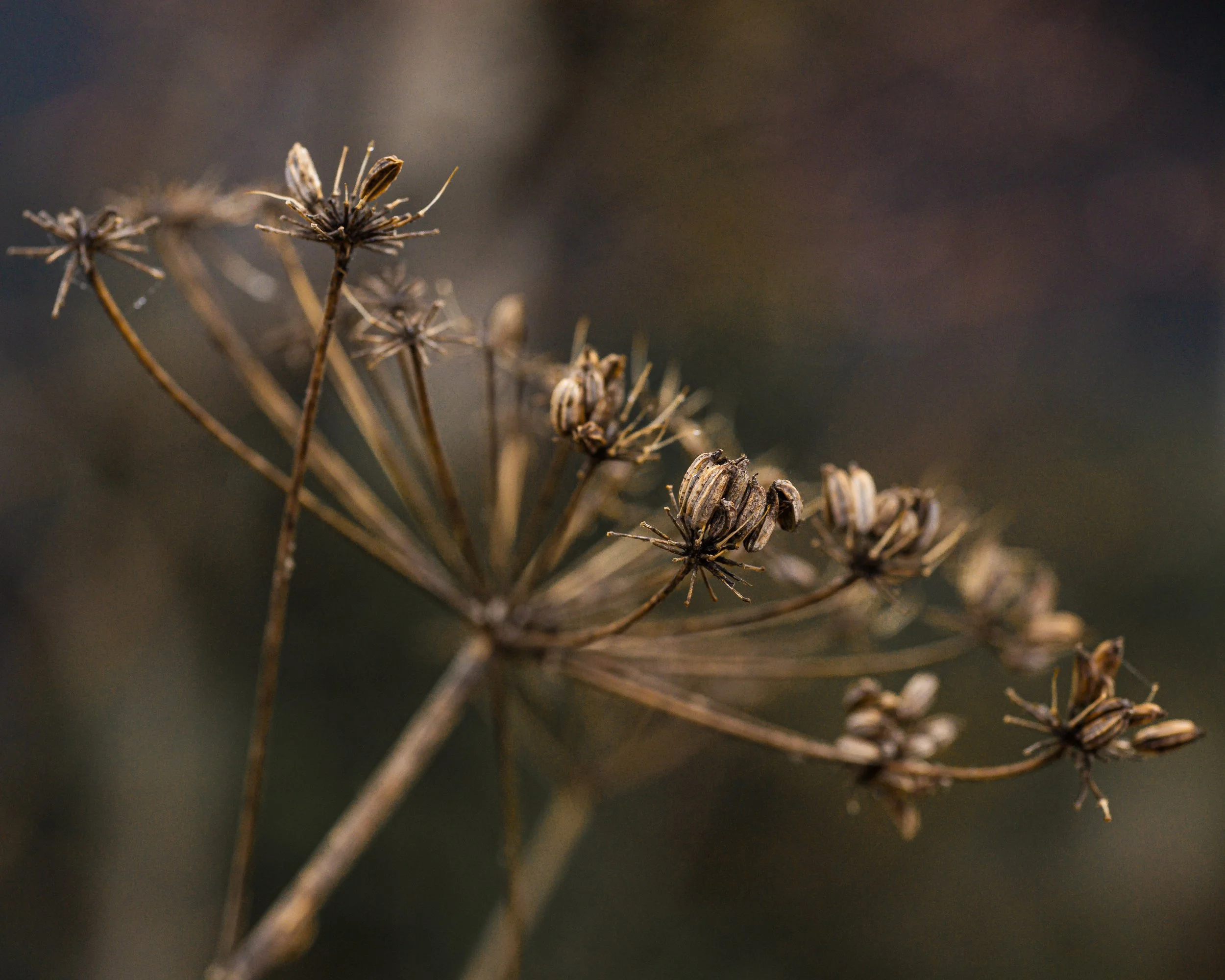
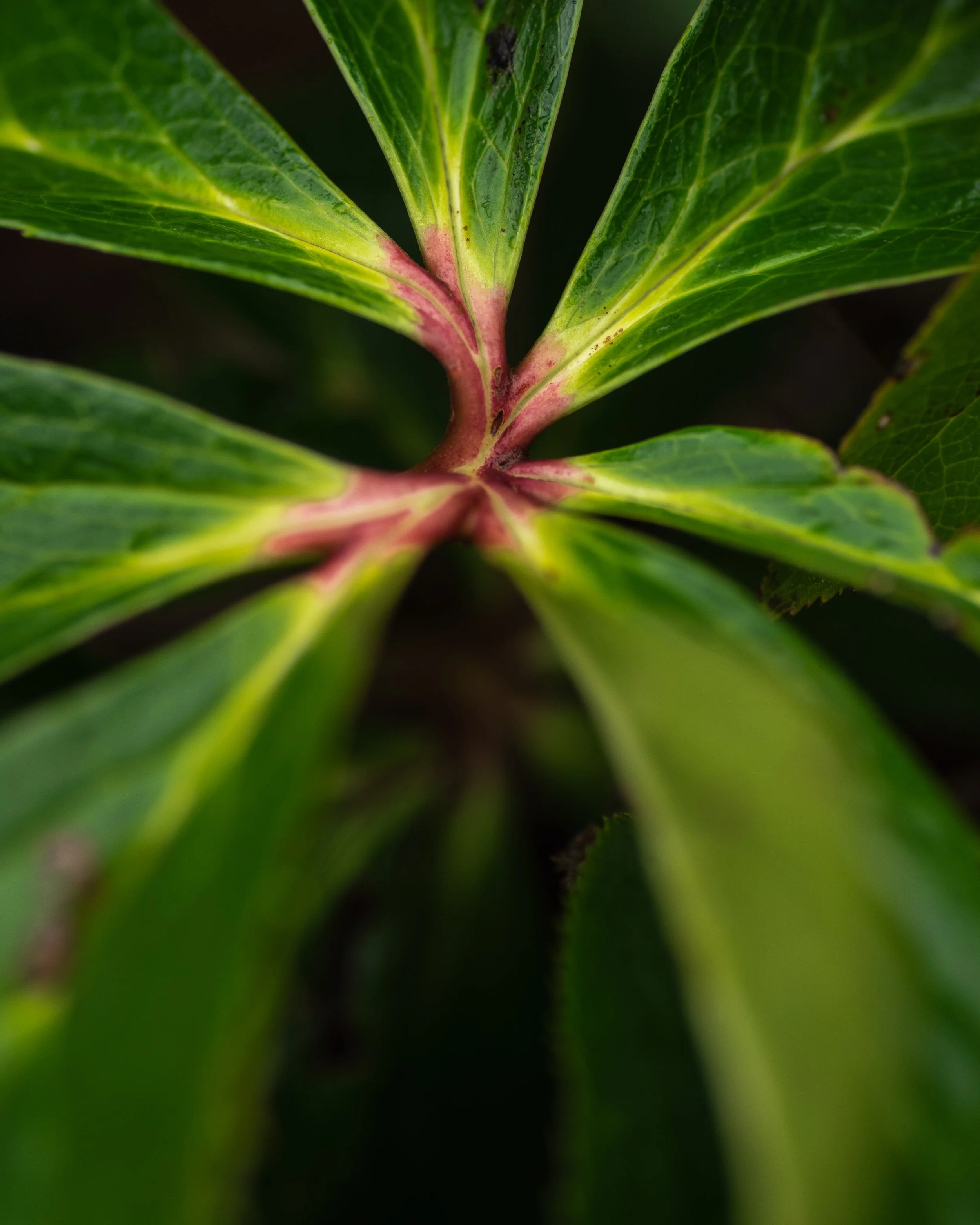
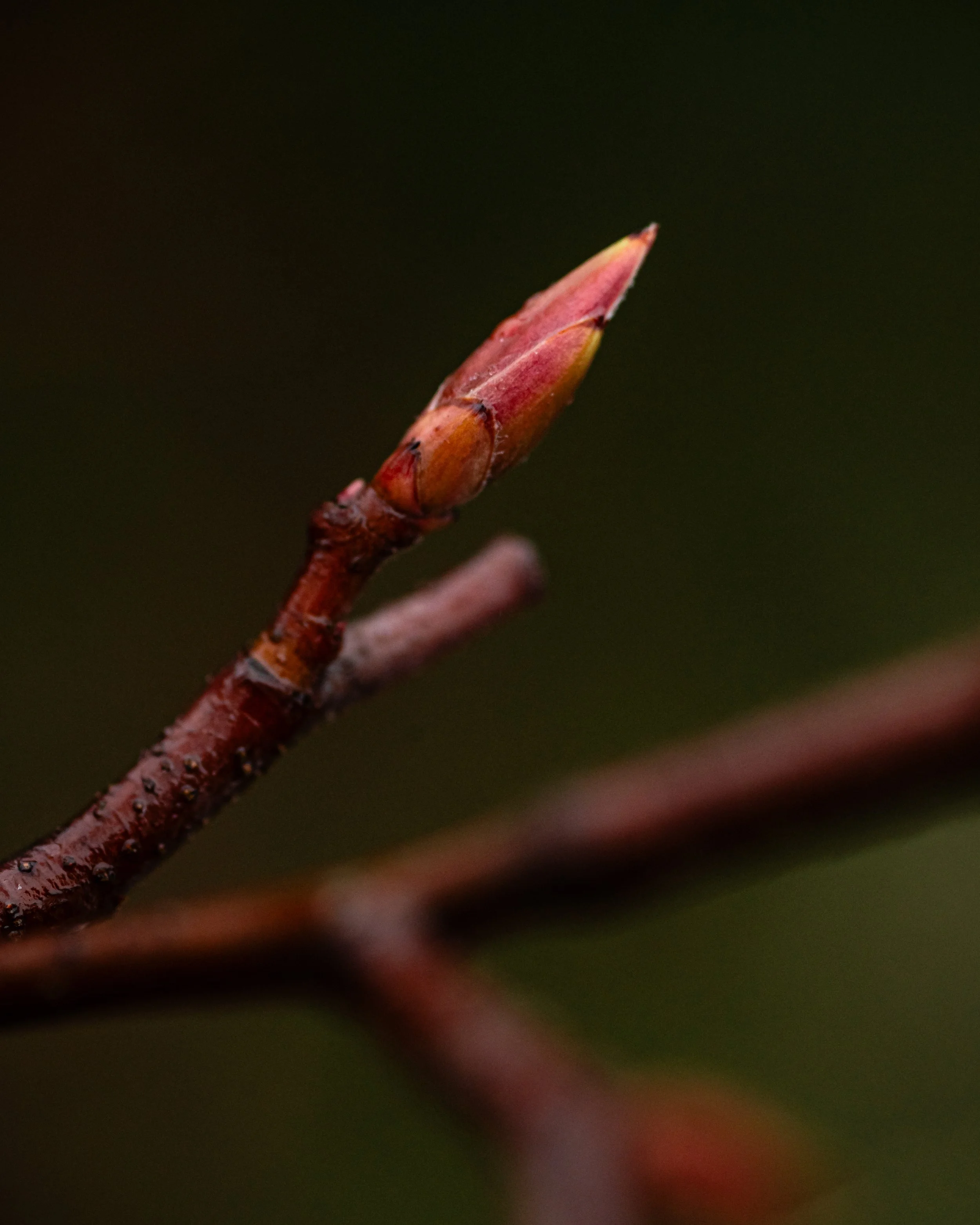
The following four images are from a recent venture out into our garden to see what’s occuring.
During the period of my burnout recovery, I took my camera on a few outings to some local gardens. I discovered the hidden gem of Winterbourne House & Gardens at the University of Birmingham. This Arts and Crafts marvel, nestled right next to the campus I studied at 25 odd years ago, features some of my favourite spaces to sit and chill in the heaving metropolis of Birmingham. I’ve also found myself volunteering there, learning about the fascinating history and craft of letterpress printing, but more on that in another blog post. The house gardens weren’t open to the public when I was a student and I’m immensely jealous that current students have this wonderful venue available to them. Here are some photos from my 2024 visit:
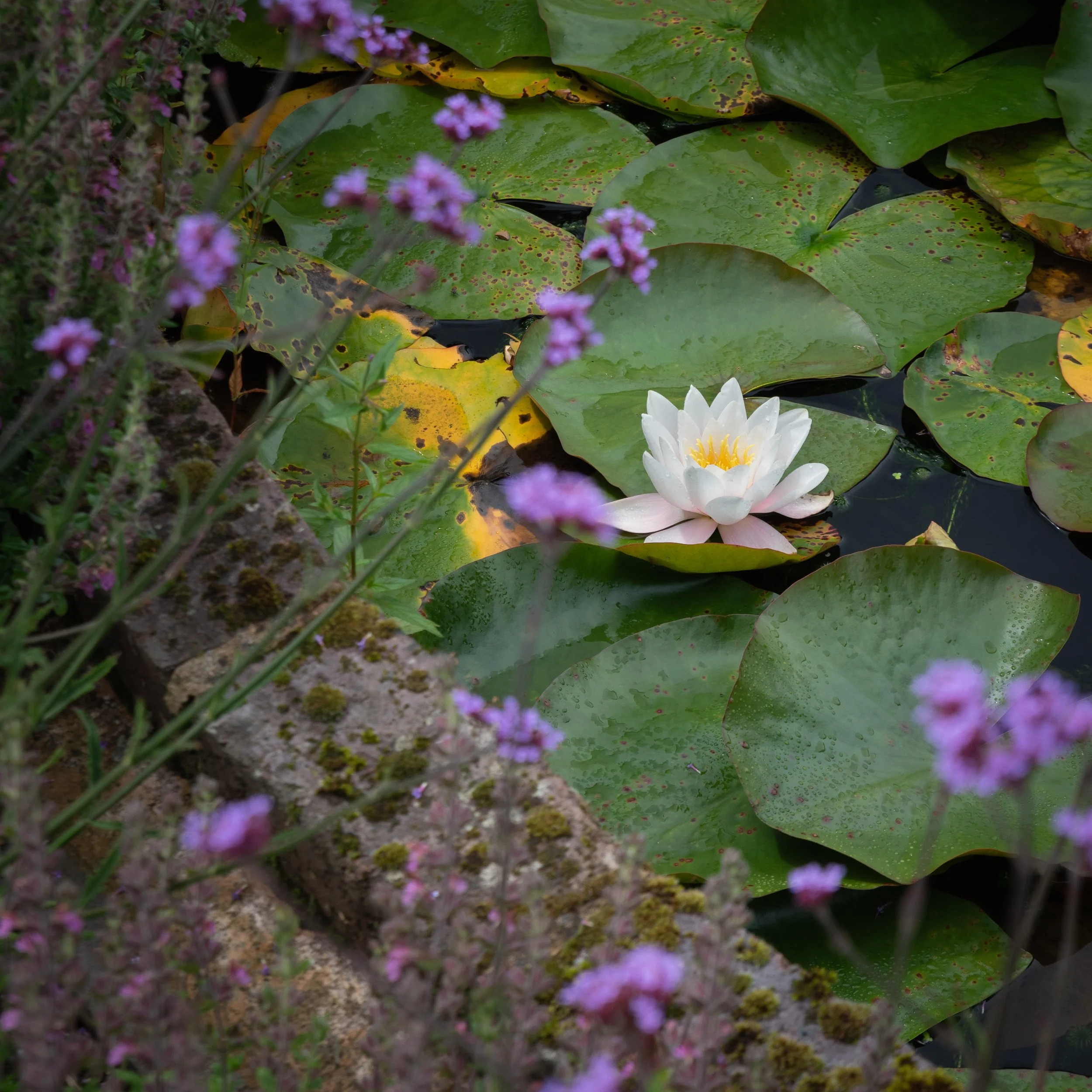
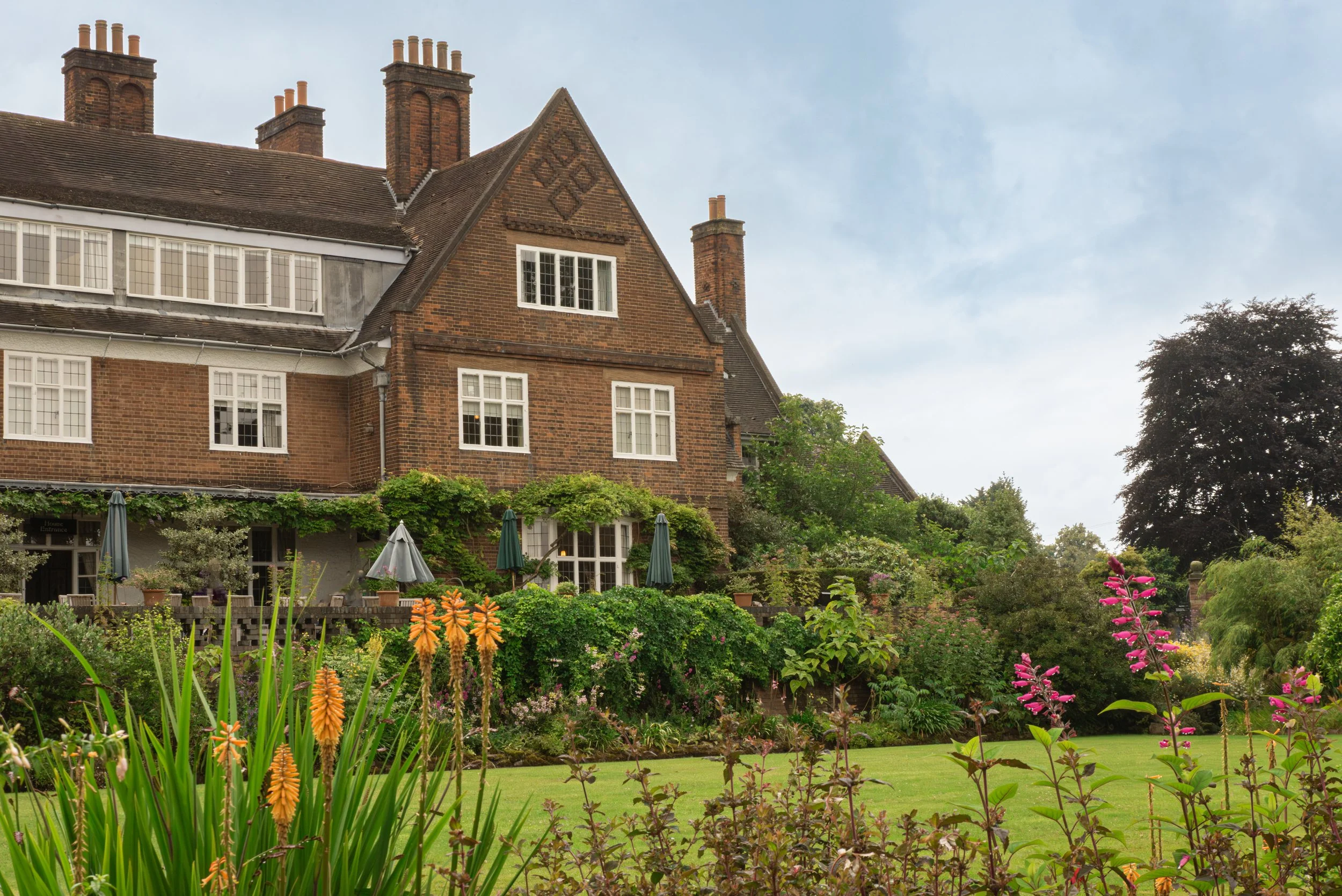
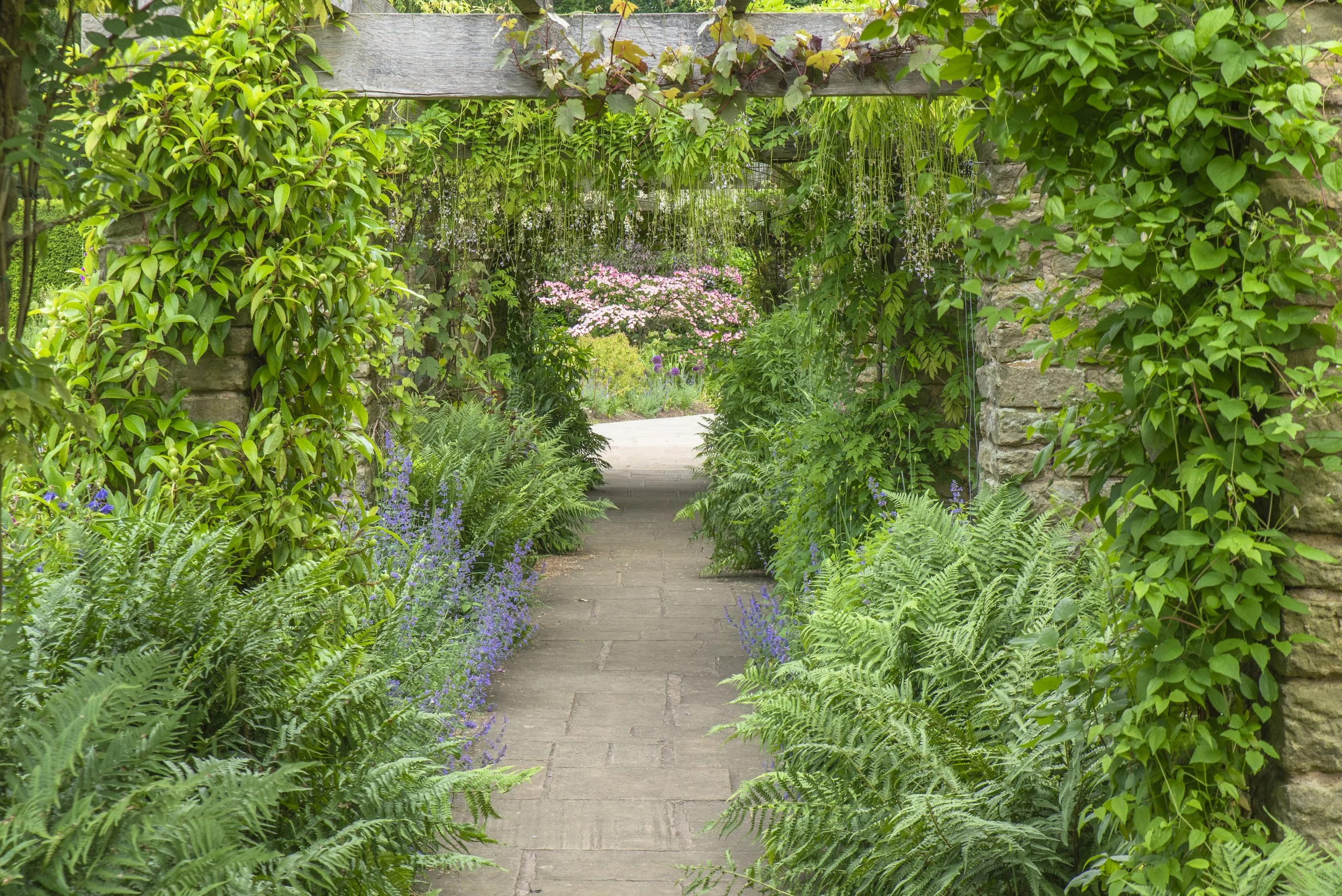
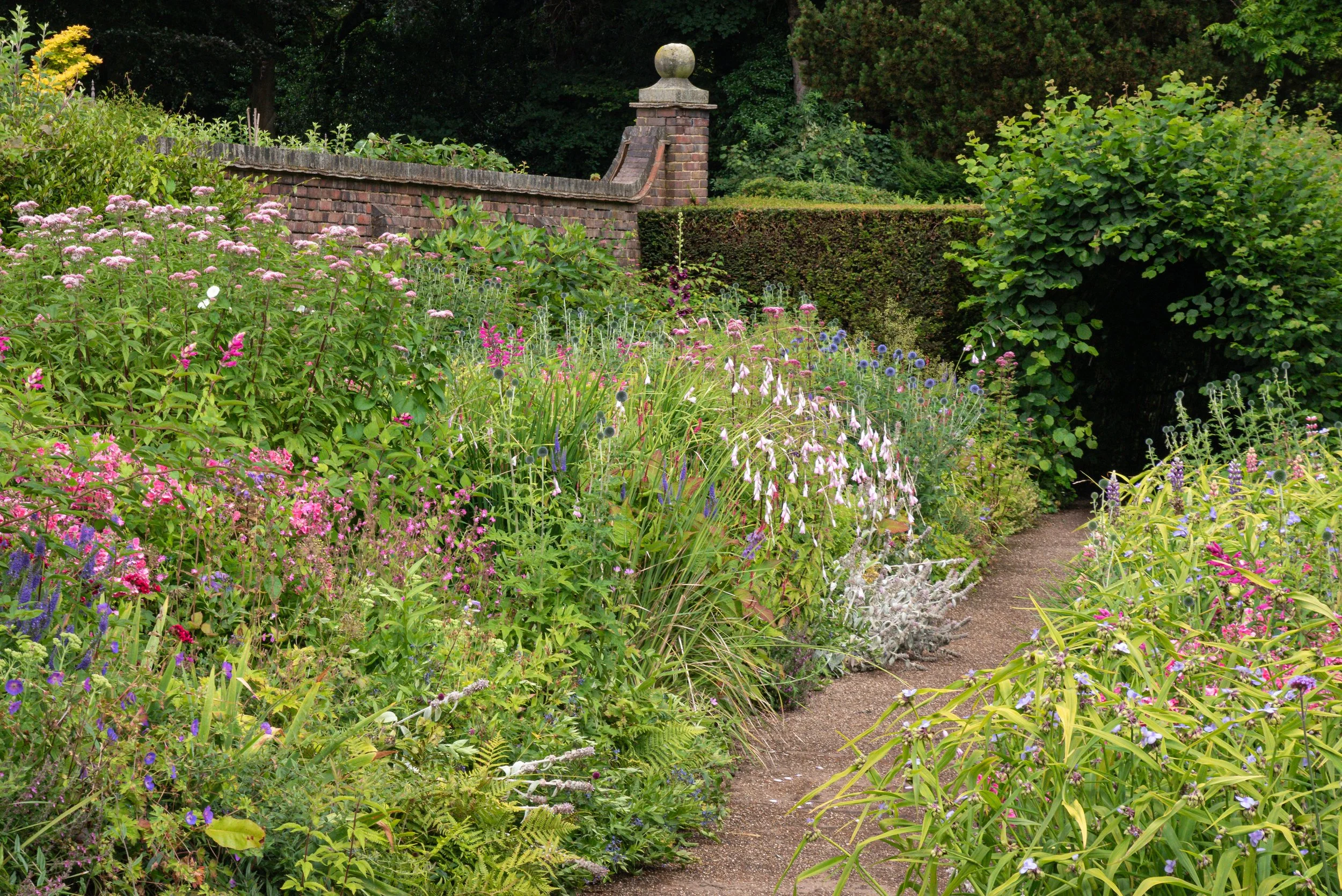
Part of what inspires me as a garden photographer is that gardens are, by their very nature, constantly changing and evolving. Plants grow (we gardeners hope) and change throughout the seasons; flowers blossom; fruits set, ripen and are harvested; leaves change colour and drop; new shoots burst forth from the soil. And we humans can’t help ourselves from interfering by moving things around, pruning errant branches, sowing new varieties, such that from week to week, month to month, year to year, no one garden is ever the same from one day to the next. This infinite variety keeps me coming back time and again.
One of the other things I enjoy about being a garden photographer is the quality of the light we strive for. Us photographers, or ‘light writers’, love shooting during what is often known as “golden hour”. This is the times of day immediately preceding sunrise and sunset when the light tends to be warmer and softer, or less contrasty, than the middle of the day. Now, this does mean dragging yourself out of bed very early to arrive on location and be ready to shoot but you really can’t beat experiencing the serenity of a garden in the early light of dawn or bathed in the soft glow of a warm sunset. You often have the garden completely to yourself, and I’ve joked with other photographers that some garden owners may never have experienced this time of day in their own gardens, for shame.
The last thing I’ll mention, for now, is the people you get to meet along the way. To date everyone I’ve met on this new career path of mine has been passionate, knowledgable and supportive. Whether it’s members of the Garden Media Guild (GMG) and Professional Garden Photographers Association (PGPA), or gardeners and garden owners, everyone has welcomed me to their community with open arms and been generous with their time, hospitality and enthusiasm. I’m really looking forward to where my journey as a professional garden photographer leads me to in 2026. Subscribe to my blog to follow along the way.

An Introduction to Dave Fennell Wells - Garden Photographer - in 2026
Hi, I’m Dave Fennell Wells, a professional garden photographer. Thanks for dropping by and checking out my first ever blog entry. I’ve really only just started on my journey as a garden photographer, having worked in Business Banking - a career I never anticipated for myself - for 20 odd years up until April 2025. I wanted to use my first blog to share with you how found myself here, beginning a new career as a garden photographer.
Well, the major turning point in my career came during 2024 when I suffered from Burnout. This manifested in panic attacks, anxiety, low mood and a general sense of having lost my sense of self; Who am I? What do I stand for? What do I want to be? (Certainly not a banker). For a long time I had felt ashamed to tell people who I worked for, mainly because the company I used to work for had a plethora of public controversies surrounding its former leadership, its continued investment in fossil fuel companies and the international arms industry. I got little personal satisfaction from the work I was doing for them (despite the fact a lot of the work I was doing was intended to support customers in financial difficulty). All in all, I felt there was a disconnect with my personal values and beliefs, and I’d lost a sense of who I was and what I enjoyed doing in my own free time. When I did indulge in hobbies, I didn’t feel the joy I used to experience.
I took a period of sick leave to recover from burnout during which I sought therapy and took the opportunity to reassess what I wanted from life. Having read the book Design You Life by Burnett & Evans, I figured I could combine my enjoyment of photography (I hobby I had enjoyed since childhood) and gardening, something I’d found joy in later in life, to see if it is possible to forge a new path.
Upon reflection, I’ve realised gardens had always played a part in my life. From childhood, my brothers and I used to play outside, I’d help my mum plant annuals in our family garden and it was fun spotting the fish and frogs that inhabited our hazardously deep pond. Outside of our own garden, my Mum worked as a conservation cleaner for the National Trust at Kingston Lacey, so we often visited old stately homes and gardens on family holidays. Through this I was exposed to the likes of Stowe, landscaped by Lancelot ‘Capability’ Brown and as a teenager I visited Heligan in Cornwall on a family holiday, not long after it had been restored and opened to the public. Throughout my adult life I’ve also enjoyed visiting gardens when travelling.
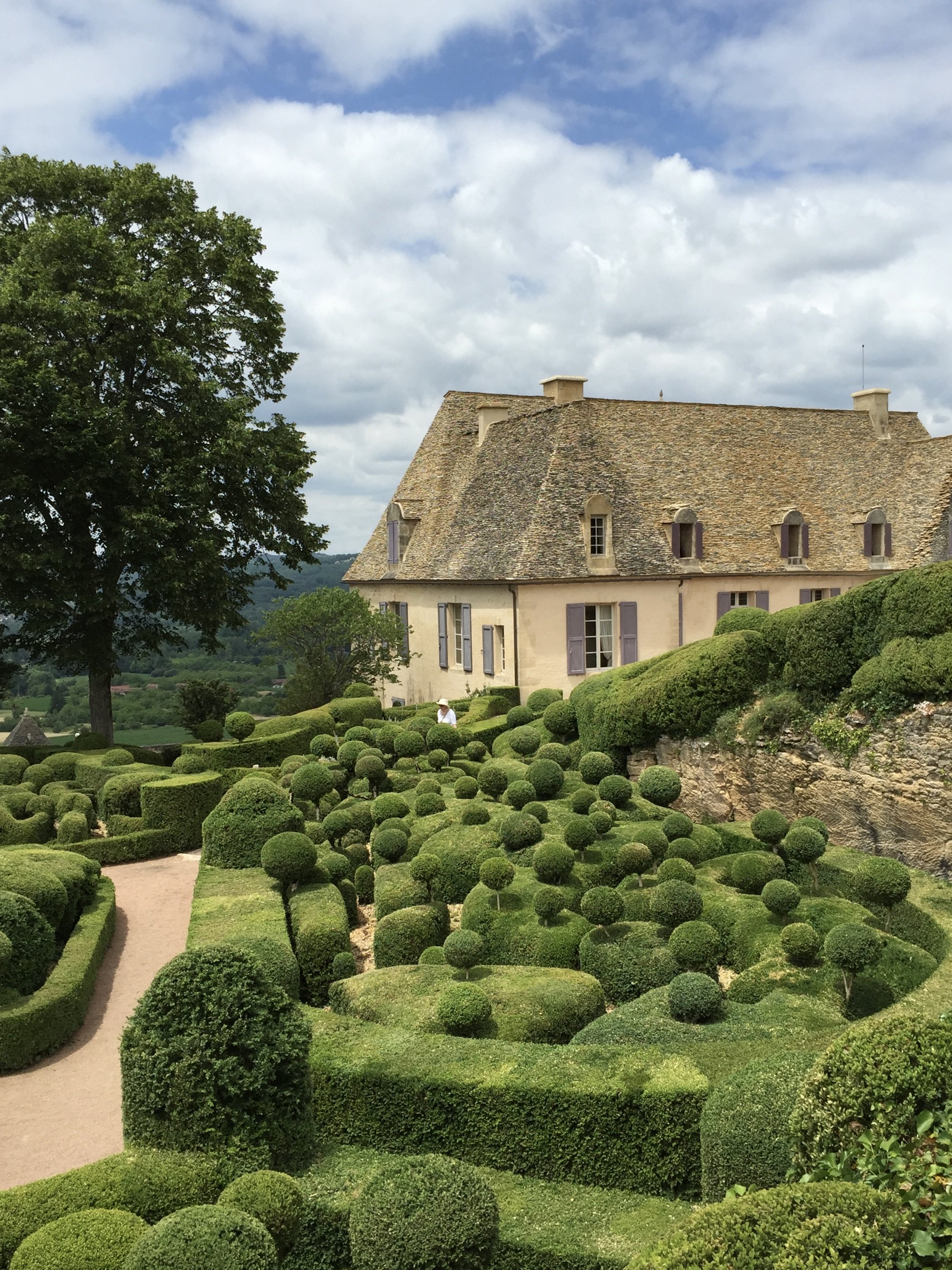
For example, here’s an old iPhone snap of the Jardins de Marqueyssac in France
Back to where we are today, I put in place a plan to depart from my former employer and go it alone as a professional photographer. Transitioning from working in Credit Risk where you have little freedom to be creative and set your own goals, to being freelance and in charge of your own destiny is somewhat daunting. There’s no one telling you what to do, no regular meetings to attend, no annual performance review cycle, and sadly, no monthly salary magically landing in your bank account.
Much as I found most of those regular meetings a real slog, I have discovered that I do benefit from some structure and need to be held accountable which, is why I’ve decided to start this blog. I intend to use it to document what I am getting up to in a work context, in part as a means to ensuring I am working towards my professional and creative goals (yes, I have reinstated a performance review structure). With that in mind, I aim to use this blog to share with you my progress as a garden photographer, the gardens I get to visit and shoot and the people I meet along the way.
That’s not to say this blog is purely for my own use. Along the way I hope to share some professional and creative tips to inspire you, my readers, to get out there with your camera’s to capture whatever interests you, be it flowers, gardens, or anything else you may wish to point your lens at.
“So what have you been up to, Dave”, I imagine you’re asking?
Well, aside from learning about blogging and setting up this site, I recently set my goals for 2026, amongst the usual SMART business objectives like getting published and increasing my social media reach, one of my goals is a personal project to shoot and self-develop 24 rolls of black and white film in 2026. Part of my recovery from burnout in 2024 was to attempt to be more mindful, and I used photography to achieve that. Being out with my camera are some of the only times I achieve a real Flow state of mind. That being said, sometimes having a screen on the back of your camera and all the bells and whistles of modern DSLR or mirrorless cameras can distract from the act of slowing down and noticing. The temptation to look down and check each shot on the rear screen, aka ‘chimping’ can take you out of your creative flow. This prompted me to consider getting back into analogue 35mm film photography. In a few short months I’ve learned a lot, in particular I have been putting into practice the ‘Sunny 16’ rule to guess-timate what exposure settings to use. I’ve even started using this on my digital cameras to be far more mindful in analysing the light falling on a scene and setting exposure before raising the viewfinder to my eye.
Some quick phone calculator maths reveals that I’ll have to shoot 2.5 frames every day of the year to hit the target of 24 rolls in a year. That seems very few, but I sadly discovered over the last few months that even though I say I am a photographer, I could go long stretches of time without picking up my camera. I anticipate setting myself this goal will result in more regular shooting and a consequential improvement in my skills as a photographer. Not least because each frame of 35mm film costs money, with the consequence that shooting film encourages you to slow down and be more intentional in your subject selection and composition. So far, I am on day 5 of the project and I am running ahead of schedule, I’ll keep you updated throughout the course of the year on remaining progress.
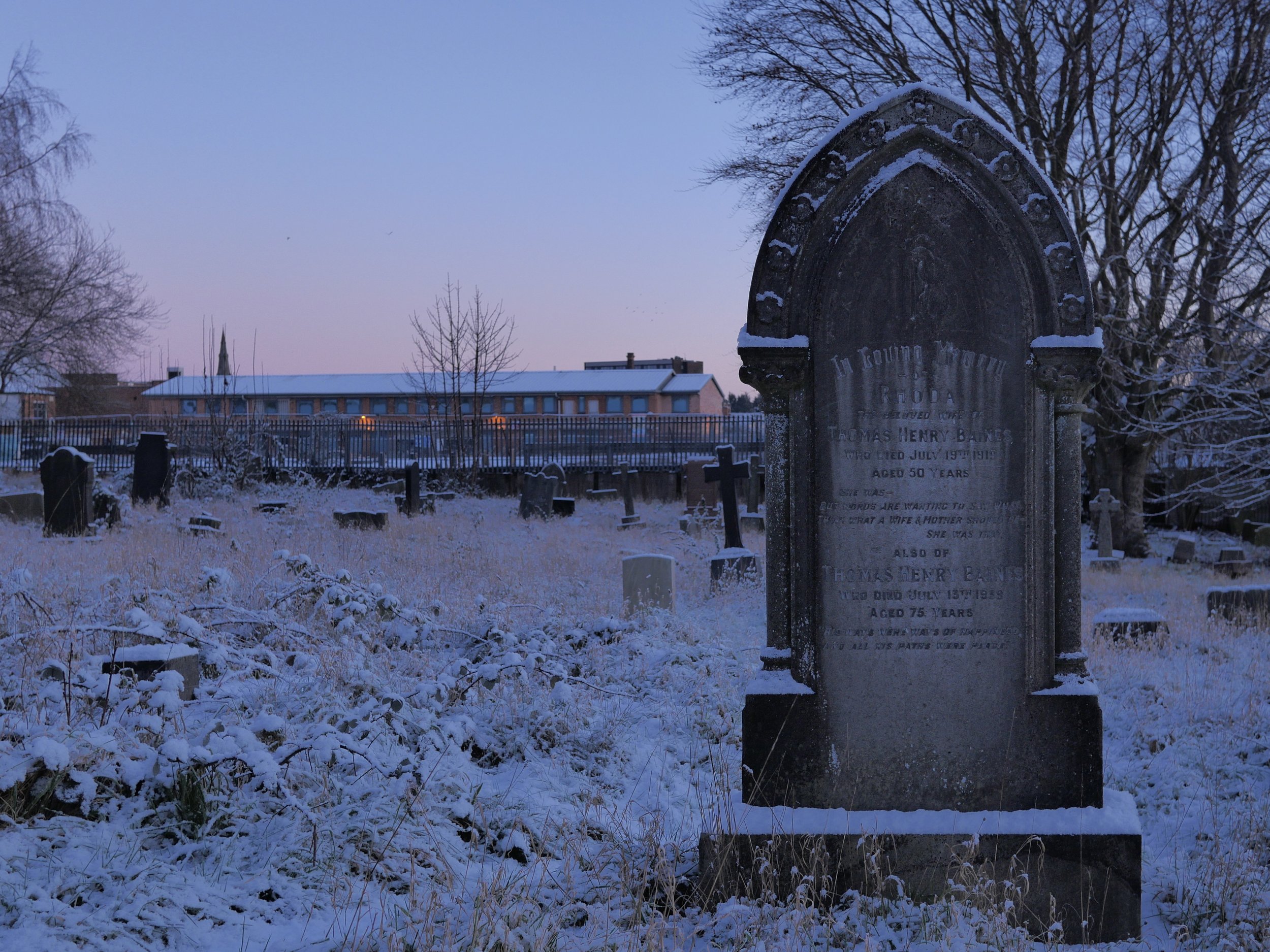
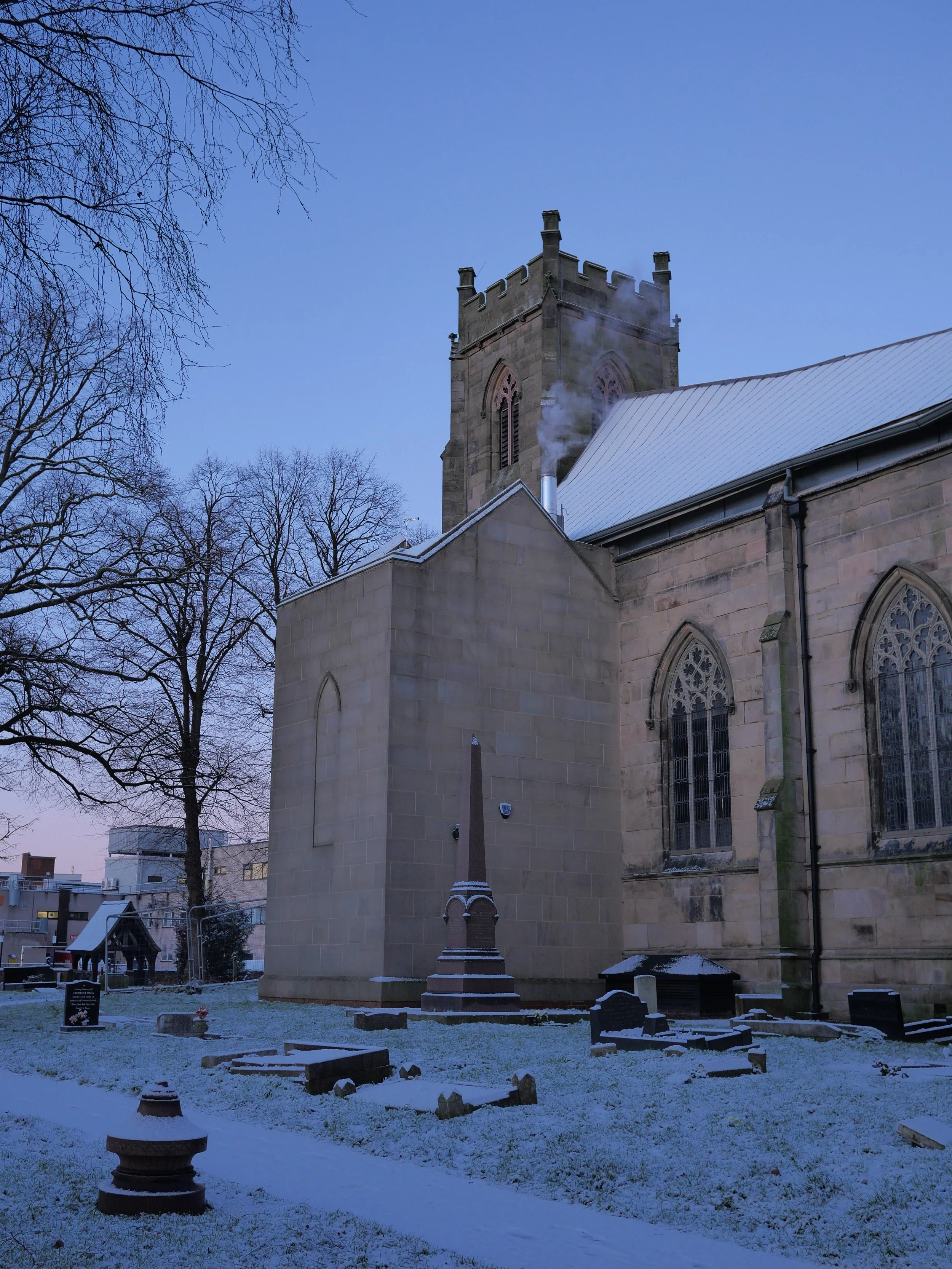
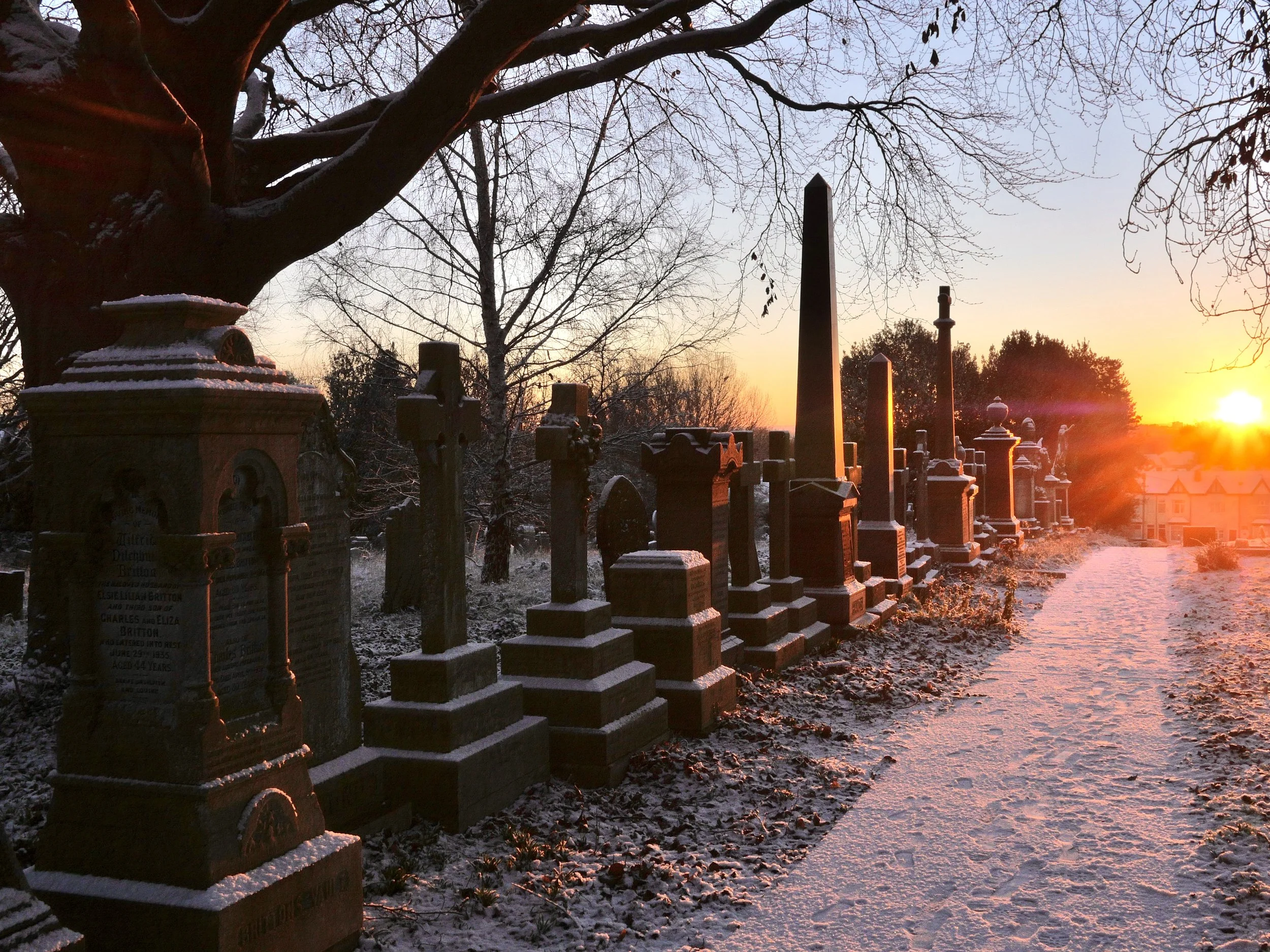
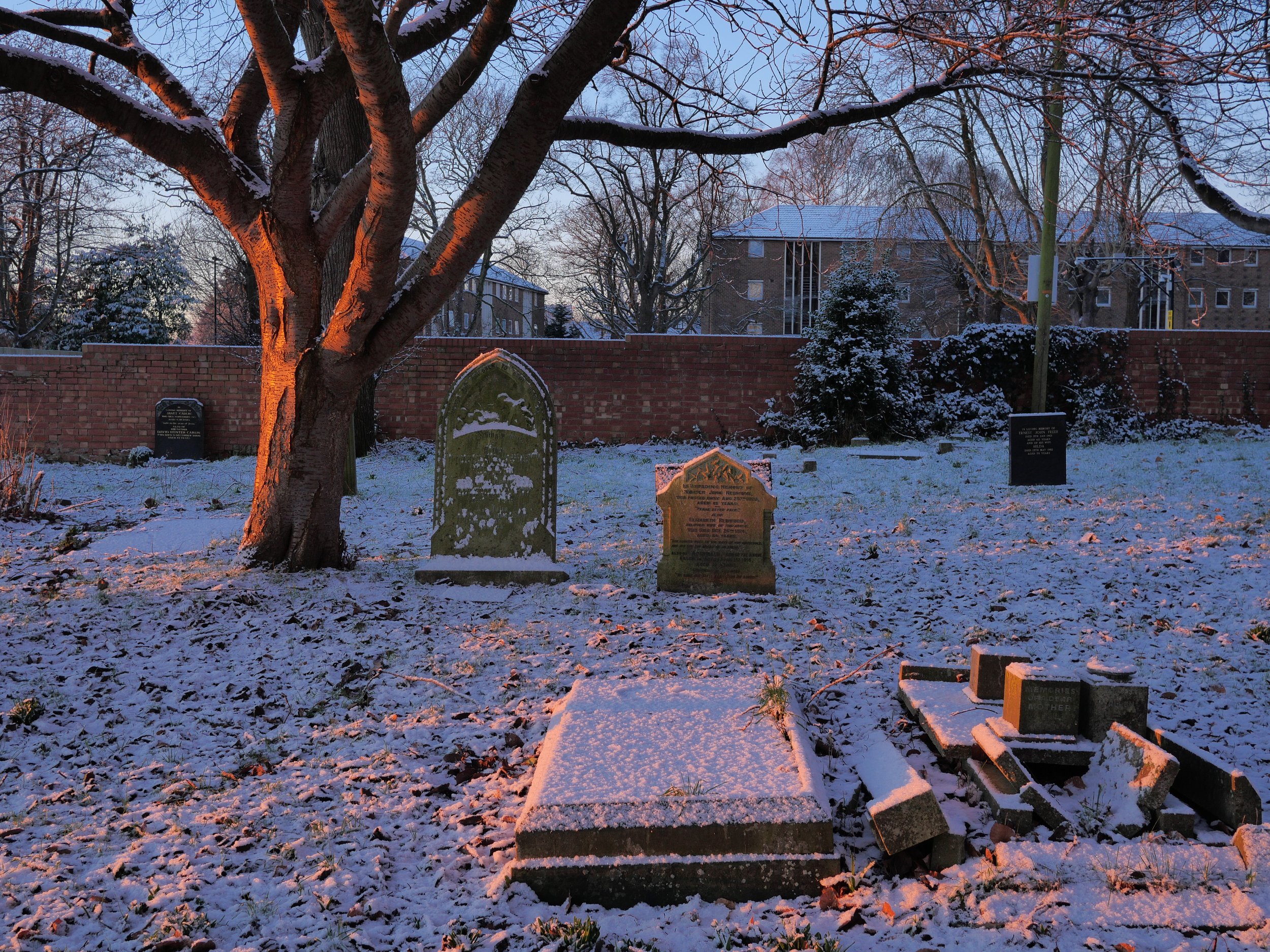
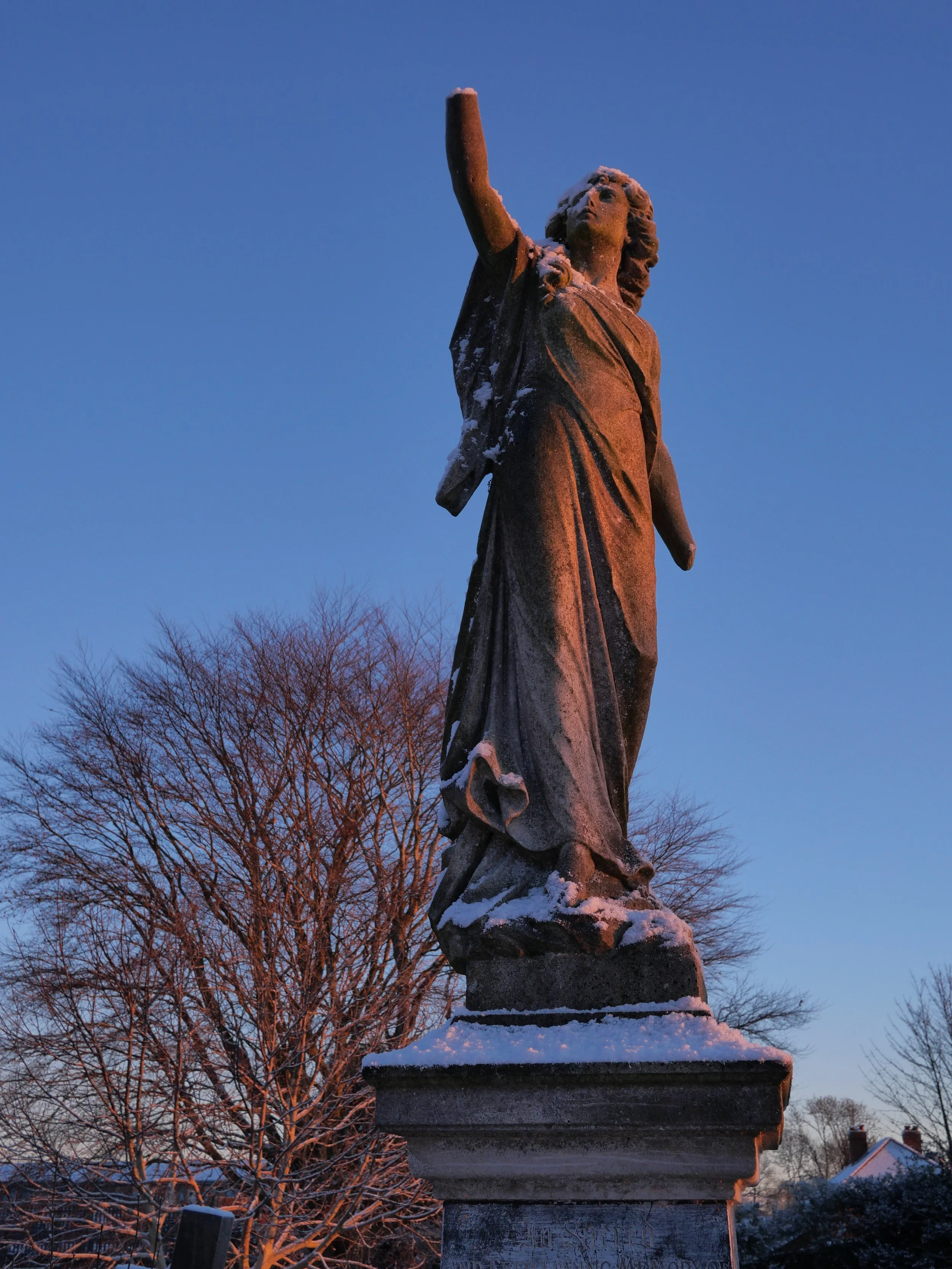
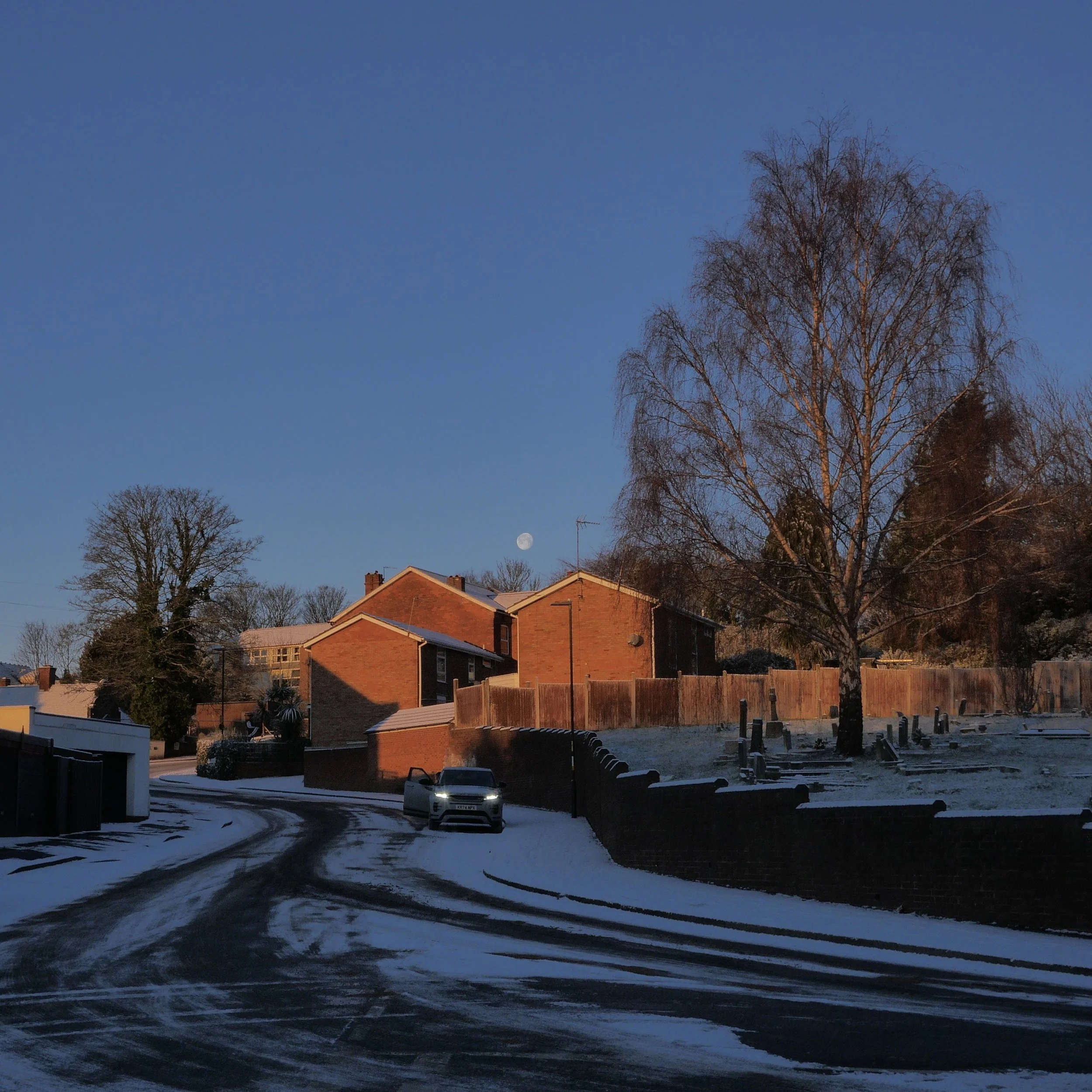
In terms of regularity of shooting, I made a concerted effort to leave the warmth and comfort of the sofa this morning and venture out in the snow to take some photos in my neighbourhood. The weather here in Birmingham has felt like -3ºC but the skies were beautifully clear this morning. As you will see below, this resulted in the most wonderful golden sunrise. I took the opportunity to to get out and practice shooting at this time of day as it’s something us garden photographers regularly do, the soft morning light delivering beautiful contrast and colours. I hope you enjoy this small sample of the images I shot in St. Barnabas’ church yard in Birmingham. I kept my ISO low for these shots and used a reasonably wide aperture in the range f/4 to 5.6 to allow enough light into so as to maintain a hand holdable shutter speed c1/100. (All images shot on Lumix GX9 & 20mm f1.7 lens, JPEGs straight out of camera with some cropping).
Keep your eyes peeled or subscribe to my blog for regular updates on what I have been doing in my professional and personal practice as a garden photographer.